Category: English

  • My Alpha Refused to Mark Me: Now He Regrets the Divorce

    On our wedding night, my Alpha mate, Damon, made one thing clear: he would never mark me. “You might be my legal wife, but Sera is my true mate.” “Don’t ever try to take her place. You’re just a human. You could never be the pack’s Luna.” I stood there, frozen. It took me a long time to whisper, “Okay.” Later, I realized this marriage was nothing more than a transaction anyway. He helped my family survive a financial crisis, and my family helped his pack secure restricted resources through our connections. Once the deal was done, it would be time to part ways. After that night, I never brought it up again. For the next three years, he took Sera to every single event. He took her to pack meetings, hunting festivals, and even my father’s birthday party. She was always the one standing by his side. The entire pack whispered behind my back, gossiping about who the real Luna was. But now, it’s over. Everything has been resolved. It’s time for me to leave. I sat in the study, reading through the divorce papers one last time. Black and white, perfectly clear. Under the division of assets, I had checked the box for nothing. He kept the house we lived in, which he owned before the marriage. He kept the cars. I wanted absolutely nothing to do with his stocks or investments. I only needed to take my own savings. Fortunately, over the past three years, we had barely communicated outside of our legal marriage status. When he had needs, he preferred to go to his mistress rather than me. That was normal. Werewolves barely recognized civil marriages anyway. I signed my name at the bottom of the papers. *Elara Vance.* I slipped the agreement into a manila folder and placed it on the coffee table. Then, I pulled out my phone and opened Snapchat to message him. “Come home early today. I have something to discuss with you.” About two minutes later, a single-word reply popped up next to his avatar. “Okay.” I turned off my phone, tossed it onto the sofa, and went into the kitchen to pour myself a glass of water. Three years ago, I actually thought that even though this marriage started as a transaction, maybe we could make it work. But during the very first pack meeting, nobody informed me. I only found out the next day from Gamma Clara. She told me the meeting had run late and the Alpha had returned in the early morning. I asked Damon why he hadn’t told me. He glanced at me coldly. “You’re just a human. There’s no point in you going.” He did tell me about the second pack meeting in advance. But when I arrived, I stood at the edge of the crowd. No one spoke to me. People passed by, brushing past me as if I were a piece of furniture. I stood there for half an hour. When I tried to politely greet a werewolf I recognized, she froze, gave a curt nod, and walked away. Damon was in the center of the crowd, talking with the elders, never casting a single glance in my direction. By the third pack meeting, I arrived earlier than usual and sat in the seat right next to Damon. That was the Luna’s seat. I knew that. But I thought, *I am his wife, at least legally.* Five minutes before the meeting started, Sera walked in. She walked straight up to me, looked down at me, and then turned to Damon. “Alpha, is this seat taken today?” Damon looked at me, remaining silent for two agonizing seconds. “No.” Sera smiled, gesturing toward me with her chin. “Excuse me, could you move?” I stood up and gave her the seat. That feeling of having even my nominal position stripped away in public still makes my stomach turn today. After that, I never attended another pack meeting. At 7:00 PM, he wasn’t back. At 8:00 PM, still nothing. At 9:00 PM, my phone finally buzzed. It was a text from him. “Something came up with Sera. I’ll be home late. Go to sleep, don’t wait up.” I stared at the message for a long time. “Go to sleep, don’t wait up.” I had heard this exact phrase for three years. It was always like this. It was always Sera. She always had an emergency, and he always had to handle it. He had to be there when she got hurt, when her missions went poorly, when she did border patrols, and when she took her ranking exams. Once, Sera said she wanted to practice night combat in the Moonlight Woods. He drove forty minutes to take her there, waited for two hours by the forest edge, and drove her back when she was done. It was 1:00 AM by the time he got back. I asked him, “Have you eaten dinner?” He said, “Yeah, had some at Sera’s.” Then he took a shower and went straight to the study. I should have figured it out that day. But I didn’t. I always thought that since we were married, we should give each other some time. Maybe over time, he would realize I wasn’t so bad. Maybe if I did well enough, he would be willing to turn around and look at this home. Looking back, if someone doesn’t have a place for you in their heart, nothing you do matters. He won’t fall in love with you just because you’re good; he’ll just think your goodness has nothing to do with him. I didn’t reply to his message. In the past, I would always reply with “Okay” to show I understood. Sometimes I would even add, “Stay safe,” trying to look generous and sensible. But today, I didn’t want to reply. Anyway, in a few days, I wouldn’t be receiving his messages anymore. An unmarked human leaving the pack would lose all connection to the werewolf world.

    I put my phone on the coffee table, picked up the remote, and changed the channel. A reality show was playing on TV. The hosts on screen were laughing hysterically. I leaned back on the sofa, suddenly finding the scene absurd. Here I was, sitting in this 2,150-square-foot house, keeping watch over a marriage that existed only on paper, waiting for a man who would never care about me to come home. While he was out with his first love. Openly, rightfully. Because when we first married, he made it clear: “If it weren’t for you, Sera and I wouldn’t have ended up like this.” He meant that I was the one who tore him and Sera apart. A werewolf and an Alpha were supposed to be natural mates. I was the interloper who forced them apart. I was the one who used my family’s influence and that arranged marriage to bind him. But what was the truth? The truth was that my father’s company was facing a severe financial crisis and desperately needed cash flow. And his pack was facing threats from rival packs, needing my family’s business network to secure weapons, supplies, and intel. Our elders sat down for one dinner, and the marriage was decided. Nobody asked me if I wanted to marry him. Nobody asked him if he wanted to marry me. But in everyone’s eyes, it was a fair trade. His family provided the money, mine provided the resources. Everyone got what they wanted. Only Sera became the victim of this transaction. And I, a human, didn’t even qualify as a victim. He probably felt I had stolen her place, turning her from a rightful girlfriend into an outcast mistress. So he gave all his guilt to Sera, and kept all his coldness for me. On our wedding night, the pack held a massive banquet. Everyone was waiting to see if the Alpha would mark his bride on the spot. Damon stood up, raised his glass, and announced to the entire room, “Tonight is just a formality. Human laws govern marriage, but pack rules are different. The two don’t interfere with each other.” The room fell dead silent for a second, then whispered gossip erupted. Sera sat in the corner, holding her glass, wearing a smug smile. I stood beside Damon, looking like a total joke. The humiliation of being publicly declared unworthy of his mark still makes my face burn when I think about it today. Since then, we had slept in separate rooms. He slept in the guest room; I slept in the master bedroom. I suddenly realized that in three years, he had only stepped into this master bedroom twice. Once was on our wedding night, when he made that speech. The other time was last year when I had a fever. It spiked to 103 degrees, and I was completely delirious. Gamma Clara called the pack doctor, asking him to make a house call. The healer asked, “Is she marked?” Clara said no. The healer replied, “Then I won’t go. I only serve pack members. Call an ambulance.” Clara ended up calling an ambulance herself to take me to the hospital. That feeling of being denied basic medical care just because I lacked a mark on my neck still makes my spine go cold. After that, I never asked anyone in the pack for help again. He didn’t come home at all that night. When I woke up at 7:00 AM, I checked my phone. No messages. After washing up, I went downstairs. Clara was already preparing breakfast. Seeing me come down alone, she opened her mouth as if to say something, but ultimately just asked, “Luna Vance, what would you like for breakfast?” She was the only one in this pack who still called me that. “Just some oatmeal is fine, Clara.” I sat at the dining table. My phone screen lit up. It was a text from him. “Sera got hurt during training last night. I stayed over to look after her. There’s a pack tactical meeting this morning, so I won’t be back.” I put down my phone and took a spoonful of oatmeal. “Clara, could you help me buy a few moving boxes over the next few days?” She froze. “Are you moving, Luna Vance?” “Yes. I’m moving out in a few days.” Her mouth opened, seemingly wanting to ask why, but seeing my expression, she swallowed her words. She had lived in this house for three years. She had seen everything. She understood. “Of course, Luna Vance.”

    She nodded and turned back to the kitchen. I finished my breakfast, went upstairs, and changed my clothes. I had an appointment with a real estate agent today. I needed to find a new place to stay before moving out of this house. I didn’t ask for any assets in the divorce, but that didn’t mean I was broke. I had savings from before the marriage. And though I hadn’t worked over the past three years, the Blackwood family deposited a twenty-thousand-dollar allowance into my account every month. I barely spent any of it, so I had saved a fortune. It was more than enough to rent a nice apartment and support myself for a year or two. As for the future, I’d figure it out when I got there. The real estate agent was a young guy with glasses who spoke very fast. He took me to see a two-bedroom apartment in the East District. It was close to downtown, and the neighborhood was lovely. “This place has amazing natural light, and the landlord just renovated it. All the furniture and appliances are brand new. The rent is $6,500 a month. What do you think?” I stood on the balcony. The view was wide open, overlooking a distant park. It wasn’t huge, but it was perfect for one person. Most importantly, it held absolutely no memories of Damon. “I’ll take it. Let’s sign the lease.” The agent clearly didn’t expect me to make a decision so quickly. He blinked, then smiled warmly. “Awesome! I’ll contact the landlord right away to get the paperwork ready!” I signed a one-year lease, paying the deposit and the first month’s rent. When I walked out with the keys, the sun was warm and bright. Standing on the sidewalk, looking at the keys in my hand, I suddenly felt incredibly light. By the afternoon, when I returned home, Clara had already bought several cardboard boxes and left them in the living room. Just as I was about to head upstairs to pack my walk-in closet, I heard the front door open. I didn’t turn around, but I had a sudden premonition. Sure enough, a familiar voice rang out behind me. “Oh, you’re home.” I turned around. Sera was standing in the entryway, holding a folder. She saw the boxes in my hands, her eyes lingering on them for a second. “Are you packing?” I didn’t answer her. I just asked calmly, “What are you doing here?” “Damon brought me.” She set the folder on the coffee table, pushing it toward me. “Pack financial regulations. The Alpha’s household expenses account should be managed by the Luna. Since you aren’t marked, this account needs to be transferred to me.” I opened the folder. It was indeed an official notice from the pack’s financial department. “Starting next month, I’ll be paying Clara’s salary, and I’ll be in charge of the household shopping. Oh, and by the way, I’m moving in.” Sera watched my face, a small smirk playing on her lips. “You don’t mind, do you?” She tilted her head. “Honestly, I thought it might be a bit awkward, but Damon insisted I move in. He said…” “If he wants you to move in, then move in,” I interrupted. “There are plenty of rooms here anyway.” She pursed her lips, walking over to sit on the sofa. “You really are incredibly generous.” “First you married him out of ‘generosity,’ and now you’re letting me move in just as easily.” I looked at her, suddenly finding it amusing. I didn’t reply, turning to head upstairs. Sera must have felt ignored because her voice rose. “Elara, I’m talking to you.” I paused and looked back at her. “I hear you.” “But you didn’t come here to chat, so why waste each other’s time?” “I have packing to do.” Sera stood up, the smile completely vanishing from her face. “You’re leaving?” she blurted out, her voice filled with disbelief. “Obviously.” “Why else would I stay? To be a third wheel in your domestic bliss?”

    Sera was utterly speechless. I turned and went upstairs, leaving her standing alone in the living room. I opened the closet and began taking down my clothes one by one. Over three years, I hadn’t accumulated that many clothes. Damon had never taken me on a trip, nor had he ever bought me a gift. No anniversary gifts, no birthday presents, and definitely nothing for Valentine’s Day. Looking back, it was laughable. I folded my last coat, packed it into a box, and was about to tape it shut when my phone vibrated. It was a text from Damon. “I’m taking Sera on border patrol tonight, so I won’t be home for dinner. Since Sera just moved in, help her get settled in the guest room.” I put the phone down and continued packing. By dusk, I had finished packing the closet and the study. As I walked downstairs, Sera was sitting on the living room sofa, sipping coffee. Hearing my footsteps, she looked up, her gaze landing on the manila envelope in my hand. “What’s that?” I didn’t answer. I placed the envelope on the coffee table and sat on the single armchair opposite her. Sera stared at the folder for a few seconds, then pulled out her phone, took a photo of it, and sent a message. Fifteen minutes later, the doorbell rang. It was one of the pack elders. He walked into the living room, flipped through the divorce papers, and then looked at me. “We don’t interfere with human legal procedures. But we need to confirm one thing: after you leave, will you disclose any pack information to the outside world?” “No.” “Do you have any written records or media files related to the pack that need to be destroyed?” “No.” He nodded, pulling a sheet of paper from his pocket and placing it on the coffee table. “This is a pack secrecy agreement. Sign it, and you can proceed with your human legal divorce.” I picked up a pen and signed my name. After the elder left, Sera looked at me, her voice dropping. “Elara, do you really not care about him anymore, or are you just pretending?” Her question caught me off guard. Did I care? Three years ago, when we first married, I had hope. Back then, I couldn’t comprehend what his Alpha status meant in the werewolf world. I only knew that the man was breathtakingly handsome, standing out in any crowd. I believed that if I was good enough, considerate enough, and understanding enough, he would eventually see me. But very quickly, that hope died. “It doesn’t matter anymore,” I told Sera. “Whether I cared or not, it’s in the past.” At 9:00 PM, Damon returned. He first looked at Sera sitting on the sofa, his gaze softening. “Sera, are you settling in okay?” Sera smiled at him, her voice sickeningly sweet. “Everything is great.” Only then did Damon turn his gaze to me. His eyes swept over me, landing on the folder on the coffee table, then shifting to the cardboard boxes behind me. His brow furrowed slightly. “What are all those boxes for?” I stood up from the armchair, picked up the folder, and held it out to him. “Damon, we need to talk.” He didn’t take the folder. He just stared at me, a hint of confusion in his eyes. “What is this?” “Divorce papers.”

    🌟 Continue the story here 👉🏻 📲 Download the “NovelMaster” app 🔍 search for “456548”, and watch the full series ✨! #NovelMaster

  • The Don’s Wife Was a Wall Street Shark

    At the peak of the whole “if she wants it, she gets it” trend online, I saw an Instagram post from my fiancé’s little assistant—the assistant to Luca, New York’s newly risen Don. “Just said yesterday I wanted a Chevy. Today Don bought me one.” Attached was a photo of the fully loaded, top-of-the-line model. And Luca, who never touched social media, had—against all precedent—left a comment underneath: “Bianca wants, Bianca gets.” I froze. Yesterday, Luca had asked me what I wanted. I’d said a Chevy Spark. I thought he was going to buy one for me. Turns out it was for his little assistant. So it wasn’t that he couldn’t indulge people. He just didn’t want to indulge me. Fine. From now on, whatever I want, I’ll get for myself. …… Luca walked in just as I finished reading that post. His eyes flicked to my phone screen. “Angry?” His voice was flat, indifferent. I said nothing, just looked at him quietly. “She needs a car more than you do.” “She runs my documents, my errands, picks up my clients. She can’t be taking Ubers forever.” “You don’t work, you don’t have a career. What do you need a car for? To let it collect dust in the garage?” He explained it calmly, driving each word straight into my chest. For him, I’d walked away from my job at Goldman Sachs. I’d helped him claw his way up from that old Brooklyn walk-up where the heat only worked half the time to where he stood today. I’d studied every possible variation on what he could eat, trying to be gentle on his stomach. Because he worried strangers coming and going through the house was a security risk, I went out personally to buy every last supply—even in a downpour. Now he was the Don whose name rang through all of New York, and I was asking him for a thirteen-thousand-dollar Chevy Spark. And he was telling me I didn’t deserve it. “Are you so poor you can only afford one car? You could easily buy one for each of us. You went out of your way to do it like this, just to belittle me. Luca—do you even realize what you’ve become?” “Every day, rain or shine, blazing sun, I either walk a dozen blocks for groceries or I take an Uber. All I wanted was a Spark that cost a little over ten grand. Is that so much to ask?” “From now on, I won’t come to you about anything. I won’t need you to give me a damn thing.” I got it all out in one breath. My voice was already trembling. Luca just looked at me and said, impatiently, “Could you keep your voice down?” I stood there, stunned. He thought I was loud. Once upon a time, he was the one who never stopped talking to me. In that cramped old apartment in Brooklyn. He’d lean against the headboard, hold my hand, and murmur on into the small hours, painting the future for me again and again. Back then he said: “The day the name Moretti earns a seat at the Five Families’ table, I swear I’ll give you everything you’ve ever wanted.” “When that day comes, I’ll propose to you at the most glorious spot in the whole of New York, in front of everyone. I’ll give you a wedding worthy of you.” I used to smile foolishly along with him, picturing our future a thousand times over. And now, he’d done it. The name Moretti rang loud through Manhattan. But there was a new little shadow at his side. Bianca Russo, turning up in every corner of our lives. Dinners. Operas. Weekends in the Hamptons. Everywhere. Under the noble excuse: an assistant has to manage his work and his life, she can’t leave his sight. The door swung open. Bianca strolled in from the foyer, twirling car keys around her finger. “Don, this car handles beautifully. Anywhere you want to go from now on, I can drive you.” She was beaming. Luca couldn’t help himself. He reached up and ruffled her hair. His voice was tender: “Happiness belongs to those who know when they’ve got enough. I’ll get you a better one next time.” I stood there behind him, frozen. I understood. He was telling me I didn’t know when I had enough. But there was something I wanted to tell him. Just yesterday, Goldman Sachs had sent me an email. My old boss, Julian Ashford, was inviting me back to the bank. Back to my industry. He’d forgotten long ago—before he ever met me, I had been one of the youngest team leads at Goldman. Not this thing standing behind him, holding out her hand for a runabout. I gave up all of it for him, willingly. Yesterday, I’d planned to decline. Now, I wanted to accept.

    Bianca smiled, smug all through her expression. “A little car like this is more than enough for me!” She turned toward me. “Ava, I’ll bet you’ve got a whole garage of cars to rotate through, don’t you?” I answered mildly: “Not right now. But I will.” Luca’s brow snapped into a frown. “When did I agree to buy you a car?” “You don’t need a car. Just keep the house in order.” I let out a soft, scornful laugh. In his eyes, if I said I wanted a car, it could only mean I was waiting for him to buy it. But what I meant was—I’d buy it myself, from now on. “Ava doesn’t work, so honestly, she has no real need for a car. Cooking a little, cleaning a little at home—must be so easy.” Bianca chimed in at just the right moment. Luca glanced at me. Two words: “True.” Suddenly the whole thing struck me as absurd. His stomach was bad. He couldn’t eat takeout. Every day I invented new ways to simmer him chicken broth, to make low-oil, low-salt home cooking. A single stew meant three hours standing over the stove. The three-story townhouse—he refused to hire a housekeeper. “I can’t sleep easy on things strangers have touched,” he’d say. Just cleaning it took an entire afternoon. All he ever did was come home to a steaming dinner and a spotless house. He’d simply never seen the rest. My throat went tight. “Luca, anyone in the world can call me idle. Anyone but you.” He caught the emotion I couldn’t quite hold down in my eyes, and something like guilt flickered in his. He opened his mouth to say something, but Bianca cut him off. “Ava, you have no idea how hard Don works every day. I’m the only one who sees it—out at dawn, home at midnight, and how many things he has to handle. You really should be more understanding. Even I feel sorry for him, and I’m just his assistant.” Luca looked down at her and smiled. “You little thing, so you actually know how to feel sorry for me?” “Didn’t spoil you for nothing.” Bianca lifted her chin. “Too bad your fiancée doesn’t know how to look after you. Guess I’ll just have to be even better to you from now on!” Luca laughed and tapped her lightly on the head. When he turned back to me, all the warmth was gone from his eyes. “Ava, do you see?” “Bianca runs herself ragged for me every day, all the little errands that never end—has she once complained she’s tired?” I lowered my head. I didn’t want to say anything more. “Right. I’m the most idle person in the world.” I turned and went into the bedroom. The door hadn’t even shut. Bianca followed me right in. She made herself at home, opening the closet, pulling out several of Luca’s custom suits. She came by every week to take his clothes to the dry cleaner. But this time, her eyes settled on the corner of the closet. Where, folded and stacked, from the years before he made it— were the cheap couples’ hoodies Luca and I had picked out together at a Brooklyn thrift shop. Neither of us had had the heart to throw them out. Bianca gave them a glance, then called loudly toward the door: “Don, there’s some old junk in here. Mind if I toss it?” I opened my mouth to speak. From outside came Luca’s careless voice: “Do what you want with it.” The sound died in my throat. I looked at those childish, almost ridiculous matching hoodies in her hand. Maybe back then had been the happiest we’d ever been. I didn’t stop her. Fine. Throw them out. Bianca gathered the clothes up, then her gaze slid back to me. “Ava, what are you keeping all this junk for, anyway?” “Luca stopped loving you a long time ago. You haven’t noticed?” Her smile was open, brazen. Nothing at all like the face she wore in front of Luca. “I know. You really wanted that Spark, didn’t you? But he just refused to buy it for you. I only mentioned it once, and he got it for me right away.” “Are you mad?” I looked at her, and suddenly I laughed. She got a little flustered, staring at me, baffled. “What are you laughing at?” “Bianca, sometimes I honestly find you quite entertaining.” “All your little schemes are so obvious, and so clumsy. Don’t you think?”

    Bianca’s little tricks were painfully obvious. It was just that they no longer bothered me. She took a few sharp steps toward me, fire simmering behind her eyes. Then in the next instant, she suddenly toppled backward and hit the floor hard. Loud enough to bring people running. She burst into tears, eyes red: “I quit!” “Just because Don bought me a car, Ava called me shameless, said I’ve got a filthy mind, said I’m trying to sleep my way up through him!” “How could I ever do that?” She was sobbing loudly. Luca came striding in. “What’s going on?” Bianca sat on the floor, biting her lip, as if she’d suffered the greatest injustice in the world. “I know she can’t stand the sight of me, but I’m just doing my job for you.” “If I’d known she’d get this upset, I wouldn’t have come today.” Luca pulled her to her feet, expression pained, brow knitted tight. “If someone hurts you, you say so. No one’s asking you to bear it in silence.” He was speaking like reason itself. But in this moment, no matter how you heard it, it sounded like a love letter. Just not one addressed to me. Bianca lowered her head, voice hoarse: “It’s just because she’s the future Donna. Otherwise I’d have already talked back to her.” Luca sighed helplessly: “So what if she’s the future Donna? You can talk back to her all the same.” He looked at me. His eyes were cold. “Apologize to Bianca.” I raised an eyebrow. My meaning was clear. Bianca, playing the good sport, spoke up: “I don’t need her apology. How about she washes my car instead?” Luca agreed without a moment’s hesitation. “Of course.” I stood up. “Luca, that’s enough.” His voice dropped: “Enough with the scene, all right? Do it for me. Let this one go.” “I’ll wash it with you.” He grabbed my hand and pulled me toward the door, unyielding. There it sat—that black Spark I’d wanted so badly. He picked up the hose and shoved it into my hand. Bianca stood off to the side, giving orders. “Here. And there. Everything needs to be spotless.” I didn’t move. Then Bianca suddenly snatched the hose out of my hand. As if she’d lost her grip on it—she aimed it straight at me. The pressurized water hit my face dead on. She burst out laughing, as though it were all a great game. “Ava, forget the car—let’s have a water fight!” The jet kept slamming into my face. My skin burned, raw. It felt like the blood was going to push right up through it. My eyes stung fiercely from the water. I blinked helplessly, again and again. But Luca just stood there smiling at Bianca. He didn’t see anything wrong with it. I couldn’t stand it anymore. I strode forward and wrenched the hose out of her hand. I was about to turn it on her. Luca stepped in front of her instantly. In the space of a breath, he was soaked. He and I stood there, locked eye to eye. After a long moment, he said: “Are you satisfied now?” “I always knew you were this vindictive.” The hose slipped from my hand. I don’t know what a wreck I must have looked. Hair, clothes—all drenched. My eyes were so blurred I couldn’t see. But none of that, hurt as much as him calling me vindictive. Once, he’d told me I was the softest-hearted person in the world. He never wanted me to suffer any slight from anyone else. So he was always teaching me: don’t swallow things, don’t let them eat you up inside. And now. The one hurting me, over and over, was him. I just stood there, silent, watching him. Only then did he seem to notice the state I was in. But all he did was frown. “Why didn’t you get out of the way?” My face was blotched with welts from the water. I wiped a hand across my cheek, taking the tears with the water. I didn’t want him to see them. “The pressure was that strong—I thought it was going to blind me. How was I supposed to dodge?” He looked at my eyes. They were bloodshot. Something tender flickered in his expression. He started to come toward me. But Bianca caught his arm. “I didn’t mean it. I just wanted to try and smooth things over with Ava. I had no idea the pressure was that high.” Luca paused a moment. “All right. Let’s just let it go. It’s over.” “You’re more mature than Bianca. You should be the bigger person.” One breezy sentence. Leaving me nothing to do but slink away like this.

    Watch👉 https://cps-front.novelix.live/app-api/ext/new/20260807M7N2o1x4cT 🌟 Continue the story here 👉🏻 📲 Download the “Novelix” app 🔍 search for “ni907099”, and watch the full series ✨! #Novelix

  • Five Years a Navy Wife, and Not One Photo of Me

    James Callahan spent five years at sea as a Navy lieutenant, and I spent five years on shore, waiting. He said warships were dangerous, conditions were rough, family couldn’t come aboard. So I kept our little home quiet, waiting for him to come back to port each time. Even when I slipped and lost the baby, I bit my tongue and didn’t disturb him. Until the day I was cleaning and pulled a metal box out from under his pillow. The moment I opened it, photographs scattered across the floor. On top was a Family Cruise application form. Applicant: Lily Sullivan—the younger sister of James’s fallen brother-in-arms. In the photo, Lily stood beside James, seagulls and the gray bow of a destroyer behind them, her smile brighter than a California sea breeze. On the back, in James’s handwriting: “You are the lighthouse of my every voyage. —J.” I laughed. I looked around our little home. Not a single picture of the two of us. From that day on, I stopped going to Coronado. Stopped sending texts that vanished into the void. Stopped reheating soup that nobody came home to drink. The ship that had sailed in my heart for five years finally sank without a sound. … “Why didn’t you come pick me up today?” James pushed open the door just as I was sitting at the table peeling an orange, watching the weather forecast on TV. Every time he came home before, come rain or shine, I’d have driven to the base two hours early. “Been busy.” I popped a segment of orange into my mouth, answering offhand, then got up and walked into the kitchen. He followed, trying to wrap his arms around my waist from behind. Before, every time he did this, I’d turn around laughing, rise up on my toes, and put my arms around his neck. But this time my body moved faster than my head— I took a step to the left and slipped out of reach. He didn’t seem to notice. He went straight to his duffel bag. “Long deployment this time. Didn’t have time to grab anything nice.” “Picked up a silk scarf. Lily said women love that kind of thing.” The scarf was ocean blue. The tag was printed in Italian—Naples. He’d brought it back from the Mediterranean. Something bitter rose in my chest. He was always like this. Made up for everything with a little gift, as if that made me part of every leg of his voyage. And then simply assumed I’d be waiting in the same place, next time. “You don’t like it?” Seeing no delight on my face, he frowned. “It’s nice.” I smiled thinly. His frown deepened. He tugged at the top button of his uniform collar. “Emma, are you still upset I didn’t bring you aboard?” “I told you, wives aren’t permitted on the ship.” His voice dropped, edged with irritation. “Why do you never listen? Not only did you not come pick me up today, you didn’t even have a bowl of soup ready. And I brought you a present.” Listening to the accusation in his tone, I couldn’t hold it in anymore. The words came out before I could stop them: “Family can’t come aboard, but Lily—an outsider—can go anywhere with you?” He seemed to catch on then to my coldness. He sighed, adopting a put-upon expression. “Come on. Lily’s different from you. Her brother is dead. I promised I’d look after her.” “You’re being childish. Nickel-and-diming about Lily all the time—we’re married, don’t be so petty.” So in his eyes, I was petty. The strength went out of me. I didn’t want to say another word. Seeing my silence, he tried what he thought was kindness. “We’ll drop it this time. I won’t hold it against you. But don’t sulk. Try to be a little bigger about this from now on.” He leaned in, casually, meaning to kiss me and put the argument to rest. I raised a hand and pressed it lightly against his shoulder. He froze. “I’m tired, James.” He was silent for a few seconds, then patted my shoulder. “All right. Get some rest.” “Mm.” I stayed cold. His phone rang. The instant he answered, I heard a familiar female voice on the other end. “James! Something terrible—the souvenirs I bought on this cruise are gone!” Lily. Her voice sounded on the verge of tears. “Don’t panic! I’ll be right there!” James responded instantly, already turning away. “Lily’s got an emergency. I’ll head over. Back tonight!” He didn’t wait for my answer. He ran out the door. I don’t know how long I stood there before I dragged my numb body toward the study. That was where James kept his charts. He’d once pointed to the sea lanes on them and said he’d take me down every one. I walked in. The shelves held wind chimes of shells from Yokosuka, a wooden fishing boat model from Diego Garcia, blue and white pottery from Crete… Five years. His ship had put in at ports in twelve countries. I hadn’t set foot even once in the base right down the road in San Diego. I pulled the blue leather-bound logbook off the bottom shelf. I’d given it to him two years ago for his birthday. I flipped through it idly. Strait of Hormuz, Gibraltar, Naples… Nearly every place he’d been, nearly every page—Lily’s name was there. So she’d been sailing with him for a long time. I was the only one kept in the dark. I sat in the study until deep into the night. Only then did footsteps sound outside the door. James pushed it open and saw the logbook in my hands. His expression shifted, just slightly, then smoothed back into place. “Why aren’t you asleep?” I didn’t answer. He came over and put his arms around my waist, offering an easy explanation. “Lily’s sensitive, you know how she is. She’s got nobody left in her family. After that first time on the ship, she kept asking to come again. I couldn’t very well say no.” “Mm.” I looked down and put the logbook back where I’d found it. My phone buzzed in my pocket. An iMessage from Zoe: The lawyer you had me ask about—military divorce specialist. He wants to know when you can meet. I set the phone face-up on the desk. The screen was still lit. James glanced down instinctively. His breath stopped.

    He stood there for a long moment, then let out a short, impatient laugh. “What’s gotten into you today? Since when are you so damn petty?” “I took Lily out to sea a few times and now you want a divorce?” “Fine. Next deployment I’ll bring you. Happy?” He gave the collar of his uniform another tug, as if coaxing an unreasonable child. Without waiting for my reply, he turned and headed for the bedroom. A few steps in, he looked back. “Lily’s several years younger than you and she’s twice as mature. Take a page out of her book, would you?” Something tight rose in my chest and then, just as quickly, sank away. Once, words like these would have panicked me. They would have sent me scrambling to explain myself. They would have made me wonder if I just wasn’t good enough. But now, all that was left inside me was a flat, level calm. Five years. All I’d done was wait. Waited for every return to port. Sick with no one to lean on, sending texts into a black hole. And him, using the pretext of looking after Lily, leaving me over and over at the exact moments I needed him most. I looked him in the eye and nodded. “All right. I won’t make a scene anymore.” I turned without another word and walked into the guest bedroom. Over the following days, I packed up my things without saying a word. James spent every day at Lily’s place. So he never noticed the things quietly disappearing from the house. The little fishbowl on the coffee table went to Zoe. The old armchair from the living room—the one I always sat in—I dragged out to the curb. Every trace of me was fading from this house, one piece at a time. “This afternoon I’m teaching Lily to read charts. Come along.” James sat at the breakfast table, taking a long pull of black coffee. “You’re always complaining you can’t read a chart—that you never know where I am.” I used to beg him to teach me. He said, “Stuff at sea, you wouldn’t get it. No point learning.” Now he was volunteering—but only as a tag-along to Lily’s lesson. The doorbell rang. Lily stood on the doorstep in a white cotton dress, a beige canvas bag over one shoulder. She flashed a bright smile. “Hi, Emma.” I said nothing. The air went stiff for a moment. Her eyes reddened instantly. Her fingers twisted in her skirt. “Emma, do you—do you not want me here?” “If it bothers you, I won’t come again.” She turned to leave, all wounded. James’s brow snapped together and he stepped past me in one stride, catching her by the wrist. “Where are you going?” He turned to me, exasperated. “Emma, I told you. Lily is Ryan’s sister. That makes her my sister too.” “If you can’t stand her being around me, then forget it—I won’t bring you along next deployment either.” Disappointment crept up like cold seawater, chilling me from head to foot. Ryan. That name was the shield he lifted every single time. As if all he had to do was say Ryan died saving my life and every grievance of mine had to be pressed back down, silent, without so much as a whimper. James didn’t look at me again. He led Lily to the door of the study, pushed it open, and went in. Under the lamp above the chart table. He spread out the massive Pacific chart, bent over it, ran his finger from one port to the next. “This is the Strait of Hormuz. This is Gibraltar.” “Last year going through Hormuz, the swells were monstrous. The destroyer rolled like she was going to capsize.” He tilted his head toward Lily, voice gentle. “You were hiding in your rack, terrified. Remember how many texts you sent me?” Lily laughed behind her hand, tears still glittering at the corner of her eye. “Thirty-seven. You said it was fine, and just like that, I wasn’t scared anymore.” They stood shoulder to shoulder at the chart table. The floor lamp threw their shadows against the wall, pressed close together. I stood in the doorway of the study like a spectator. I remembered that day. CNN had been running Persian Gulf coverage all day long, gray warships and heaving swells filling every frame. I paced the house, sick with worry. I sent text after text until the screen was full of them. The next day he finally replied: OK. Everything they’d been through together—I’d known nothing about any of it. My chest ached, faintly. I turned and went back to my room to keep packing. If I’d known nothing, then James’s future was something else I no longer wished to be part of.

    A knock at the door. I opened it. My neighbor, Mrs. Martha, stood there holding a still-steaming casserole dish, a checkered cloth draped across the top. “Emma, I saw James was home. I made a chicken bake, thought the two of you—oh?” She glanced past me and saw the two figures standing side by side in the study. Her face changed on the spot. She shoved the casserole into my hands. Her voice was low, but every word had a barb in it. “Lieutenant Callahan. Emma sits at home waiting for you. Drives out to the Coronado piers before sunup. Rain, wind—doesn’t miss a day.” “You come home and spend it with somebody else, and leave her standing to the side?” The rustling in the study stopped. Lily came out, eyes red. “Mrs. Martha, you’re misunderstanding—” “Misunderstanding, my foot. I’ve got eyes.” Mrs. Martha’s face was pure disdain. “These girls now, all day long, only thing on their minds is stealing somebody else’s husband—” She didn’t finish. Lily covered her face and bolted out the door. James snatched up his service jacket and went tearing after her. Passing me, he flung a cold sentence over his shoulder. “So this is how you talk about Lily to the neighbors when I’m not home.” “If anything happens to her, I will never forgive you.” I stood in the empty doorway. The casserole was still hot. The steam blew up into my face. Mrs. Martha looked stricken. “I’m sorry, honey. Did I make it worse?” My voice came out rough. “You’re not what’s wrong with us.” I suddenly remembered that winter. The wind at Coronado had been strong enough to knock you off your feet. I’d stood on the pier in a down parka for three hours, waiting. He’d stepped off the ship. Lily had called—said she’d twisted her ankle and couldn’t get down the stairs. He’d left me alone in the parking lot. The sea wind slid down my collar, cold as knives. Halfway home something warm ran down my leg and stained half my pants leg red. I called James. He didn’t pick up. Not until the next day did he send back a few brief words: Underway on short notice. Back at sea. I didn’t want him blaming himself, so I never told him about the pregnancy—or the miscarriage. Now I knew. There was no emergency underway. He’d just taken Lily out on the ship, on the spot, to smooth her feelings. … When James came home that night, his face was darker than a Pacific storm. He stood in the entryway, still in his service jacket, and led with: “Are you happy now?” “Lily cried for hours. You’re going to Mrs. Martha’s tomorrow to set the record straight.” “Lily and I are clean. You’re the one who imagines things all day long.” “If you can’t handle her being around…” He paused. “Then there’s no point continuing this marriage either.” “Done?” I stopped what I was doing. James frowned. “I can’t handle it.” He blinked. “What did you say?” “I said—” I touched a hand to my belly. There had once been a small life there. “Go find Lily. We’re getting divorced.” James straightened up sharply. His face went ugly. “Emma Whitaker. Remember what you said today. Don’t come crawling back begging.” He expected a fight. Because in the past, with our precious little time together, I never had the heart to spend it in silence. So I always bowed my head, gave ground, let him go to Lily. But now I simply turned, walked to the nightstand, and pulled open the bottom drawer. Inside was a thin manila envelope. I took it out and laid it on top of the nightstand. The iMessage Zoe had sent an hour earlier still lit up the phone screen: Divorce papers drafted. Look them over. Sign if the terms work.

    Watch👉 https://cps-front.novelix.live/app-api/ext/new/20260807sirDKh5prH 🌟 Continue the story here 👉🏻 📲 Download the “Novelix” app 🔍 search for “ni120380”, and watch the full series ✨! #Novelix

  • He Faked the DNA to Ruin Us

    At my daughter’s seventh birthday party, I called her father over to cut the cake. Instead, my husband shoved me away in front of everyone — hard. “Don’t call me that. I’m not her father!” He slammed a paternity test down on the table. The results said Wren wasn’t his. I froze where I stood. A second later, my parents slapped me across the face in front of the whole room. Vivian — the one they’d just welcomed back into the family — curled into my husband’s arms, eyes rimmed red, wearing that carefully rehearsed look of innocence. “I’m so sorry, Claire. I just made an offhand comment that Wren didn’t really look like Marcus. I had no idea he’d actually go get her tested…” From that day on, I became the whore of the Upper East Side, and my daughter became the little bastard everyone whispered about. Until, one day, I overheard him talking to a friend in that same careless tone: “The paternity test was faked. Her parents know too.” “She stole so many years of Vivian’s life. Once Vivian feels better about it, I’ll just remarry Claire. Easy.” “Claire can’t live without me. She won’t dare leave.” My fists clenched so tight my nails cut into my palms. The next morning, I calmly signed the divorce papers with him. But the moment I stepped out of the law firm’s doors — I turned around and picked up another marriage certificate. … Outside the study door, listening to Marcus’s casual, throwaway words, I could barely stay on my feet. His friend started to say something else, but Marcus cut him off with a soft laugh. “Relax. When it happens, I’ll just pretend I had no idea.” “I’ll say the hospital mixed things up. She’ll come crawling back on her own.” I braced myself against the wall, a sharp ache stabbing through my chest. Only hours earlier, Wren had come home from school in tears, her beloved uniform caked in mud, her knees scraped raw. When I called Ashcroft Academy, the teacher’s voice on the other end was ice-cold. She wanted us to transfer schools. “Mrs. Whitmore, do you really need me to spell it out for you?” “When a parent behaves indecently and drags her name through the mud all over town, of course every child in the class knows Wren is a bastard of unknown parentage.” “The other parents have made their feelings very clear. It’s put the school in an impossible position.” I hung up and held my trembling daughter tight, my heart shredded. Then she lifted her tear-streaked little face and asked me: “Mommy, if I really were Daddy’s kid… would he like me again?” For that one question from my daughter, I swallowed every last shred of my pride and went back to Marcus. To beg him for one more paternity test. I never imagined I’d end up here, listening to this poison instead. To him, staging a fake paternity test in front of a room full of people, dragging my name through the dirt — none of it mattered. It was nothing. Every insult, every cruel word Wren and I had endured, was just theater — a performance he’d staged to keep another woman happy. Even my adoptive parents, who never stopped telling me how much they loved me, were part of the act. I shut my eyes against the pain. Inside the room, the laughter and easy conversation went on. The friend seemed to hesitate. “But that kid, Wren… I just saw her running home from school in tears, a bunch of classmates calling her a bastard. You’re really okay letting her go through that?” “What if she finds out the truth? What if she doesn’t want anything to do with you?” Marcus’s voice was thick with the arrogance of a man who thought he had it all under control. “Kids forget. She’ll get over a little pain. It’s nothing.” “Besides, she’s my flesh and blood. Blood is blood. You think she can really walk away from her own father?” I clenched my hand so hard my nails bit into my palm, but I felt no pain. Once, I would have thrown the door open and demanded answers at the top of my lungs. But not this time. This time, I simply turned and walked away. This divorce — I was going through with it.

    I packed a few changes of clothes, took Wren by the hand, and went back to the Sterling estate. Every other time I’d come home, Mom and Dad would rush to the door with smiles before I’d even stepped through it. This time, my mother didn’t even try to hide the disgust in her voice. “What are you doing here?” “Mom… I don’t have anywhere else to go. I just want to stay one night with Wren.” She let out a cold laugh. “The Sterling estate is not a homeless shelter. Don’t bring your bad luck into this house.” Something heavy sat in my chest. Wren peeked out from behind me, small and timid. “Grandpa! Grandma!” Her voice was soft, hopeful — waiting, like she always had, for her grandparents to sweep her up in a hug. Their faces stayed cold, hard as stone. “Don’t call us that. We don’t have relatives like the two of you.” It felt like someone had hit me across the head. I just stood there, dumb. A few days apart, and we’d gone from mother and daughter to something less than distant relatives? I could still remember my father hoisting me onto his shoulders as a child, laughing, calling me the jewel in the Sterling family’s crown. My mother, so proud, telling anyone who’d listen how brilliant her daughter was. But the moment Vivian came back, all that love vanished overnight. One by one, my projects had been stripped from me. The network I’d spent years building — piece by piece, quietly transferred to Vivian’s name. Back then, I told myself Vivian was their long-lost daughter. It was only natural for them to want to make it up to her. Now, though, I saw it clearly. They hated me. They hated me for taking Vivian’s place — for stealing more than twenty years of her life. Marcus’s cruel words still echoed in my ears. To give Vivian her revenge, they’d stood by and let that whole charade unfold. They’d ground Wren and me under their heels without a second thought. The thought settled in my stomach. I pushed my emotions back down and tested the waters. “What if… that paternity test was wrong? What if the results were falsified?” My mother paused for just a beat. “The evidence is right in front of you. You’re still trying to talk your way out of it?” My father stared me down, his eyes flat and cold. “There were dozens of people watching that day. You’ve dragged the Sterling name through the gutter.” “A paternity test isn’t proof enough for you? What do you want — someone to catch you in bed with him before you’ll admit it?” A chill crept through me, bone-deep. They knew. They knew all of it was a lie. And still, in this moment, they spat these words at me — pinning me to that pillar of shame as though it were nothing. My father knit his brow, his voice dropping into a tone of grim generosity. “Fine. If you really want to stay here, then tomorrow morning you’ll release a public statement.” “You’ll admit publicly that you were unfaithful in your marriage. You’ll admit Wren isn’t Marcus’s child.” “And you’ll step down from your position at Sterling Group and transfer your shares to Vivian, unconditionally.” I could barely believe what I was hearing. My voice trembled. “You want me to admit what? Wren is not a bastard!” My mother didn’t even bother to look up. “A fake can only breed a fake. What else would she be?” Something roared in my head, and something inside me broke, completely. Just then, footsteps came down the stairs. Vivian appeared, red around the eyes, playing the shaken little dove. “Dad, Mom, don’t be like this…” She turned to me, her voice honeyed. “Claire, I know you’re hurting. But Mom and Dad are getting older, and the Sterling family has its reputation to think about.” “You can’t let your personal life drag the rest of us down with you.” “Just admit fault. Once this dies down, we’ll be family again.” Then she looked down at Wren, all careful, staged sympathy. “As for whether she’s really Marcus’s daughter…” “Marcus is such a good man. He wouldn’t hold it against you.” I opened my mouth to speak, but my parents had already run out of patience. My father ordered the housekeeper to throw my things out. “We raised you for twenty years. We were even willing to leave you some dignity.” “But since you won’t admit fault, don’t ever set foot in this house again.”

    By the time I left the Sterling estate, it was deep into the night. Wren curled against me, her eyes swollen, silent. I stroked her hair, thinking she’d just cried herself out, and hurried to find a place to stay. By the time I was standing in the hotel lobby, I was a wreck. “Hi. I’d like a suite, please.” I slid the supplementary card across the counter. The receptionist ran it, then looked up at me. “I’m sorry, Mrs. Whitmore. This card has been frozen.” My stomach dropped. I dug out my own bank card. Only to find that even the savings in my personal account had been transferred out. A cold weight settled in my fingertips. A wave of nausea washed through me. Marcus was really willing to go this far. He didn’t just want me to bend. He wanted every path behind me sealed off. The receptionist’s voice was flat. “Ma’am, would you still like to check in?” My throat tightened. I quickly called my best friend for help. “Can you lend me some money? Or book me a room? I just need somewhere to sleep with Wren tonight.” Two seconds of silence on the line. Then her voice, lowered. “Claire, it’s not that I don’t want to help.” “It’s just — my family is in the middle of negotiations with Whitmore Capital. With everything blowing up right now, if I get involved, it could hurt the company.” She didn’t finish. She didn’t need to. I hung up and stared at my reflection in the polished marble floor. Suddenly, it was almost funny. Twenty-something years of living, and I had nothing. Nothing but the daughter in my arms, who would stand by me without a moment’s hesitation. The next second, she swayed against me and went limp. I reached for her forehead and felt my blood run cold. She was burning up. I scrolled through my contacts, my finger stopping on the last name in the world I wanted to bother. A few minutes later. Money finally borrowed, I gathered Wren in my arms and went back to the front desk. “I need a room. My daughter has a fever.” The receptionist rolled her eyes. “No wonder the card was frozen. It’s the fake Sterling princess who cheated on her husband.” I stiffened. She looked me up and down, her voice curdling with contempt. “Cheap to the bone, and still had the nerve to pop out some bastard for the world to see.” “This is a respectable establishment. Kindly take yourself elsewhere. Don’t dirty our floors.” Guests around the lobby turned to stare. I tried to explain, but there was nothing left to explain. I could do nothing but carry Wren out of the hotel in disgrace. The Manhattan streets at that hour were freezing, the wind cutting like a blade. Wren, feverish and delirious, buried her face in my shoulder, murmuring: “Daddy… don’t leave me…” That one sentence tore my heart to pieces. I clenched my jaw, and in the end, I took out my phone and dialed Marcus. Ten calls in a row. No answer. My fingers shaking, I typed out a text. 【Wren has a fever. Can you come?】 A long while later, he replied. “The kid isn’t mine. I don’t have time to watch you play the tragic mother.” I stared at those cold words on the screen. Around me the street noise roared on, but I couldn’t even find the voice to cry. In the end, I took Wren to the hospital alone. The ER hallway was crowded. I’d just finished registration when I heard a familiar voice. Marcus, supporting Vivian, walked into the emergency room. A nurse handed him her chart, her tone edged with reproach. “Early pregnancy bleeding. Signs of threatened miscarriage.” “The first few months are critical. As her husband, you need to be more careful. Don’t put a pregnant woman through this kind of stress.” Marcus took the chart, and instinctively drew Vivian closer. “Still hurting?” Vivian gave a small shake of her head, eyes red-rimmed. Marcus frowned. “Don’t go home tonight. Stay at my place. I’ll take care of you.” Vivian bit her lip, murmured something, and leaned into his chest. I stood frozen where I was, feeling the blood freeze inch by inch in my veins. Years ago, when I was pregnant with Wren, he had held me the same way. The morning sickness had been so bad I couldn’t keep water down. He’d dropped every meeting on his calendar and spent the entire ten months by my side. He said, “Claire, you and our daughter — you’re my whole life.” And now, the man crushing his “whole life” into a bastard was him. The one who pushed Wren and me into this pit — was him. I almost wanted to laugh. The truer a man’s love, the more terrifying his cruelty when he stops loving you. Wren was still burning up in my arms. My phone buzzed. I looked down. A message from Marcus. 【Claire, stop wasting time. Three days from now. Harrison & Klein. Sign the papers.】

    Watch👉 https://cps-front.novelix.live/app-api/ext/new/20260807XDe16sagDC 🌟 Continue the story here 👉🏻 📲 Download the “Novelix” app 🔍 search for “ni601845”, and watch the full series ✨! #Novelix

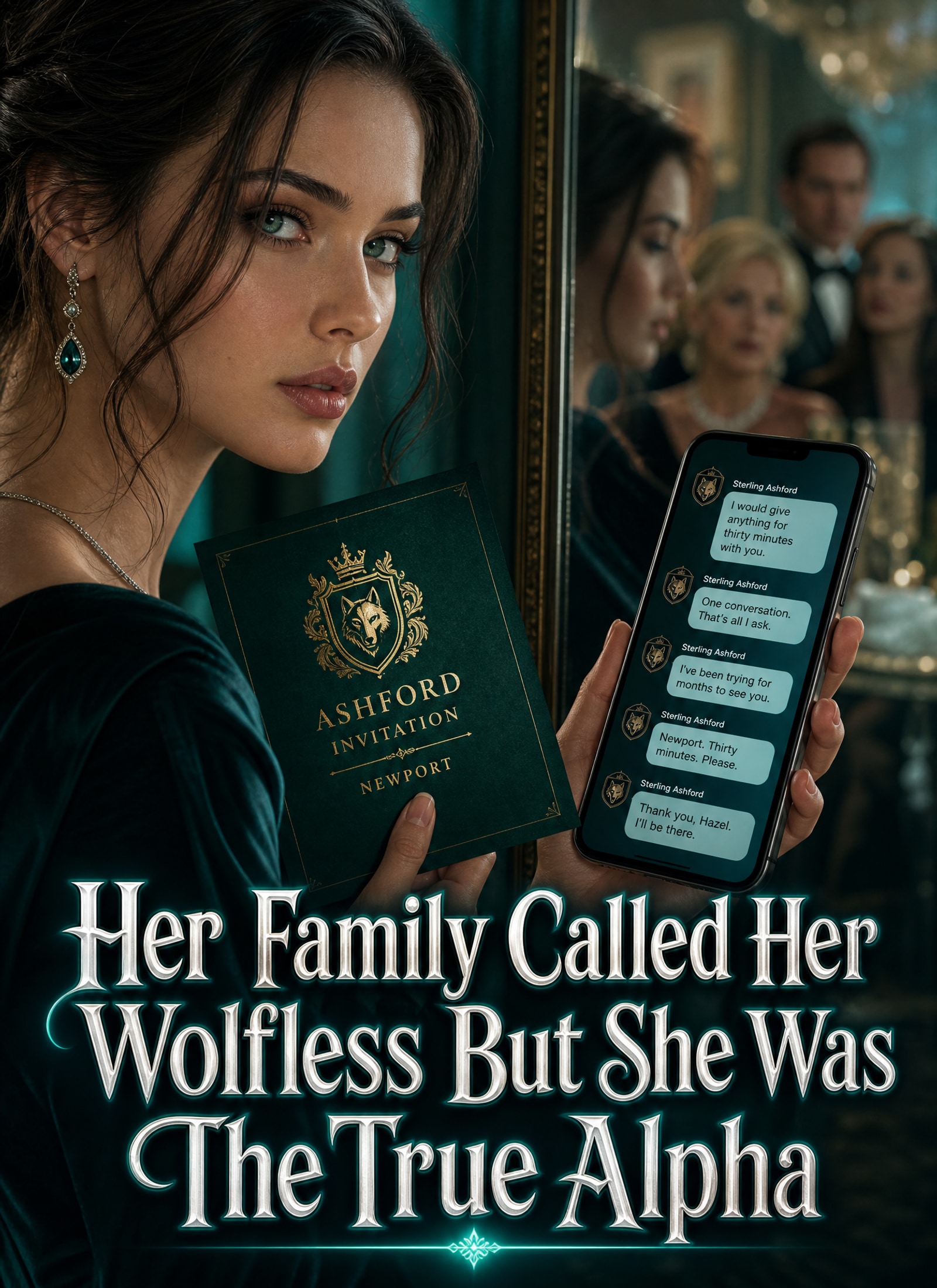
  • Her Family Called Her Wolfless But She Was The True Alpha

    The moment my mother called, I had just signed a seven-figure licensing agreement for one of my proprietary rituals. Her voice was as distant as ever. “Serena is holding her Bonding Ceremony this weekend.You have to come home.” She hung up. I opened the family group chat I’d kept muted for months. As a wolfless, I’d never been included in my family’s Mind-link. This group chat was the only channel they were willing to use with me. My brother Elliot chimed in, which was rare for him. 【Wear something decent. Don’t embarrass Serena. Everyone coming from Ashford Pack is a high-ranking Alpha.】 Ethan Cole, who had grown up alongside me, jumped in right after. 【Your First Shift was ten years ago. If you’d just gotten your act together back then, made it into Whitemoon Academy like Serena, you wouldn’t be living off scraps in New York.】 I scrolled through the messages, one after another. I stopped on the one Melanie Reed had sent. Melanie, who used to be my closest friend. 【Hazel, Serena is marrying into Ashford Pack. If things aren’t working out for you in New York, just come home. Let Serena find you something to do around here. Anything’s got to beat working two jobs.】 Elliot added, 【Even that would be doing her a favor. She spent three months studying and still couldn’t tell one basic herb from another. She can’t even smell like a wolf.】 Ethan followed. 【She’s defective. First Shift failed. Hazel, you’re just a defective piece of work.】 I lowered my eyes. Ashford Pack? Their Wolf King, Sterling Ashford, had sent three formal invitations through the Dean of Silvermoon Academy, hoping to get thirty minutes of my time. He had been asking for three months. The messages kept scrolling. I couldn’t be bothered to read any more. I sent a single line: 【OK. I’ll be there on time.】 Serena immediately hit me with a Venmo transfer. $0.01. The note read: 【For your flight home ❤️ Can’t wait to see you, Hazel!!】 Elliot’s voice message hit within seconds. 【Serena’s Bonding Ceremony is costing a fortune. How could you actually accept? Send it back. Now.】 Ethan followed. 【Even if Serena is about to become Luna of Ashford Pack, that doesn’t give you a free pass to guilt-trip her.】 I was about to type back. Melanie sent a sighing sticker. 【Enough. Can you two lay off Hazel for once?】 【She’s the only one in our group whose First Shift failed. She’s been avoiding us for a decade. She’s finally willing to come back. Don’t scare her off.】 I lowered my eyes. Eighteen years old. Yes. I had been avoiding them. Senior year of high school, Serena came back from studying at some remote Pack, and slipped into my little circle with Ethan and Melanie like she’d always belonged. Just like at home, I became the invisible one again. We’d be walking down the hallway together, and suddenly the three of them would stop mid-step at the same moment. Ethan would tilt his chin up slightly. Melanie’s eyes would follow his gaze. Serena would lower her head with a small smile. I stood there beside them. At first, I’d ask them, confused, what they were laughing about. Every time I asked, they said it was nothing. Later I figured it out. They were talking through the Mind-link. As a “wolfless,” I was locked out of that conversation by nature. But after my First Shift at eighteen, every hour of my life went into the labs at Silvermoon Academy. I didn’t have the time to hide anymore. A private message from Serena pulled me back. 【Hazel, don’t take the Venmo the wrong way.】 Her voice was soft. 【I know New York is stressful, and rent keeps climbing. I just wanted to help out, cover your flight. There’s really no other meaning behind it.】 She tacked on a teary-eyed emoji. Predictably, the group chat filled up again with praise for how “thoughtful” she was. I took a screenshot of the payment and sent back $0.01. The chat went quiet for a few seconds. Elliot was the first to jump in. 【Hazel, what’s your problem? Not enough? You’re a wolfless. Being allowed to attend Serena’s Bonding Ceremony should have you thanking God. She isn’t even embarrassed to have you there, and you have the nerve to complain about her Venmo?】 Ethan added, 【A penny is still a gesture.】 Melanie chimed in. 【Serena actually cares about you. You screenshot her transfer to humiliate her. Did you even think about how she feels?】 I leaned back in my chair and took a sip of coffee. At eighteen, this would’ve kept me awake all night. At twenty-eight, I felt nothing. Serena sent a voice message. Her tone was cautious. 【Hazel, I was just so excited when I heard you were coming home. I accidentally sent the wrong amount. Don’t be upset, okay?】 【I really do worry about you, out there in New York on your own. I already told Julian to keep an eye out for a job for you.】 【But the standards at Ashford Pack are pretty high. Your situation… honestly doesn’t even meet the minimum. Maybe I can get you a spot at the pack house as a receptionist. Or kitchen help. Don’t take it personally.】 Elliot sneered. 【What right does she have to take it personally? She has no one to blame but herself. When my coworkers ask about her failed First Shift, I can barely bring myself to say it out loud.】 Ten years ago, the day the academy acceptance letters landed at home. Serena got into Whitemoon Academy’s elite Alpha program. I got one rejection, and a waitlist notice from a satellite school at a fringe Pack. My parents booked a two-week Europe trip for Serena and Elliot. They gave me $50. Said it was for two weeks of groceries. They said it without a hint of shame. “Kids who failed shouldn’t get to travel too. That would be unfair to the ones who worked hard for success.” I wanted to tell them that family shouldn’t be ranked by a single First Shift. But then I remembered. The mug that had smashed against my forehead. I said nothing. And I never told them what I actually became, that night in the forest during my First Shift. I am a White wolf. I never told them the truth. There was a knock at the door. Emma, my assistant, stood in the doorway, her voice respectful. “Dr. Whitmore, Ashford Pack sent another email. This time through Dr. Langley. He called personally. He’s asking if you could spare thirty minutes.” The “Rogue Purification” joint research initiative Ashford Pack was leading, backed by East Coast Packs, had already burned through five hundred million dollars. They’d been stuck for two years on the core ritual for reversing corrupted wolf souls. And one of the rituals I’d mastered happened to be the key that opened that lock. Emma paused. “Should I turn them down again?” I let out a soft laugh. “No. Tell the Wolf King. This weekend, I’ll be in Newport.”

    Friday. I landed in Newport. No one came to pick me up. I called an Uber Black and rode straight to my parents’ front door. Melanie was the one who opened it. She froze for a moment. Something subtle flickered across her eyes. “Hazel… I almost didn’t recognize you. New York has been kind to you, hasn’t it? Who would’ve thought a wolfless could survive that well outside a Pack.” I didn’t answer. I walked past her. Serena’s eyes swept over the watch on my wrist, then the trench coat I was wearing. She pressed her lips together. “Hazel, we’re all family here. There’s no need to overdo it for appearances. How many credit cards did you max out for this?” Ethan laughed. “Impressive, Hazel. Been out there long enough to pick up on knockoffs.” I looked at the faces in front of me. Ten years, and they hadn’t changed much. Elliot had put on weight. Melanie had picked up fine lines at the corners of her eyes. Ethan’s hairline had noticeably receded. Serena, on the other hand, was carefully polished. Like a porcelain doll someone had spent a lot of time packaging. What they all had in common was the same faint condescension in their eyes when they looked at me. I raised an eyebrow. “From the day I left home until now, I’ve never once mentioned my income to any of you. I’ve never sent any of you a private message complaining. Where exactly are you getting your assessment of me?” No one had an answer. My mother came out of the kitchen and set a dish on the table. She glanced at me. “You don’t have a wolf, and you don’t have any real skills. What kind of decent job could she land? Three thousand a month at most.” My father clapped me on the shoulder. “That’s enough. We’re all family here, no strangers. No one’s going to laugh at you for struggling. Let’s just eat.” Eight dishes on the table. Ethan and Melanie both let out an admiring “wow.” “Mrs. Whitmore still remembers I love roasted ribs.” “That lemon cream salmon I raved about last time. Mrs. Whitmore made it again.” I glanced across the table. Everyone had their favorite dish in front of them. Even the golden retriever curled up by the couch had a small bowl of beef, portioned out just for him. Only I had a plate of green salad. At the table, my mother personally sliced off the most tender piece of rib and slid it onto Serena’s plate. “These past few years, we’ve invested in a few properties along the Newport coast. One for Elliot. One for Serena. We’re living in one, and there’s a smaller one out for rent.” She looked up at me. “Hazel, Elliot is the Alpha heir of this family. Serena is an Alpha female, marrying into Ashford Pack. It’s only right they get properties. You don’t even have your own wolf. Why should they have to share what’s rightfully theirs with you?” I set down my fork and let out a laugh. “So property distribution in this family is based on shifting rank now? Not on the number of biological children?” The table went silent. My mother’s face flushed dark red. Her hand came down hard on the table. “Hazel! Ten years you don’t come home, and the second you do, you’re giving me attitude?!” “If I’d known your First Shift would fail, I should’ve sent you off to the Omega servant quarters the day you were born! Would’ve saved us the humiliation!” Exactly the same as ten years ago. The night after my First Shift. The mug came flying at my forehead. Warm blood dripped onto the hardwood floor, drop after drop. She had that same expression then. Ten years. I had long since given up on that thin sliver of maternal love. At this moment, I felt nothing. My father stepped in to smooth things over. “Your mom talks tough, but she’s soft underneath. Don’t take it to heart.” He laughed and changed the subject. “Serena, a friend of mine got hold of a bottle of Soulmoon Wine. Wine that used to only touch noble lips. I’ll give it to Mr. Ashford tomorrow. He’ll love it.” Serena pressed her lips into a smile. But her eyes flickered away. “Dad… Mr. Ashford. He might not be able to make it.”

    My father froze. “What? Mr. Ashford isn’t coming? This is Julian’s Bonding Ceremony. Two Packs joining. How could he not be there?” Serena sighed. “Julian said there’s a very important guest coming from New York these next few days. Mr. Ashford has to receive them personally. He genuinely can’t get away.” Elliot frowned. “Who is it? More important than his own grandson’s Bonding Ceremony?” “I don’t know either,” Serena said, shaking her head. “Julian just said the person’s from New York. Mr. Ashford went through several intermediaries. Waited nearly three months just to secure this meeting.” Melanie looked baffled. “What kind of big shot has that kind of nerve? Ashford Pack’s stature is what it is. Mr. Ashford waited three months?” Ethan scoffed. “Right? So what if they’re from New York. Bigger deal than Serena’s Bonding Ceremony?” Serena waved her hands quickly. “Don’t say it like that. Julian said this person holds a ritual that could resolve a critical problem for Ashford Pack. Mr. Ashford said if they can lock in this collaboration, Ashford Pack will be sitting on top of every other East Coast Pack for the next decade.” She paused. Her eyes drifted casually toward me. “Hazel, you’ve been in New York for a long time. Ever heard of anyone like that?” I shook my head. “Not sure.” Elliot scoffed. “She’s a wolfless who couldn’t even keep her own wolf. What would she have heard? Serena, don’t try to include her in every topic. She can’t keep up.” I kept eating and didn’t say anything. What was I going to say? That the person Mr. Ashford had been trying to meet for three months was me? They’d only burst out laughing, then decide I’d lost my mind. After dinner, I sat for a while and was about to get up when my father suddenly called after me. “Hazel, your mother cleared out your old room a few days ago. You haven’t been home in ten years. She doesn’t say it out loud, but she’s never stopped thinking about you.” He added with a smile, “Fresh sheets and pillowcases. Your mother picked them out herself.” The words had barely landed when my mother came out of the kitchen wiping her hands. Her tone was flat. “That room’s for Melanie tonight. Hazel, you can make do on the couch.” The smile on my father’s face froze. Melanie looked up from the couch, glanced at me, and the corner of her mouth twitched up. “Mrs. Whitmore, I feel terrible about this. I can just book an Airbnb.” My mother’s voice left no room for debate. “You come by so rarely. How could I let you stay somewhere else? Hazel is family. It’s only one night on the couch.” I stood by the table, silent. “Hazel?” My mother’s voice pulled me back. She was frowning. Probably annoyed that I hadn’t immediately agreed. I stood up. “No need. I’ve already booked a hotel.” Her face darkened. “What’s that supposed to mean? You have a home and you’d rather stay at a hotel? The couch isn’t good enough for you?” I picked up my coat and started toward the door. “I’m used to sleeping in my own bed.” Behind me, my mother’s voice dropped into a mutter. “This child… ten years away and her temper’s grown. Every word gets thrown back at me.” The door closed behind me. Ten years ago, the girl who woke up sweating on that couch would have gone off and cried in secret, unable to understand why her mother treated someone else’s daughter better than her own. The Hazel of ten years later doesn’t do that anymore. Deposits kept rolling into her accounts. Licensing fees for her rituals. Dividends from cross-Pack collaborations. Consulting fees from the Council. Every number came with more zeros than she could bother to count. She had long since stopped needing anyone else to be good to her. She was good to herself. Without any restraint.

    Watch👉 https://cps-front.novelix.live/app-api/ext/new/20260807jYoJBQBzaL 🌟 Continue the story here 👉🏻 📲 Download the “Novelix” app 🔍 search for “ni958264”, and watch the full series ✨! #Novelix

  • Unwriting My Eight Year Marriage

    I stood at the very back of the crowded bookstore, swallowed by the noise of Austin’s book launch. The moderator smiled, leaning into her microphone. “That lingering heartbreak in the final chapters—the one everyone is crying over. Was that written for your wife?” Austin kept his head down, casually flipping through a copy of his own novel, offering no answer. Beside him, Flora offered a soft, knowing smile. She reached over, smoothly taking the pen from his fingers to sign the book for the fan in front of them. When someone in the crowd yelled out to ask who she was, she looked up, her eyes crinkling at the corners. “I’m just his most important reader.” A ripple of knowing laughter swept through the room. A photographer tapped my shoulder. “Excuse me, can you step back? You’re blocking the light.” I retreated until my back pressed against a cold concrete pillar, the shadows swallowing me. Suddenly, my mind drifted back eight years. I had been burning with a hundred-and-four-degree fever, shivering under three blankets. But the moment Flora called, Austin walked out the door. When he finally returned, his voice had been flat, defensive: “It was just a fever, Georgia. If her debut manuscript got ruined in that flood, she would have lost everything.” It wasn’t until the signing ended and the crowd dispersed that he strolled over to me. “Why were you standing so far away?” “I didn’t want to block the light.” He frowned, his brow furrowing. “You’re acting strange today.” I offered a faint, tired smile. “It’s nothing. I just suddenly realized something.” “What’s that?” I didn’t answer. The truth was simple: I had finally realized that no matter how much ground I yielded over the last eight years, I would never get him to share even a sliver of his light with me. “I’m heading out first.” “You aren’t waiting for me?” “No,” I said softly. “Not today.” Walking out of the venue into the chilly Boston air, I pulled out my phone and sent an email to the editor at Pacific Crest Press: “Regarding the writing residency you offered me in the Outer Banks—I’ve decided to accept.” … When Austin pushed open the study door, I had just closed the digital contract from the publisher. He leaned against the doorframe, lazily rolling his wrist. On it was a beaded sandalwood bracelet Flora had brought back from a temple in Kyoto. She always told him that writers needed to wear it to ground themselves against the vanity of fame. He had scoffed at the sentimentality of it, yet he hadn’t taken it off for a year. Meanwhile, the silver compass keychain I had given him years ago had lost its ring months back, and he hadn’t even noticed. “What are you looking at?” he asked, walking toward me and reaching for my phone. I pressed the power button, darkening the screen before his fingers could touch it. “Nothing.” He was always observant. Writers are like that—they build entire dramas from the slightest shift in tone or a misplaced glance. Except, in the past, he had never bothered to direct that sharp intuition toward me. Tonight, though, he was uncharacteristically stubborn, refusing to let the minor awkwardness slide. He took another step closer, his voice dropping. “Are you throwing a tantrum because of the interview today?” I looked up, meeting his eyes. “Am I allowed to?” He slipped off his heavy coat and draped it over the back of a chair. “If you’re going to bring up old history over a few harmless jokes from a moderator and some fans, then maybe I shouldn’t have abandoned my work to come home tonight.” He made it sound so effortless. His blatant favoritism was just a joke; my grief was merely “bringing up old history.” I pushed the literary magazine on my desk toward him. The cover bore a quote in bold, mocking print: “I have written of every kind of love under the sun, yet I have kept only one lifelong regret.” “Austin, that regret you wrote about—it’s Flora, isn’t it?” His hand hesitated on the edge of the magazine for a fraction of a second before he recovered his composure. He looked at me, his expression perfectly detached. “Georgia, writers need material. You don’t need to force yourself into every metaphor I write. You’re only making yourself miserable.” I stared at him, a hollow laugh escaping my throat. “So after eight years of marriage, I don’t even have the right to be jealous?” Austin opened his mouth, but before he could find his words, his phone buzzed on the desk. “Flora” flashed across the screen in bright, unforgiving light. He glanced at me instinctively, but when he saw my face remained completely blank, he answered it right in front of me. Through the receiver, Flora’s voice came through, trembling with tears. “Austin, my editor just ripped my new draft to shreds. He said it has absolutely no soul. I… I don’t know what to do…” The coldness on Austin’s face dissolved instantly, replaced by a tenderness I hadn’t seen directed at me in years. “Don’t cry. Email me the draft. I’ll look over it right now.” Flora whimpered softly over the line. “But… isn’t it Georgia’s birthday today?” Austin glanced at me, pausing for a brief second before speaking with absolute certainty. “She won’t mind.” When the line went dead, the only sound left in the study was the soft, rhythmic patter of rain against the windowpane, heavy and suffocating. Austin pulled a small, wrapped box from the desk drawer and slid it toward me. “Happy birthday.” I didn’t reach for it. He pushed it a fraction closer, his tone softening slightly. “I made reservations at that French bistro downtown. The one you’ve been talking about for two months.” I stared at the box. Eight years of marriage, and he could never remember my actual birthday, couldn’t keep track of my food allergies, and had entirely forgotten that lilies made my throat close up. Years ago, I had withdrawn my own manuscript from the final round of the New England Literary Prize just to stay home and help him polish his breakthrough novel—a sacrifice he had washed from his memory long ago. And yet, tonight, he was actually offering to take me out. I looked at him, feeling a sudden, quiet urge to give this dying marriage one last shred of dignity. So, I nodded. “Okay.” The moment the word left my mouth, his phone buzzed again. He glanced down at the screen, then stood up, grabbing his keys. “Go ahead and head over to the restaurant first. Let me just handle this draft for Flora, and I’ll meet you there in a bit. It won’t take long.” He said it wouldn’t take long. But I sat alone at the candlelit table from seven until eight-thirty. The silver utensils across from me remained untouched. The waitress approached for the third time, asking gently if she should clear the cold appetizers. At nine-thirteen, my phone finally buzzed with a text. “Flora’s chronic stomach pain flared up. I’m taking her to the ER.” Thirty seconds later, a follow-up arrived: “Go ahead and eat without me.” I stared at those cold pixels on the screen, a slow smile stretching across my face until my eyes stung with unshed tears. When I got back to our apartment, Austin’s leather shoes from this morning were sitting by the entryway, spotted with rain. Next to them hung the charcoal cashmere scarf Flora had knitted for him. She had told him the color brought out his eyes, and he had worn it every single day of the winter. On the coffee table lay a stack of advance copy editions of his new book, pristine and white. The paper band wrapped around the cover read: “To the one who taught me the meaning of longing.” I picked up a copy. On the title page, in his elegant, sweeping handwriting, was a personal inscription: “For Flora: May you always find the courage to begin again.” Once, on our fifth anniversary, I had begged him to write a simple inscription in a book for me. He had scoffed, saying married couples didn’t need to perform such meaningless, superficial gestures. It wasn’t that he disliked writing them; he just didn’t think I was worth the effort. My fingertips lightly traced the ink of his dedication. After a long moment, I closed the book, went to the closet, and began packing my life into old cardboard boxes. At one in the morning, the lock clicked. Austin walked in, his coat slung over his arm, his face etched with exhaustion. When he saw the half-filled boxes in the living room, he froze. “What are you doing now?” I kept my head down, wrapping packing tape around the seams of a box. “Just sorting through some old books.” He strode over and pressed his hand firmly against the cardboard flaps, stopping me. “Georgia, is this really necessary? Are we going to do this all night?” The harsh, scraping sound of the tape dispenser tearing filled the room. I looked up at him calmly. “I’m not making a scene, Austin.” “Not making a scene?” He let out a bitter, defensive laugh. “I know I missed dinner, and I’m sorry. But Flora had a hundred-and-three fever and was entirely alone in that waiting room. She had no one.” My voice remained entirely flat. “I was alone in a clinic when my fever hit a hundred-and-four.” Austin’s expression stiffened. I kept going, my tone steady, almost clinical. “Three years ago, when I was admitted for internal bleeding from my ulcers, I called you twelve times. You were at Flora’s debut launch.” He locked his jaw, offering no defense. I remembered lying curled on that cold hospital cot, clutching my stomach. The nurse had grabbed my phone to call my emergency contact. When the call went through, the background was loud with applause and laughter. I could hear the moderator asking Austin what drew him most to Flora’s writing, and his voice carrying clearly over the speaker: “It’s her fierce, unyielding spirit. It’s incredibly rare.” The nurse had given me a look of profound pity, and I had quietly taken the phone back, lying that I must have dialed the wrong number. When he finally came home at dawn and noticed the medical tape on my wrist, his only reaction was: “Why didn’t you tell me it was that serious?” I had told him. But his world was always too loud, too crowded with applause, for my quiet cries to ever reach him. Austin looked away, his impatience flaring. “That was years ago, Georgia. Why do you insist on digging up the past right now?” “I’m not digging anything up.” I reached into the box and pulled out a worn, paperback copy of Rilke’s “Letters to a Young Poet”. I held it out to him. “Here. This is yours.” He refused to take it. The slim volume hung in the air between us like a delayed verdict eight years in the making. “This was the first book I ever bought you,” I said softly. “Which is why I’m returning it.” With an irritated flick of his wrist, he slapped the book out of my hand. It hit the hardwood floor with a dull thud, the pages sprawling open, and a faded photograph slipped out from between them. It was a picture of me at twenty-two, and him at twenty-four. Back then, before the publishing deals and the glowing reviews, he had been a struggling writer living in a damp basement apartment. A heavy rainstorm had flooded the pipes, soaking his manuscript. I had spent hours sitting on the floor with a hairdryer, carefully drying each page one by one. I remembered him sitting amidst the ruined papers, looking up at me with such fierce sincerity: “Georgia, when I finally make it, my first book is going to be dedicated to you. Only you.” I suppose the twenty-four-year-old Austin could never have predicted that by thirty, he would have erased that promise entirely. He stared at the photograph now, a shadow of conflict crossing his eyes. He started to bend down to pick it up, but then, his phone buzzed again. I beat him to it, snatching his phone off the table before he could. Austin’s face darkened. “Georgia, put that down.” I looked down at the screen. Two notifications from Flora were glowing on the lock screen. “Austin, I had a nightmare that you left me.” “Can you come back and stay with me for a bit? Just a little while.” Austin’s fingers twitched. I slid the phone back into his palm. “Go. You wouldn’t want to keep her waiting.” He stared at me, his tone turning accusatory. “Do you have to be so incredibly bitter?” I let out a soft, tired laugh. “Austin, I sat alone in a quiet restaurant for three hours tonight.” But he didn’t get it. He never would. I picked up my own phone and sent a quick email back to the residency coordinator: “I can leave early. The sooner, the better.” He left anyway, slipping back into the rainy night to comfort Flora. When the door clicked shut, the silence in the apartment was deafening. My phone rang almost immediately—it was Chase Crane, the editor-in-chief of Pacific Crest Press, his voice bright and eager over the line. “Georgia, the cottage overlooking the shore just freed up. If you’re still interested, you can move in as early as three days from now.” I stared out the window at the endless, gray Boston rain. “Three days,” I murmured. “I’ll be there.” Austin didn’t return that night, nor the next morning. I spent the day packing my life into suitcases: my ID, my laptop, a few changes of clothes, and the yellowed, handwritten manuscript of “Southern Tides” that I had kept tucked inside an old binder. Eight years ago, I had been on the verge of finishing that novel. When I had nervously handed him those pages back then, he had flipped through only two sheets before tossing them aside with a shake of his head. “Your prose is too soft, Georgia. It doesn’t have the weight to carry a full-length novel. Don’t waste your energy.” I had believed him. For eight years, I never touched a novel draft again. At ten the next morning, the door opened. I had just zipped my suitcase when Austin walked in, supporting a pale, fragile-looking Flora. She was wearing his wool coat over her shoulders, one hand clutching her stomach. The moment her eyes fell on my suitcase, her eyes welled up with tears. “Georgia, please don’t misunderstand. My stomach was hurting so badly, and Austin was worried the paparazzi would spot us at the hotel, so he brought me here to rest.” I looked past her to Austin. “Why is she here?” He helped her onto our sofa, then looked up at me, his tone completely matter-of-fact. “It’s not safe for her at her hotel right now.” “And?” “Go prep the guest room for her.” He said it so casually, so naturally, as if in this home where I had spent eight years of my life, I was the guest and she was the family. My hand tightened around the handle of my suitcase, my feet glued to the floor. Austin’s brow furrowed, his voice dropping to a harsh whisper. “Georgia, don’t start a fight right now.” Flora immediately scrambled to her feet, her voice trembling. “No, Austin, it’s fine. I’ll leave. I don’t want to make Georgia uncomfortable, and I certainly don’t want to come between you two.” She turned toward the door, but as she took a step, she stumbled, leaning heavily into the coffee table. A glass of hot tea wobbled and went over, splashing scalding water across the wooden surface. I jumped back, but a spray of the near-boiling liquid caught the back of my hand, leaving a bright red welt. Yet, it was Flora who clutched her wrist, tears streaming down her face. “Georgia, why did you push me?” I stood frozen, the absurdity of the accusation stealing the air from my lungs. Austin didn’t hesitate for a single second. He rushed forward, pulling her into his arms, desperately checking her hands. “Did you get burned? Let me see.” Flora whimpered, holding up her wrist to show a barely visible pink mark. Meanwhile, the back of my hand was throbbing, a blister already starting to form. Austin didn’t even look in my direction. “Apologize to her,” he snapped. I stared at him, convinced I had misheard. “What did you say?” He looked up, his eyes cold, his words cutting deep. “I said, apologize to Flora. She’s sick, and you just shoved her. When did you become so petty, Georgia?” I stared at him in silence. If he had cast even a single glance at my hand, I might have found a way to lie to myself—to believe that eight years of history couldn’t possibly be reduced to this. But he didn’t look. Flora leaned against his shoulder, her voice dripping with sweet reason. “Austin, don’t be angry with Georgia. I’m sure she only did it because she loves you so much.” Austin adjusted his coat around her shoulders. “Loving someone doesn’t give you the right to hurt people.” A short, dry laugh escaped me. “Austin, do you honestly believe I pushed her?” His gaze was entirely flat. “I know what I saw. I believe my own eyes.” “And did your eyes catch my hand getting scalded?” His gaze flicked down, resting on the raw, red skin of my hand for less than a second before he looked away. “You should have been more careful.” The final, fragile thread that had held us together for eight years snapped. I didn’t bother arguing. As Flora sat back down on the sofa, a delicate silver crescent moon pendant slipped out of her collar. On the inner curve of the crescent, a tiny inscription was engraved: “The tides will bring the moon back home.” I stared at the words, the blood in my veins turning to ice. “Where did you get that pendant?” Flora’s hand flew to her neck, trying to cover it. But Austin answered coolly, “I designed it for her.” “Those words,” I whispered, “were from my unfinished manuscript.” Austin’s jaw tightened. “Georgia, don’t start obsessing over a few scrap pages of a dead project. Flora needed a central metaphor for her new book. I thought it fit, so I let her use it.” “Did you ever think to ask me?” He finally lost his temper. “You haven’t written a single sentence in eight years, Georgia! Those pages are just kindling gathering dust in your closet. In her hands, they actually have a chance to become literature.” Flora looked up, eyes wide and innocent. “Georgia, if it bothers you that much, I’ll take it off…” Her fingers fumbled with the clasp, and the heavy silver pendant fell, landing directly in the mug of hot tea. A fresh wave of scalding liquid splashed onto my raw skin. I gasped at the sharp, biting pain. But it was Flora who sobbed first. “I’m so sorry! I didn’t mean to, I just got nervous…” Austin’s expression darkened completely. “Georgia, enough is enough. Apologize to her. Now.” I looked down at my blistered hand, feeling a strange, hollow calmness wash over me. “And if I don’t?” He stepped closer, his voice dropping to a low, commanding threat. “At the New England Literary Gala in three days, you will stand in front of the press and clarify this.” “Clarify what?” “You will tell them that Flora’s novel does not use any stolen material. You will tell them that your early drafts were never intended to be serious literary works.” He pulled a folded document from his pocket and slid it onto the table. It was a single sheet of paper, light as a feather, yet heavy enough to crush the remnants of my life. It was a waiver—a declaration stating that my early manuscripts had no independent creative value, and that I was freely transferring all rights to Flora to use my metaphors, sentences, and character designs. I read every single line before looking up at him. “You wrote this?” Austin calmly adjusted the cuff of his shirt, giving a disinterested shrug. “Our publisher’s legal team helped with the wording. It’s airtight.” “You want me to sign a paper saying the work I spent years of my life pouring my soul into isn’t even worth being called writing?” He walked over, standing over me. “Georgia, look at the bigger picture. Flora’s book is already topping the bestseller pre-order list. If a plagiarism rumor gains traction now, her career will be over before it starts.” A bitter tightness caught in my throat. “So it’s fine if you destroy mine instead?” Austin went quiet. After a few seconds, he reached out and gently tucked a stray strand of hair behind my ear. It was a tender gesture, but his words were pure condescension. “You’re different, Georgia. You have me.” How beautiful. A poison pill coated in honey. I looked at him and felt a sudden, profound embarrassment for the woman I had been. For eight years, everyone in our circle had told me the same thing: “Be reasonable, Georgia. Don’t make a fuss. You have Austin, and that’s enough.” I lowered my gaze, forcing back the burning behind my eyes. Sensing my silence, his tone grew more pressuring. “Pacific Crest Press is currently bidding for my next essay collection. Their editor-in-chief flew in just to have dinner with me last night. If you drag this out into the public eye and make it a scandal, do you really think they’ll side with a nameless writer who hasn’t published a single page in eight years over me?” He paused, letting his tone soften into a patronizing promise. “Support Flora at the gala. Once this blows over, I’ll talk to my old mentor at the university. If you want to start writing essays or short reviews again, I won’t stand in your way.” I stared at the waiver, the black ink blurring before my eyes. Eight years ago, a single dismissive comment from him was enough to make me bury my dreams. Eight years later, he was asking me to sign a confession of my own worthlessness just to clear the path for another woman. He was truly ruthless. But I didn’t scream. I didn’t argue. I simply picked up the document, folded it neatly, and slid it into my purse. “Fine. I’ll do it.” Austin blinked, caught off guard by how quickly I had bent. He studied my face, trying to read me. “You’re sure you’re okay with this?” I kept my eyes on the floor and gave a quiet nod. “Yes.” He opened his mouth to say something else, but from the living room, Flora’s weak voice cut through the air. “Austin… my wrist is really throbbing…” He turned instantly, leaving the study. At the threshold, he paused, looking back at me one last time. “I’m glad you’re finally being sensible.” The moment the front door closed, I wiped my eyes. I reached into my purse, pulled out the waiver, and tore it into tiny, unrecognizable shreds. While they were occupied in the living room, I quietly slipped out of the side door, leaving behind the apartment that had been my prison for eight years. When Austin finally returned to the study, he found only a cold glass of water on the desk. The room was empty. A book lay open under the desk lamp; he glanced at it, unconcerned. I had always been like this—running away when I was upset, crying in a corner until I got over it, waiting for him to offer a few hollow words of comfort so we could go back to normal. He frowned, pulling out his phone. “Where did you run off to now?” There was no reply. He added: “Make sure you sign that waiver tomorrow.” Still, nothing but silence. Austin stared at his screen and let out a dry, irritated breath. “You’re getting more dramatic by the day,” he muttered. In the living room, Flora asked softly, “Is Georgia still angry with me?” Austin pocketed his phone. “She agreed to help. Let her cool off on her own.” He was entirely convinced that I was just throwing a childish tantrum, that once the gala was over, he could buy me a slice of chestnut cake and a bouquet of flowers, and I would open the door with teary eyes and forgive him. He had no idea that by then, I was already boarding a flight heading south. For the next three days, I didn’t send a single text or answer a single call. The night before the gala, Austin’s assistant rushed up to him at his hotel, looking frantic. “Austin, we can’t get in touch with Georgia. Her phone is off, and she isn’t answering any emails.” He tried calling my number himself, only to be met with a cold automated voicemail. His texts went undelivered. No matter how badly we had fought in the past, I had never let him lose face in public. But this time, I hadn’t even grasped the need to leave an explanation. Flora stood nearby, watching anxiously. “Austin, do you think Georgia is still holding a grudge against me?” Austin ignored her. Half an hour later, his assistant ran back over, his face entirely devoid of color, holding out his phone. On the screen was an official announcement just posted by Pacific Crest Press: “We are thrilled to welcome novelist Georgia Wilde to our coastal residency program. Her long-awaited debut novel, Southern Tides, is officially back in production.”

    🌟 Continue the story here 👉🏻 📲 Download the “MotoNovel” app 🔍 search for “535054”, and watch the full series ✨! #MotoNovel

  • The Sweet Smell Of My Ruin

    When I was seven, my cousin Tabitha pushed me into the deep end of our neighborhood pool and stood at the edge, watching me sink. By the time they dragged me out and pumped the water from my lungs, the terror had already taken root. Ever since, I have been afraid of the water. My family ran a bed-and-breakfast right on the rocky coast of Maine—the Wells Bay Inn. During the peak summer season, it was all hands on deck. My mother forced me to stand on the damp sand to welcome the incoming surfers. I stood there, my limbs trembling so violently that before the guests’ shuttle even arrived, I fainted. My father hauled me up by my collar in front of a dozen staring tourists. “Are you trying to ruin our business on purpose?” he roared, his voice echoing over the crashing waves. “A kid raised on the ocean, afraid of a little water? What are the guests supposed to think of us?” One afternoon, while I was exhausted and asleep, they slipped a life vest over my arms and carried me onto our family speedboat. When I opened my eyes, the shore was nothing but a thin, dark line on the horizon. We were in the middle of the open ocean. My father stood at the helm, his back to me. “You’re not coming back home until you dive in and swim a lap.” I cried on that deck until I was completely dehydrated, my throat raw and bleeding. In the end, it was the Coast Guard that towed me back to land. By nineteen, I had found my escape in scent. Perfumery didn’t require water. It only needed pure alcohol and the delicate chemistry of essential oils. I designed a custom sea-salt fragrance that caught the attention of an independent boutique brand in Boston. They sent me a contract, offering me a full-time position as their lead perfumer. When my mother found the document, she didn’t even consult me. She called the representative directly and canceled the agreement. “Our son is staying here to take over the family inn. He doesn’t have time to be a servant for your little startup.” She locked me out of my room, dragged my scent cabinet into the bathroom, and poured over two hundred bottles of essential oils down the toilet. The roaring sound of the flush filled the small space. Watching the dark oils swirl down the drain, I was suddenly five years old again, watching the water close over my head. I realized then that in all these years, I had never actually been saved. I was still at the bottom of that pool. 1 “What are you staring at? Think it’s not clean enough?” My mother’s voice cut through the ringing in my ears. She stepped over the shattered glass on the bathroom floor, using her toe to kick the shredded remains of my contract toward my knees. I knelt on the cold porcelain tiles. The toilet tank hissed as it refilled with water. A few empty, amber-colored glass vials floated in the bowl. One was Damask Rose. It had cost me nearly a hundred dollars for a tiny gram—money I had spent six months scrimping from my meager allowance. “I asked you a question. Are you mute now?” My mother walked over. She adjusted the collar of her silk robe and tapped my forehead hard with her finger. “Instead of helping with the inn, you’re wasting your time on this smelly garbage. Are you trying to give me a stroke?” I stared at the swirling water in the toilet bowl. My throat felt as though it were stuffed with a dry, thorny sponge. “That was my job,” I whispered, my voice cracked. “They offered me a contract. Four thousand a month.” My mother let out a sharp, mocking laugh. “Four thousand? That’s pocket change. Your father books out a single VIP suite for a weekend and makes double that. You want to run off and work for someone else? What am I supposed to tell our guests when they ask where my son is? How is that supposed to look?” I looked up at her—at the woman I had called “Mom” for nineteen years. “If I don’t take this job, what am I supposed to do? Spend the rest of my life busing tables in your dining room?” Before she could answer, the bathroom door was kicked open. Tabitha strolled in, swaying slightly. She was holding my phone, the screen glowing in her hand. “Oh, still thinking about going to work?” Tabitha sneered, her lips curling into a yellow-toothed grin. She swiped her thumb across the screen. “I just used your account to send a little voice note to that coordinator of yours.” I bolted upright. My knees, numb from kneeling so long on the hard tile, buckled slightly. “What did you send?” I lunged to grab the phone. Tabitha stepped aside with practiced ease, driving her foot into the back of my knee. I lost my balance and crashed against the marble sink, my hip bone colliding with the sharp edge. A dull, sickening pain flared through my lower back. “What did I send?” She pressed the play button. My mother’s shrill, aggressive voice blared from the speaker: “What kind of cheap, sweatshop operation is trying to steal my son’s formulas? Stay away from him, or I’m calling the police and reporting you for harassment!” The audio ended. A second later, a red exclamation mark flared next to the contact name. Isla Burt had blocked me. She was the only person who had ever truly understood my work. The only one who had told me I had a gift. My hands began to shake uncontrollably. I gripped the edge of the sink, my knuckles turning white. “Give me my phone.” Tabitha smiled, tossed her head back, and threw the phone straight into the dirty mop bucket in the corner. It hit the murky water with a heavy splash, sending gray droplets flying onto my bare ankles. “Stop whining. I did you a favor,” Tabitha said, dusting off her hands. “There are too many scammers out there. With your IQ, you’d probably get sold off and not even realize it.” I stared into the bucket, watching the tiny bubbles rise from the submerged device. It was a cheap, second-hand phone I had bought with the money I earned washing dishes during high school. I turned slowly to my mother. “She threw my phone in the trash water. Aren’t you going to say anything?” My mother didn’t look at me. She was busy smoothing down the lapels of her robe. “Tabby was just looking out for you. That phone was ancient anyway. Your father will get you one of the spare devices we keep at the front desk tomorrow.” She paused, her eyes narrowing as she looked me up and down. “Now get dressed. Put on that new high-end wetsuit we bought for the staff. There’s a major surfing club arriving this afternoon.” I froze. “I can’t. I have aquaphobia. I can’t go near the shore.” Tabitha scoffed, leaning against the doorframe. “Still playing that old tape? You’re nineteen, Jesse. You fell in a pool when you were seven and you’re still using it as an excuse to be lazy.” “It wasn’t an accident,” I said, staring directly at her. “You pushed me. You held my head under the water.” Tabitha’s face hardened. She took two strides forward and slapped the back of my head, slamming my forehead into the mirror. “Say that again, you little freak. See if I don’t drag you down to the docks and feed you to the crabs myself.” My mother stepped between us, pulling Tabitha back. “That’s enough, Tabby. Don’t bruise his face. We have clients to impress this afternoon.” She turned to me, her eyes dead. “The suit is on your bed. If you aren’t wearing it by two, you can pack your things and get out of this house.” The door slammed shut. Their footsteps faded down the hall. I slowly sank onto the floor, ignoring the shards of glass biting into my palms. I reached out and picked up the torn scrap of my contract. Isla Burt’s signature was still visible, though the ink was already beginning to bleed from the dampness of the floor. I pressed the paper against my chest. Once, this room had been filled with the scent of two hundred bottles of sea-salt and botanicals. Now, there was only the rancid, chemical smell of bleach and sewage. 2 By two o’clock, the sun was beating down on the sand like white-hot needles. I stood at the entrance of the private beach, suffocating in the tight, neon-blue wetsuit. The sand beneath my feet was scorching, but inside, I was shivering. The sound of the waves crashing against the jagged rocks felt like a dozen invisible hands wrapping around my ankles, pulling me downward. My father was sitting under a giant umbrella nearby, an icy drink in hand, laughing loudly with a group of wealthy out-of-town women. “Your boy is quite the looker, Rob,” one of them remarked, pointing a manicured finger toward me. “He looks like a Ralph Lauren model standing out there.” My father laughed, a booming, self-satisfied sound. “Oh, Jesse’s our golden boy. Raised him right here on the water. Swims like a fish.” I swallowed hard, my stomach churning. In my mind, the vast blue horizon began to distort, expanding until it mirrored the deep, tiled abyss of the pool from my childhood. The surfing club’s shuttle bus pulled up to the curb. A dozen young, athletic tourists climbed out, laughing and talking. My mother immediately put on her customer-service smile and rushed over to greet them. “Welcome, everyone! We have your oceanfront suites all ready for you. Jesse! Don’t just stand there like a statue! Get over here and help with the gear!” I dragged my heavy, unresponsive legs forward, step by step. The group leader, a young woman with polarized sunglasses, looked me over. “Nice gear. You guys take your beach service seriously.” She handed me a sleek, custom surfboard. “Careful with this. It’s carbon fiber. Worth more than your rent.” I took it from her. The smooth fiberglass still carried the damp, briny scent of the ocean. In an instant, the world tilted. The surfboard in my hands transformed into the slippery edge of the pool tile I had clawed at so desperately when I was seven. The young woman’s face blurred, replaced by Tabitha’s grinning, teenage face. “Hold your breath! I said hold it!” The auditory hallucination blasted through my mind. My hands shook violently. The expensive board slipped from my grip, crashing onto the jagged granite rocks below with a loud, sickening crack. The entire beach went dead silent. The young woman’s smile vanished, her face contorting in anger. “Are you blind?!” She shoved me hard. My foot caught on a wet rock. I stumbled backward, losing my footing entirely, and fell into the shallow tide pool. The freezing water rushed over my waist. “Help! Help me!” I screamed, thrashing wildly. I flailed my arms, kicking my legs in panic as the water splashed over my chest. “I can’t breathe! I’m drowning!” I curled into a ball, clutching my head, suffocating in less than two feet of water. Around me, the crowd erupted into laughter. “Is this guy for real?” “The water is barely to his knees. What a drama queen.” “Is this some kind of stunt for social media?” My father and mother pushed through the crowd. My father’s face had turned a deep, furious purple. He stepped into the water, grabbed me by my collar, and yanked me up like a soaked dog. “You useless, embarrassing piece of garbage!” A heavy, ringing slap landed across my face. My vision blurred, and a high-pitched hum filled my ears. The salty water, mixed with the metallic taste of blood from my split lip, trickled into my mouth. “Are you trying to ruin our business on purpose?” my father hissed under his breath. “A kid raised on the coast, afraid of water? What are the guests supposed to think of us?” I covered my face, shivering violently. “I’m sorry… I’m sorry…” I mumbled, my voice cracking. “I can’t… I really can’t.” My mother quickly turned to the guests, her face stretched into a strained smile. “I am so sorry, everyone. Our boy has a history of severe panic attacks. We’ll cover the cost of the board entirely, and your stay tonight is completely on the house.” She turned back to me, her hand gripping my bicep so hard her nails pierced the neoprene of my wetsuit, digging into my skin. “Get to the linen room and stay there,” she whispered, her voice dripping with venom. “No dinner for you tonight.” I don’t remember how I walked back to the utility building. The whispers and stares of the tourists followed me like a physical weight. “Is he mentally ill?” “He looks completely unstable.” “Stay away from him. He might snap.” I pushed open the door to the linen room. It was a windowless space packed with piles of unwashed sheets and heavy tablecloths, smelling of sour dampness and harsh industrial bleach. I slid down the wall into the dark, my head resting against a stack of cold towels. I reached into my pocket, but it was empty. I didn’t even have a way to call for help anymore. Then, I thought of Dr. Gregory Ross. He was the only general practitioner in our small coastal town who also handled psychiatric consultations. Six months ago, he had prescribed me anti-depressants. He had told me, “If things ever get too heavy, Jesse, you come straight to my office.” I stood up, grasping onto that memory like a lifeline. While the staff was busy hosting the reception out front, I slipped out the back door and ran toward the town clinic. If I could just get a formal diagnosis—something in writing to prove I was truly ill—I could go to the police. I could finally find a way to leave this place. 3 I ran until my lungs felt like they were filled with hot lead. When I burst into Dr. Ross’s office, he was sitting at his desk, typing up patient charts. He looked up, startled by my disheveled, wet appearance and the sand clinging to my face. “Jesse? What happened to you?” I stumbled forward, gripping the edge of his desk to keep from collapsing. “Dr. Ross, please. You have to help me.” My voice came out in ragged gasps, tears spilling over my cheeks. “They poured my oils down the drain. They forced me into the water… they’re going to kill me. Please, write me a diagnosis for severe clinical depression or PTSD. I need to show the police. I need to get away.” Dr. Ross stood up slowly. He reached for a box of tissues and handed one to me, but his movements were stiff, hesitant. He didn’t look me in the eye. Instead, his gaze flicked toward the desk phone. “Jesse, calm down,” he said quietly. “Your mother already called me.” My hands froze. The warmth drained from my chest, replaced by an icy, hollow dread. “My mother?” Dr. Ross sighed, pulling open a drawer and extracting a folder. “She called about thirty minutes ago. She told me you’ve been having severe delusions lately because of your obsession with chemical mixtures. She said you had a breakdown in front of the guests today.” He looked at me with a soft, patronizing pity. “Jesse, psychiatric treatment requires family support. Your mother is very concerned about you. She’s decided to admit you to the psychiatric wing at Woodhaven Clinic tomorrow morning for a full evaluation and long-term treatment.” I took a step back, knocking over a metal IV stand behind me. It clattered loudly against the floor. “She’s lying,” I whispered, shaking my head. “I don’t have delusions! I’m not crazy! They’re the ones doing this to me!” Dr. Ross’s expression only grew more pitying—the clinical, detached pity reserved for the deeply unstable. “Look at yourself, Jesse,” he said, pointing to my trembling hands. “You’re highly volatile right now. You’re showing classic signs of persecutory delusions. Just sit down. Let me give you a mild sedative, and I’ll call your parents to come pick you up.” He reached for the telephone receiver. I turned and bolted out the door. “Jesse! Stop!” Dr. Ross called out, but I didn’t listen. I ran down the narrow alleyway behind the clinic, my heart hammering against my ribs, heading straight for the regional bus station. I had to get to Boston. I had to find Isla Burt. If I could just talk to her face-to-face, if I could explain what had happened, she would understand. I could still be saved. I searched my pockets, but I didn’t have a single dollar on me. A gray regional bus was idling at the platform, the driver leaning against the door, smoking a cigarette. “Please, sir, let me on,” I begged, grabbing his arm. “I need to get to the city. I’ll find a way to pay you as soon as we arrive. Please.” The driver flicked his ash, looking me up and down with disgust. “No cash, no ride, kid. I’m not running a charity here. Move along.” He shoved me back. Before I could plead again, a black SUV screeched to a halt at the edge of the platform. The doors flew open. Tabitha jumped out, flanked by two burly kitchen hands from the inn. “Run all you want, Jesse. Where do you think you’re going?” Tabitha sneered, swinging a heavy rubber baton in her right hand. The bystanders waiting for the bus quickly took several steps back. I backed up against the side of the bus, my hands scraping against the metal exterior. There was nowhere left to run. “Stay away from me,” I choked out, looking around for anything to defend myself with. There was nothing but gravel and dry leaves. Tabitha stepped forward and grabbed me by the back of my wet collar, twisting the fabric until I could barely breathe. “I told my aunt you were a stray dog that needed to be kept on a short leash,” she grunted, signaling the two men to drag me toward the SUV. “Help! Please! I don’t know these people!” I screamed, turning toward the crowd. “Someone call the police!” An older couple hesitated, taking a step forward. Tabitha immediately put on an expression of deep, performative grief. “I’m so sorry about the noise, everyone. This is my cousin. He suffers from severe bipolar disorder and schizophrenia. He had a breakdown this morning and tried to attack his mother with a knife. We’re just trying to get him to the hospital before he hurts himself.” Hearing this, the couple retreated instantly, their faces hardening into expressions of fear and disgust. “Oh, poor family.” “No wonder he looks so feral.” “Better let them handle him.” The bus driver quickly stepped inside and closed the door. I was dragged to the SUV and shoved into the backseat. The child locks clicked into place. Tabitha climbed into the passenger seat and lit a cigarette. She exhaled a cloud of gray smoke, looking back at me through the rearview mirror as the two men pinned my arms down. “Do you really think anyone is going to save you, Jesse?” She laughed softly. “You should have drowned when you were seven. You’re just a waste of space anyway.” I closed my eyes. In the darkness of my mind, I heard the final, fragile structure of my hope collapse into dust. There were no paths left. I was completely alone. 4 They locked me back in the linen room. This time, they secured the door with a heavy brass padlock. There were no windows, and the light overhead had been switched off from the outside. I curled up on a pile of damp, discarded sheets, staring into the dark. I don’t know how many hours passed before a thin sliver of light appeared at the bottom of the door. A smartphone was slid through the narrow gap. It belonged to Daisy, the teenage maid who had started working at the inn a month ago. She was always getting yelled at by my mother, and I had helped cover for her mistakes a few times. The screen was unlocked, displaying a local community forum page. The headline was in bold, red letters: “My Heart Breaks: How My Son’s Severe Delusions Are Ruining Our Family.” The author was my mother. The post was incredibly detailed. It featured the video of my panic attack on the beach, photos of my shattered essential oil bottles, and even a forged toxicological screening report. “My son became addicted to synthetic chemicals while trying to make his “perfumes,” she wrote. “Now he is suffering from severe, drug-induced hallucinations. He has turned on his own family, accusing his loving cousin of childhood abuse, and trying to sabotage our livelihood. As his mother, my heart is shattered. If anyone in town sees him wandering around in a manic state, please contact us immediately. Do not approach him.” I scrolled down to the comments. There were hundreds of them. “Looks like another junkie. They should just lock him up.” “What a waste of a pretty face. He’s completely gone.” “Rob and Miriam are saints for dealing with this.” “If he were my kid, I’d have beaten the crazy out of him long ago.” I scrolled further. My middle school and high school group chats were filled with screenshots of the post. People I had sat next to in class, people I thought were my friends, were all busy deleting me and drawing boundaries. This was what it felt like to be erased while you were still breathing. Footsteps echoed outside. The phone was quickly pulled back through the gap beneath the door. The padlock clicked, and the door swung open. My mother stood in the doorway, holding a crisp, white linen dress shirt. “Wash your face and put this on,” she said, her voice remarkably calm, almost gentle. “We’re hosting a bonfire on the beach tonight for your father’s prospective investors. I want you to go out there, pour some drinks, and mingle.” I didn’t move. I stared at her through the shadows. “You’ve already convinced the entire town I’m a dangerous junkie. Aren’t you afraid I’ll embarrass you?” My mother smiled coldly. “On the contrary. Having our ‘troubled’ son there, looking clean and polite, will show everyone how incredibly forgiving and patient we are as parents. Besides, some of those female investors like pretty, quiet boys. If you make them happy, we might just forget about Woodhaven.” I looked at the white shirt. I felt an overwhelming, crushing exhaustion. I didn’t even have the energy to feel angry anymore. I stood up, stripped off the dry, stiff wetsuit, and put on the clean white shirt. I followed her out of the room like a ghost, walking toward the brightly lit courtyard. The bonfire was roaring, the scent of woodsmoke and roasting meat mixing with the salty ocean breeze. As I reached the edge of the patio, my eyes locked onto someone sitting at the far end of the long wooden table. Isla Burt. She was wearing a simple cream-colored dress, holding a glass of club soda, listening to my father speak with a slight frown. My heart leaped. She had come. She hadn’t given up on me. She must have realized the voice note was a lie and came to find the truth. I quickened my pace, moving toward her. “Isla!” Before I could take another step, my mother’s hand clamped over my mouth from behind, dragging me back. “Ah, Isla,” my father said, smiling warmly as he pointed toward me. “This is our boy, Jesse. The one we spoke about.” Isla turned her head. Her eyes met mine. There was no warmth in her gaze. Only a clinical, distant assessment, and a faint hint of revulsion. “Mr. Wells, about the contract…” Isla started. My mother stepped forward, holding her phone out before Isla could finish. “Miss Burt, please don’t take anything he says to heart. He’s very unwell. This is what happened on the beach just this afternoon.” She hit play on the video. There I was, thrashing and screaming in a foot of water like a lunatic. Isla’s frown deepened as she watched. She looked from the screen back to my face. I shook my head violently, pulling my mother’s hand away. “No! It’s not like that! I have PTSD! They forced me into the water!” I pleaded, stepping forward. “Isla, please, you have to believe me! I’m not crazy!” Isla took a step back, her expression freezing into one of cold disappointment. “Mr. Wells,” she said, her voice quiet but sharp enough to cut through the noise of the party. “A person who cannot govern their own mind cannot govern the delicate nuances of scent. We cannot use your formulas. I’m sorry for the intrusion.” She set her glass down, turned, and walked out of the inn’s courtyard. She didn’t look back once. I stood frozen, watching her silhouette disappear into the coastal fog. Around me, the fire crackled, and my father’s booming voice rose as he escorted the remaining guests. The last thread holding my mind together snapped. I turned and walked away. I didn’t go back to the linen room; I went to my own bedroom. My mother was too busy with the investors to notice. I opened my desk drawer and pulled out the very last intact formula sheet. I wrote a single line at the bottom, then tucked the paper beneath my pillow. The night was freezing, and the ocean wind was bitter. I slipped past the firelight, down the rocky path, and onto the dark sand. The water rose to my knees, then to my chest. That dark, swirling depth that had been waiting for me since I was seven years old finally opened its arms, and I let myself go.

    🌟 Continue the story here 👉🏻 📲 Download the “MotoNovel” app 🔍 search for “535055”, and watch the full series ✨! #MotoNovel

  • No More Coffee Mr Right

    My name is Brook Calloway, and for the last three years, I’ve been the personal assistant to the coldest billionaire in New York City. And when I say assistant, I mean on-call twenty-four-seven. I’m talking about warming up his milk at three in the morning, walking his golden retriever in a literal blizzard, and hauling eight designer suitcases through JFK. Three years. And the most tender thing he’s ever said to me is: “Get out.” Then my dad called. “Alright, kiddo,” he said, his voice unusually soft. “You’ve paid your dues. Time to come home and take over the family business.” I stared at the resignation letter in my hands, then looked up at Brian Lancaster’s perpetually frozen face. I took a deep breath. “Brian,” I thought, “we are officially done.” 1 How do I even describe Brian Lancaster? If emotional detachment had a scale, normal people would sit at a comfortable room temperature. Brian? He was at forty below zero. The kind of cold that turns you into a taxidermy specimen the moment you walk through his door. On my first day, I walked in brimming with naive, bright-eyed enthusiasm. “Good morning, Mr. Lancaster! I’m Brook, your new assistant.” He didn’t even look up from his desk. “I need the Q3 financial reports compiled. On my desk in two hours.” No “welcome”. No “good morning”. Not even a polite nod. Three years. One thousand and ninety-five days. I had entered this building as a vibrant, ambitious young woman, and I was leaving as… well, let’s not use the word “dog”. At 2:47 AM this morning, I was in the middle of a beautiful dream. I was in Bali. The sand was warm under my feet, a surfboard tucked under my arm, the sun melting into the horizon. Then, the buzz. I cracked one eye open. The glowing screen read: “Brian.” I answered. “I need twelve copies of the proposal ready in the conference room for the eight-o’clock meeting. Freshly ground Mandheling coffee, exactly one hundred degrees Fahrenheit. Not a degree over, not a degree under. Also, my car pulls up at seven. Be at the curb to open the door.” Click. He hung up. No “thank you”, no “sorry to wake you”. Nothing. I lay there staring at my ceiling. He woke me up at 2:47 AM just to tell me what could have been a scheduled email. Could he not text? Of course not. Because he is Brian Lancaster. The youngest CEO in Manhattan, head of the Lancaster Group, and a staple on the Forbes “Under 30” list. To him, I wasn’t a person. I was a tool. An on-demand, self-cleaning appliance. At six-thirty, before my alarm could even go off, my body jolted awake on autopilot. While brushing my teeth, I stared at the stranger in the mirror. Dark, bruised circles under my eyes, hair resembling a bird’s nest after a windstorm, exhaustion etched into every line of my face. Where was Brook Calloway, the carefree, effortlessly chic heiress of three years ago? Dead. Systematically dismantled and buried by Brian Lancaster. When I got down to his building’s curb, his sleek black town car was already waiting. I pulled open the back door. He was sitting in the rear seat, eyes closed, resting. Every hair was in place, his presence radiating an almost oppressive authority. Draped in his tailored charcoal overcoat, he practically wore a sign that said: “Do Not Disturb.” I climbed into the passenger seat. “Go,” he murmured. A single word. He didn’t even open his eyes to look at me. Fine. Go. I was used to it. At the office, I had his coffee waiting. Mandheling, exactly one hundred degrees. I’d actually used a culinary thermometer to verify. He took the cup and took a slow sip. Then, his brow furrowed. “Cold.” I glanced down at the thermometer in my pocket—it had read 99.5. Half a degree off. And the man could actually taste the difference. “I’ll reheat it,” I said. As I turned to leave, his voice clipped the air behind me. “And pick up my dry cleaning. I need the navy suit by three.” “On it.” I stepped out of his office, shut the heavy glass door, and took three deep, grounding breaths in the corridor. Inhale. Exhale. Just keep swallowing it. At lunch, Janice from accounting slid into the booth across from me. “Brook, honestly, you look like a beaten dog lately… Oh, God, sorry, I didn’t mean it like that.” My fork hovered over my salad. Janice winced, trying to soften the blow. “I just mean, he runs you ragged. Twenty-four-seven. Aren’t you just completely exhausted?” “Exhausted doesn’t cover it.” “Then why do you do it?” “Because today is my last day.” Janice nearly choked on her diet soda. “Wait, what?” I reached into my blazer pocket, pulled out a crisp, folded piece of paper, and smoothed it onto the table. My formal resignation letter. Janice’s eyes looked ready to pop out of her skull. “Are you… are you insane? You’re quitting?” I wasn’t insane. For the first time in three years, I was completely sane. Three years of letting Brian treat me like a pack mule. Enough was enough. My dad had called two nights ago, his voice softer than usual. “Brook, sweetheart, come home. Your old man misses you.” Which, in Calloway speak, translated to: “The board is breathing down my neck, there is no successor, and I need you back at headquarters yesterday.” But honestly, stepping back into my life as a high-society heiress sounded a thousand times better than being Brian’s emotional punching bag. Plus, Dad promised me a three-month sabbatical before I had to touch a single spreadsheet. Three whole months to travel the world. Three months. Bali, the Maldives, the Northern Lights. Just thinking about it made me salivate. At five-thirty, after wrapping up his final executive meeting, Brian returned to his office. I knocked gently on the frosted glass. “Come in.” I pushed the door open, taking one last deep breath to steel my nerves. “Mr. Lancaster, there’s something I need to discuss with you.” He was reviewing a file, his eyes locked on the pages. “Speak.” I walked over and placed the resignation letter directly onto his polished mahogany desk. Finally, he looked up. His gaze fell to the paper, lingering for two excruciating seconds. Then, he looked at me. For the first time in three years, Brian Lancaster was truly, intently looking at me. His eyes were cold, piercing, and incredibly bright. They pinned me in place, sending a sudden chill down my spine. We sat in silence for five agonizing seconds. Then, he spoke. “Denied.” I blinked. “Excuse me?” He slid the letter to the side of his desk, returning his focus to the file. “We have the annual summit coming up next week. If you leave, who coordinates the logistics? Denied.” And that was it. Discussion over. I stood there, my head spinning. “Mr. Lancaster, I am not asking. I’m resigning.” “I heard you.” He turned a page, his tone so flat it made me want to scream. “Still denied.” My jaw slackened. He didn’t even look up as he added, “Close the door on your way out.” And just like that, I was dismissed. Left standing outside his office, my feet felt glued to the carpet, a wave of sheer absurdity washing over me. He had rejected me. Not a confession, but a simple resignation. For three years, he’d treated me like background noise. Now that I wanted to leave, he wouldn’t let me? I pulled out my phone and shot a text to my dad: “Dad, he rejected my resignation letter.” My dad replied instantly: “Then submit it again. Be firm. You’re a Calloway, sweetheart. Don’t let some young upstart push you around.” I texted back: “His attitude is iron-clad.” Dad: “Then make yours titanium.” I took a deep, steadying breath. Fine. Tomorrow, I’d try again. I refused to believe he could hold me hostage in midtown Manhattan. 2 The next morning, armed with a freshly printed copy of my resignation letter (Revision Two), I marched into the office. Today, one way or another, I was getting out of this contract. At worst, I would just cite standard labor laws. Two weeks’ notice was standard, thirty days was legally binding. What was he going to do, chain me to the desk? I arrived earlier than usual. At seven o’clock, the office was nearly empty. I brewed his coffee—Mandheling, exactly one hundred degrees, verified with precision. Then, I placed the envelope flat on his desk and set the coffee cup directly on top of it. I wasn’t doing this face-to-face this time. I wasn’t going to let him shut me down with another dismissive “denied.” At 7:45, Brian arrived. The rhythmic click of his Oxfords echoed down the marble hallway like a slow, impending countdown. He pushed open his door and glanced at the desk. He lifted the cup. The envelope was revealed. I watched from the crack in the glass door, my heart hammering against my ribs. He stared down at the paper. Then, slowly, deliberately… He folded it in half. Then in half again. And slid it right back under the cup. Using my resignation as a coaster. My three years of dedication, reduced to a barrier against condensation. I took a deep breath, pushed the door open, and stepped inside. “Mr. Lancaster.” He took another sip. “The temperature is perfect today.” “Mr. Lancaster, about that paper under your cup—” “I saw it.” He set the cup down, his eyes shifting to his dual monitors. “Our schedule for the next two weeks is packed. You’re not going anywhere.” My mouth opened, but no sound came out. “The corporate gala is next month,” he continued, his voice cool and administrative. “You are the lead coordinator. I will not review, let alone accept, any resignations until that event is concluded.” It was a mandate, not a conversation. I stood there, my fists clenching and unclenching at my sides. “Mr. Lancaster, legally speaking—” “Brook.” He cut me off, finally looking up. His eyes were devoid of heat, empty of any real emotion. Just a hard, analytical stare. “Are you threatening to take legal action?” The words caught in my throat. A faint, mocking shadow of a smirk played at the corner of his mouth. It wasn’t a smile; it was the look of a man who owned the playing field and everyone on it. “Go ahead. But let me remind you of the non-compete clause you signed when you joined Lancaster Group. It prohibits you from working for any competitor in this market for the next twenty-four months.” A cold dread settled in my chest. The non-compete. I’d signed that three years ago during onboarding and completely wiped it from my memory. “Of course,” Brian added, leaning back slightly, “if you plan to leave the industry entirely, feel free to ignore it.” My mouth opened and shut like a fish gasping for air. I “did” plan to leave the industry. I was going home to run Calloway Enterprises. Wait. Calloway Enterprises was in the exact same sector. We were competitors. And I had never told him about my family. I had no intention of telling him, either. It felt too embarrassing—working as his assistant for three years only to reveal I was a billionaire’s daughter playing at corporate life. No, that wasn’t a conversation I wanted to have. I stood my ground, squaring my shoulders. “I’m aware of the non-compete, Mr. Lancaster. But my decision stands. Under state labor laws, a thirty-day written notice is legally binding. In thirty days, whether you sign that paper or not, my contract is terminated.” He stared at me, his gaze shifting to something I couldn’t quite read. It wasn’t anger. It wasn’t surprise. It was more like… curiosity. As if he were truly seeing me for the first time in three years. The silence stretched for three beats. “Fine.” He looked back down at his documents. “Thirty days. But during these thirty days, you perform every single duty expected of you.” “Of course,” I said. I turned and walked out, closing the door behind me. In the hallway, I let out a long, shuddering breath. I had done it. Thirty days, and I’d be free. Janice was waiting for me near the espresso machine, practically vibrating with suspense. “Well?” I held up three fingers. “Thirty days.” She patted my shoulder sympathetically. “Hang in there, girl. Thirty more days.” I nodded, determined. Then, my phone buzzed in my hand. A text from Brian: “Prepare the proposal for this afternoon’s client pitch. I want to see the draft by three. Also, my car goes in for service this afternoon. Arrange for my ride home. We’ll use your car.” I stared at the screen. Thirty days. Just thirty days. I could survive this. Over the next week, things took a deeply bizarre turn. Brian changed. Not for the better. He became infinitely more demanding. Before, he’d assign me three or four major tasks a day. Now? It was a relentless, minute-by-minute barrage. 7:00 AM: “Send me the minutes from yesterday’s board meeting.” 8:30 AM: “Take this contract to legal for an expedited review.” 9:00 AM: “Let me see the corporate gift options for the European clients.” 10:00 AM: “My favorite pen is out of ink. Get a replacement.” 11:00 AM: “Order lunch. Low sodium, low fat, keep it under four hundred calories.” 1:00 PM: “There’s a crease in my left cuff. Find a steamer.” 2:00 PM: “Have you booked the hotel for next week’s business trip?” 3:00 PM: “The conference room projector is acting up. Fix it.” 4:00 PM: “The orchids in the lobby look tired. Order fresh ones.” 5:00 PM: “I’m working late. Order dinner.” By the end of each day, I didn’t feel like an assistant. I was a nanny, a personal driver, a courier, a florist, a nutritionist, and an on-call IT specialist all rolled into one. But I kept my head down. Just thirty days, I kept telling myself. By the fifth day, my patience frayed. It was eleven o’clock on a Thursday night. I had just crawled into bed and pulled the duvet up to my chin when my phone rang. “Brian.” I answered with my eyes closed. “Yes, Mr. Lancaster…” “Brook. Are you asleep?” “I was getting there, yes.” “Pick me up tomorrow morning at five-thirty. I need a ride to JFK.” I bolted upright in bed, the duvet slipping. “What? JFK? There’s no travel on the calendar for tomorrow!” “A last-minute meeting.” I glanced at the digital clock on my nightstand. It was 11:03 PM. To pick him up at 5:30 AM, I’d have to wake up by 4:30. Which meant I was looking at barely five hours of sleep. And he had a fully staffed corporate car service at his disposal. “Mr. Lancaster, the company has a private car service on retainer—” “I want you.” Four words. No explanation, no room for negotiation. I threw my phone onto the mattress. “Inhale. Exhale.” Twenty-five days left. Only twenty-five days. At four-thirty the next morning, my alarm blared. When I forced my eyes open, the world felt entirely monochromatic. I splashed freezing water on my face, downed a mug of lukewarm instant coffee, and grabbed my keys. I pulled up to his high-rise at 5:25 AM. At 5:30 on the dot, the heavy glass doors of his building swung open. He stepped out. He wore a tailored black trench coat, sunglasses resting in his hair, pulling a sleek Rimowa suitcase behind him. Wait. He was rolling his own bag? Usually, that was my job. I’d be expected to jump out, hoist it from his hand, and load it. I scrambled out of the driver’s seat, walking quickly toward him. “Let me take that, Mr. Lancaster.” He didn’t hand it over. Instead, he kept his grip, walked past me to the trunk, waited for me to pop it, and lifted the suitcase in himself. Then he climbed into the back seat. “Let’s go.” I stood frozen for a second before getting back behind the wheel and starting the ignition. The forty-minute drive to the airport was dead silent. I caught his reflection in the rearview mirror once or twice. He was staring out the window, the passing streetlights casting flickering shadows across his sharp jawline. His lips were pressed in a thin, unreadable line. I forced my eyes back to the road. It didn’t matter. In twenty-five days, that face would no longer be my problem. At the terminal, I hopped out to unload his trunk. This time, he didn’t protest. I lifted the Rimowa out and set it on the curb. “I’ll be back in three days,” he said. “I’ll email you the return flight details.” “Got it.” He took the handle, took two steps toward the sliding glass doors, then stopped. He turned around, looking at me. The bright halogen airport lights caught his back, leaving his face in shadow. “Take the next three days off,” he said. “Go home and sleep.” And with that, he walked away. I stood beside my idling car, stunned. Did Brian Lancaster just give me paid time off? In three years, he’d never offered me a single unscheduled day of rest. I thought I’d misheard him. But I didn’t question it. I drove straight home, crawled back under the sheets, and slept like the dead. I didn’t wake up until two the next afternoon. My phone was blissfully quiet. It was unprecedented. Not a single text, email, or missed call. As I lay in bed staring at the ceiling, a bizarre thought crept in. “Is he starting to feel guilty for running me ragged?” I scoffed, shaking my head. No. Brian Lancaster was physically incapable of self-reflection. I’d spent three years studying him. He cared about metrics, results, and efficiency. He didn’t care about people. In his universe, an assistant was an appliance, and you didn’t check on the feelings of your toaster. I rolled over, pushing the thought away. Stop analyzing him. Twenty-five days left. The beach was calling my name. Three days later, my brief respite ended. The text came through: “Landing at six. Pick me up.” Back to reality. I parked by the arrival gate on time. When he walked through the security doors, however, he wasn’t alone. A woman walked beside him. She was petite, strikingly elegant, with the kind of features that belonged on a French film poster. They walked shoulder-to-shoulder, and she was carrying a small shopping bag for him, laughing at something he’d said. And Brian… Brian was actually smiling back. In three years, I had never seen him smile like that. It wasn’t his polite corporate smirk; it was soft. A thought flashed in my mind: “A girlfriend?” Well, whatever. None of my business. I stepped forward. “Welcome back, Mr. Lancaster.” He looked at me, his smile instantly flattening. “Brook.” The woman turned her warm, luminous eyes on me, extending a manicured hand. “Hi, I’m Caroline Mercer. An old friend of Brian’s.” I shook her hand. “Brook Calloway, Mr. Lancaster’s assistant.” Caroline smiled warmly. “Oh, Brian has mentioned you so many times. He says you’re absolutely indispensable.” Really? Brian Lancaster had talked about me? Called me “indispensable”? I glanced at him. He stood there like a statue, neither confirming nor denying her claim. “Thanks for coming to pick us up, Brook,” Caroline added, with a sweet, disarming politeness. I offered a professional smile, keeping my mouth shut. I loaded his bag into the trunk and opened the rear door. Brian climbed in. Caroline leaned into the open window. “Are we still on for dinner tonight?” Brian nodded. “Yes.” Caroline turned to me. “Brook, would you mind booking us a table? The Conservatory, eight-o’clock.” “Of course,” I replied. I shut the passenger door and climbed into the driver’s seat. As I checked my mirrors before pulling into traffic, I saw Brian staring at his phone. The smile was gone, replaced by his usual, frozen mask. So, he only smiled for her. I gripped the steering wheel a little tighter. “Not your business, Brook. You’re leaving.” At eight, I dropped them off under the canopy of The Conservatory. My instructions were to wait. They dined from eight until ten. Two hours. I sat in the idling car, scrolling through my phone, reading the Maldives itinerary for the third time until I knew every beach resort by heart. At 10:05 PM, Brian walked out of the restaurant. Caroline accompanied him to the curb. They stood under the warm glow of the streetlamp, talking softly. They stood close. Very close. She murmured something, and Brian laughed. A genuine, unrestrained sound that echoed in the quiet street. I looked away from the rearview mirror. At 10:10, he got into the back seat. “Take me home.” “Yes, sir.” We drove in silence for a few minutes before his voice broke the quiet. “Brook.” “Yes?” “Your resignation letter. I received it.” My chest tightened slightly. “Thirty days, correct?” he asked. “Yes, sir.” He didn’t say another word, and I didn’t offer one. The car remained silent for the rest of the drive. When I pulled up to the entrance of his luxury apartment building, I shifted into park and got out to open his door. He stepped out, standing directly in front of me. Even without the height advantage of his Italian leather shoes, he towered over me. I had to tilt my head back to look at him. The streetlamp cast his shadow long and dark across the pavement. “Brook,” he said, his voice quiet. “Are you absolutely sure about this?” I met his gaze, refusing to blink. “I am.” He looked at me for a long moment, then nodded once. “Alright.” He turned and walked toward the lobby. The crisp click of his soles faded as he crossed the threshold. I leaned against the hood of the car, watching his silhouette disappear through the glass doors. I took a slow, deep breath of the cool night air. I was sure. I had never been surer of anything in my life. 3 Day twenty. Brian’s schedule became punishingly busy. It was a level of hectic I hadn’t seen before. Usually, he had at least five seconds to text me coffee orders. Now, my inbox was quiet. He was locked in back-to-back meetings from dawn till dusk. When I went in to deliver a stack of contracts, I noticed him pinching the bridge of his nose—a subtle sign of a migraine, though he dropped his hand the second he realized I was looking. I laid the papers down. “Just need your signature on this last service agreement, Mr. Lancaster.” He reached for his pen. His fingers were pale, the knuckles slightly flushed from the tight grip. As I turned to slip out, his voice stopped me. “Brook.” “Yes?” “Did you prepare the itinerary for Caroline’s visit tomorrow?” I paused at the door. Caroline. Again. “Yes, sir. It’s already in your inbox.” “Good.” I closed the door behind me. Caroline had been showing up at the office constantly. Almost every other day, she’d breeze through the lobby, sending the receptionists into a flurry of nervous touch-ups. She was undeniably beautiful, soft-spoken, and infinitely elegant. But the thing that struck me was how she interacted with Brian. It wasn’t the typical sycophantic behavior of people trying to gain his favor. She spoke to him as an equal, with an easy, quiet intimacy. One afternoon, as I was about to drop off some folders, I heard their voices filtering through the cracked door. “Brian, your lips are chapped. Have you had a single glass of water today?” “Don’t call me that.” “You never used to mind.” “That was a long time ago.” “Fine, “Mr. Lancaster”. Drink this water, or I’m sitting on your desk until you do.” Then came a soft, low chuckle. From Brian. I stood in the hallway for two seconds, staring at the polished wood of the door, before turning around and walking back to my desk. “Brian.” A childhood nickname. An old flame, a lifelong connection. Good for them. Honestly, it had nothing to do with me. I had less than ten days left. Day twenty-three. The corporate gala preparations reached a fever pitch. I was working fourteen-hour days. Venue scouting, guest list curation, dress rehearsals, vendor coordination. Brian’s standards were agonizingly high; a single misplaced centerpiece would result in him tearing a vendor to shreds over email. One night, around ten, I finally packed up my laptop. The entire floor was pitch black. Except for the light in Brian’s office. As I walked past, I noticed his door was slightly ajar. He was sitting at his desk, head resting in his hand, staring blankly at his laptop screen. He wasn’t reading. He was just… staring into space. I hesitated, then knocked softly on the door frame. He blinked, looking up. “Yes?” “I’m heading out for the night,” I said, pausing. “You should get some rest too, Mr. Lancaster.” He looked at me. It was a strange look. Uncharacteristic. Like he wanted to say something, but couldn’t find the vocabulary. Finally, he just gave a quiet nod. “Go on. Have a safe drive.” “Thank you.” When I reached the street level, I looked up. On the thirty-eighth floor, his window was the only light left burning in the skyline. A solitary, bright beacon. I turned away and unlocked my car. Seven days left. Day twenty-seven. The dress rehearsal went flawlessly. The transition plan was solid, and the flow was locked in. After my final report, Brian gave a curt nod. “The day after the gala is your last day,” he said quietly. I calculated the dates in my head. “Yes, sir.” “The gala is the day after tomorrow. So the day after that is day thirty.” “Yes, Mr. Lancaster.” He stared at me for several long seconds. “Have you submitted the transition files to HR?” “Everything has been sent over. The incoming assistant has been briefed.” He shifted his gaze. “Fine. Get back to work.” As I turned to leave, he spoke again. “Brook.” I stopped. “Wear something formal to the gala.” “Understood.” I stepped out of the office, finding my palms slightly damp. I didn’t understand why my chest felt so tight. This was exactly what I wanted. Back at my desk, I began typing up the final operational log. Three years of daily routines, distilled into bullet points. “Lancaster Group Operational Guidelines: CEO Preferences.” “Coffee: Freshly ground Mandheling. Served exactly at 100°F.” “Lobby Florals: No lilies (allergic). Only white orchids.” “Meeting Prep: Requires ten minutes of absolute isolation before any presentation.” “Dietary: No cilantro. Meals must be under 400 calories during high-stress weeks.” “Analytical: Extremely sensitive to data discrepancy. Can detect a 0.3% margin of error in financial statements instantly.”

    🌟 Continue the story here 👉🏻 📲 Download the “MotoNovel” app 🔍 search for “535056”, and watch the full series ✨! #MotoNovel

  • My Copycat Divorce Went Wrong

    I spent my entire life following my best friend’s lead. Wherever she went, I followed. She applied for civil service jobs, so did I. She quit to start her own business, so I joined her company. She got married, so I married his brother. She got a divorce, so I went straight home and asked for one, too. With bloodshot eyes, she grabbed me by the neck and yelled, “I didn’t actually go through with it! Why the hell did you divorce?” I replied, “If you leave, I leave. We’ve been best friends for thirty years—when have I ever lagged behind?” 1 My name is Belinda Howard, and I am thirty-one. If you asked me what the best decision of my life was, I’d tell you it was following my best friend, Regina, blindly. In elementary school, she signed up for advanced math prep. I did too. She ended up winning a state medal, and while I walked away empty-handed, I at least learned how to solve for “x”. In middle school, she joined the swim team. I followed. She became the school champion. I nearly drowned, but hey, my lung capacity improved. When it came to picking high school tracks, she went with AP physics and calculus. I struggled through the same classes. She graduated near the top of our class, while I barely scraped by near the bottom—but being in the same classes meant I always had a front-row seat to copy her homework. When college came around, she got accepted into Boston University. My SAT scores were hundreds of points lower, but I managed to get into a small community college just a fifteen-minute bike ride away from her dorm, close enough to steal her meal-plan food. After graduation, she applied for a government job. I did too. She passed and got hired; I failed. But I ended up setting up a bagel cart right outside her office building. It felt like we were still working together, in a way. Two years later, when she quit her secure job to launch an e-commerce startup, I didn’t hesitate for a single second. I sold the bagel cart and joined her. When she made her first million, I got a slice of the pie and managed to build up a decent savings account of my own. Later, she married Jackie. Jackie had a younger brother named Chris. Regina pointed at Chris and said to me, “Belinda, he’s a good one. Go get him.” I said, “Okay.” And just like that, I got married. For thirty years, whatever path she paved, I walked. It had worked beautifully. Until that day. It was exactly 2:47 PM when Regina sent me a text. Three words: “I filed divorce.” I dropped my fork into my instant mac and cheese, not even waiting for the cheese powder to dissolve. I picked up my phone and typed back: “Wait for me.” Then I drove straight home. When I walked through the door, Chris was lounging on the couch, wearing a sheet mask and watching some trashy reality TV. Seeing me home in the middle of the day, he turned his head. “What are you doing back?” he asked. I took a deep breath, standing in the entryway, and used what I thought was my most serious, solemn voice. “Chris, we should get a divorce.” The living room fell dead silent for three seconds. Chris peeled back half the sheet mask, exposing one side of his face. His eyes blinked. Then he said, “Okay.” I froze. I thought he’d cry. Or scream. Or ask me why. Or throw something. Instead, he just said “okay”. It wasn’t a desperate, heart-shattered kind of “okay”. It was the kind of “okay” you whisper when you finally get the shipping notification for a package you’ve been waiting on for months. He actually stood up, half-masked, and ran into the bedroom to start pulling open drawers. I stood there in the living room, completely stunned, listening to him yell from the bedroom, “Our marriage certificate and tax files are in the second drawer of the entryway table! Grab them, I’ll pack a bag, and we can head to the courthouse right now.” My mouth dry, I managed to say, “You… aren’t going to ask why?” Chris poked his head out of the bedroom door, the mask still clinging to one cheek. He looked at me with an eerie, steady calm. “Belinda, if you’re actually the one initiating this, I’m not asking any questions. I’m just afraid if I ask, you’ll change your mind.” A strange, undefinable feeling crept into my chest. But there was no time to analyze it. My best friend was divorced. I couldn’t lag behind. By 4:00 PM, Chris and I were standing in the county clerk’s office. The woman behind the desk kept glancing back and forth between us. She probably thought we were acting strange—usually, couples filing for divorce carried an aura of deep-seated resentment. We looked like we were trying to get a marriage license. Chris smiled the entire time. I remained entirely expressionless. When it came time to sign, his hand didn’t shake. Neither did mine. Because I wasn’t really thinking. When we stepped out of the courthouse, Chris stood on the concrete steps, stretched his arms, let out a massive sigh of relief, and looked up at the blue sky. “God, that feels good.” I felt the weight of the divorce papers in my bag, pulled out my phone, and texted Regina. “Done. We’re still in sync.” I waited for her to send back a thumbs-up emoji. Instead, my phone rang. Regina’s voice blasted through the speaker, sounding like someone was choking her. “Belinda, what the hell did you do? You actually divorced him?” “Yeah,” I said, leaning against a handrail. “Just walked out of the courthouse.” Silence stretched for five agonizing seconds. When she spoke again, her voice held a tone I had never heard from her before. “Stay right there,” she rasped. “I’m coming to you.” Twenty minutes later, Regina’s SUV screeched to a halt in front of me. The door practically flew open. She stormed over, grabbed my collar, and pulled my face inches from hers. Her eyes were bloodshot. A vein throbbed on her temple. “Belinda,” she whispered, her voice raw. “I didn’t cheat.” “Huh?” She shook me. “I didn’t fucking cheat! Jackie misunderstood. I explained everything to him. We didn’t sign the papers. We’re still married.” My brain went entirely numb. “But you texted me saying you got divorced,” I stammered. She let go of my collar, took a step back, and covered her face with her hands. “When I sent that text, Jackie was throwing a fit, and I thought it was over. But ten minutes after I sent it, he calmed down and came to apologize. I was going to call you and tell you to ignore the text, but your phone was dead.” “…” I looked down at my phone. Do Not Disturb. I had turned it on during the drive to the courthouse because I was terrified Chris would back out if my phone kept buzzing. Regina stared at me, her expression screaming one word: “Psycho.” I rubbed my neck. She had grabbed me pretty hard. “So…” I muttered, “you guys are still together?” “Yes.” “Jackie took you back?” “Yes.” “Then what about me?” Her lips trembled. She looked at me, bewildered. “What does that have to do with me? You divorced your husband on your own. How is that my fault?” The streetlights flickered on. I stood on the courthouse steps. Holding my divorce papers. My furious best friend standing beside me. And somewhere in the distance, Chris had already taken an Uber home. At that exact moment, a cold realization washed over me. For thirty years, I had never trailed behind her. But this time, I hadn’t lagged. In fact, the line hadn’t even moved. I had just sprinted off the cliff all by myself. 2 Regina yelled at me on the sidewalk for fifteen solid minutes. I didn’t say a single word back. It wasn’t that I didn’t want to defend myself; it was that I literally had no face to do so. When she finally finished her tirade, she leaned against her car door, panting as if she had just run a marathon. “Belinda,” she breathed, “have you ever made a single decision for yourself in your entire thirty-one years of life?” I thought about it. Honestly? No. “Do you even realize what kind of mess you’re in now?” she continued. “You’re divorced. You walked away with nothing—” “Who said I walked away with nothing?” I interrupted. “Chris didn’t ask me for—” I cut myself off and pulled out my phone to check my messages. A text from Chris had arrived three minutes ago: “I keep the condo, you keep the car, and I’m taking the savings. Car keys are with the lobby doorman.” I opened our joint banking app. Balance: $4.73. I slid my phone back into my pocket. “What?” Regina asked. “Nothing,” I murmured. “You were right. Pretty much walked away with nothing.” Regina slammed her fist against the car door. She wasn’t angry with me anymore; she was angry with herself. “If I hadn’t sent that stupid text—” “It has nothing to do with you,” I said quietly. “It was my decision.” She looked at me with a complicated expression. It was probably the first time she had ever heard the words “my decision” come out of my mouth. Then the irony hit her. “For thirty years, every decision you made was because of me. And the one time you make your ‘own’ decision, it’s a divorce.” I stayed silent. She stayed silent. We just stood there under the warm glow of the streetlamp for a long time. Finally, she patted my shoulder. “Get in the car. You’re staying at my place tonight.” “Won’t Jackie mind?” I asked. She hesitated. “He… probably doesn’t know yet.” As it turned out, Jackie didn’t just know—he was literally rolling on the bed laughing when he found out. That night, as I sat on Regina’s living room sofa, Jackie walked out of the bedroom in his sweatpants to grab a glass of water. He froze when he saw me. Standing by the kitchen door with his mug, he tried to hold it in for a few seconds, but his shoulders shook, his mouth twitching uncontrollably. “Belinda,” he said, his voice trembling as he fought back a hysterical laugh. “Hey. You, uh… you want some dinner?” “Whatever,” I muttered. He turned and rushed into the kitchen. The second the door swung shut, I heard a muffled snort, like he had stuffed his face into a dishtowel to keep from howling. Then he turned the sink faucet on high to drown out the noise of his laughter. I sat on the sofa, staring at the fruit bowl on the coffee table. A single apple and an orange, perfectly placed. Regina sat down next to me, her lighter clicking three times before she finally got her cigarette lit. “What’s your plan now?” she asked. “What do you mean?” “You’re divorced, Belinda. You have no house, no savings. Where are you going to live?” “Your couch is pretty comfortable,” I said. She slammed her lighter onto the table. “I’m asking you seriously.” “I am being serious,” I said, turning to look at her. “Look at my life. When have I ever not followed you? Just tell me what to do next.” She took a deep drag of her cigarette, exhaling a cloud of gray smoke. “I’m not telling you anything anymore. Starting today, you figure out how to live your own life.” I blinked. The weight of her words hung heavy in the air. For thirty years, she had never spoken to me like that. I opened my mouth to say something, but the kitchen door swung open. Jackie walked out carrying a bowl of hot ramen, topped with a perfectly fried egg and a neat sprinkle of scallions. He set it down in front of me. “Eat up. We’ll figure out tomorrow, tomorrow.” Staring at the steaming bowl, my eyes suddenly welled up with tears. It wasn’t because I was deeply moved. It was just that he had put too much chili oil in it, and the spicy steam was hitting my face. After finishing the noodles, I lay down on the sofa. The living room lights were turned off, leaving only the tiny red standby light of the television blinking in the dark. I pulled out my phone and went to Instagram. Chris had posted a photo an hour ago. It was a glass of red wine on our—his—balcony. The caption read: “New beginnings.” I scrolled through the comments. His buddy: “Finally!” His coworker: “About time, man.” His dad: “Come stay with us this weekend, I’ll make that roast you like.” I kept scrolling. Not a single person asked him what happened. No one expressed shock. It was as if the entire world had been waiting for him to divorce me. And I was the only one who hadn’t realized it. I closed Instagram and pulled up my chat history with him. The last message was his text about the condo and the car. I scrolled up. Three days ago. He asked: “What do you want for dinner?” My reply: “Whatever.” Five days ago. He said: “Wanna see a movie this weekend?” My reply: “Can’t. Regina wants to play tennis.” Eight days ago. He sent a photo of a new blue button-down shirt he had bought. My reply: “Nice.” Just one word. I pressed the phone against my chest, staring up at the dark, invisible ceiling. A chilling thought struck me. We had been married for three years. In all that time, I don’t think I had ever initiated a single conversation. Every interaction was started by him. Every response from me was an afterthought, a half-hearted obligation. It was as if he were just an NPC in the background of my life. My entire focus, my entire universe, had been anchored to Regina. Not in a romantic way, but in a psychological one—my identity didn’t belong to me. It belonged to her. The thought made my skin crawl. I rolled over, trying to force my mind to go blank. “Sleep,” I told myself. “Think about it tomorrow.” 3 When I woke up the next morning, my back ached as if I’d been thrown down a flight of stairs. No matter how plush a sofa is, sleeping on one for a whole night is a form of torture. The sound of sizzling oil and the smell of breakfast drifted from the kitchen. I dragged myself up and walked to the doorway. Jackie was standing at the stove, flipping eggs. He glanced back at me. This time, his face was normal, the urge to laugh finally gone. “Wash up and get some breakfast,” he said. “Regina already left.” “Where did she go?” “The office,” Jackie said, looking at me like I was crazy. “It’s a Tuesday.” I checked the time. 8:40 AM. I should be heading to the office too. Wait. “Our” office. Three years ago, when Regina quit to start her e-commerce company, I had jumped right in with her. Strictly speaking, we were partners, but she was the majority shareholder and I was the minority. She made all the decisions; I just made sure they got done. I washed my face and sat down at the dining table. Jackie sat across from me, sipping his coffee, looking like he wanted to say something. “Just say it,” I muttered. He set his mug down. “Belinda, don’t take this the wrong way, but…” “But what?” “Were you and Chris already over a long time ago?” I chewed on my toast, thinking. “What does ‘over’ mean?” “You know… no feelings left.” I thought about it some more. To be honest, I didn’t know. I didn’t know what having feelings or not having feelings was supposed to feel like. In our three years of marriage, we never had explosive fights, nor were we frozen in silence. He cooked, I ate. He talked, I listened. If he wanted something, I let him have it. But spark? Longing? Worry? I had never felt any of those things for him. “I guess so,” I replied. Jackie nodded, dropping the subject. But he tapped his fork against the rim of his plate and added quietly, “Then you definitely should have divorced. But the reason shouldn’t have been because of Regina.” The words stung. I didn’t answer. I called an Uber and headed to the office. When I walked through the doors, the receptionist gave me a cheerful, “Morning, Belinda!” I nodded and walked up to the third floor. When I pushed open my office door, Regina was already there. She was sitting in my desk chair. She leaned back, her legs crossed on top of my desk, an unlit cigarette dangling from her mouth. “You’re here,” she said. “Why are you in my chair?” “Waiting for you.” She swung her legs down and pushed a folder toward me. I picked it up. It was an equity transfer agreement. The document stated that she was transferring fifteen percent of her shares to me, bringing our stakes to a fifty-fifty split. I looked up at her, bewildered. “Jackie chewed me out last night,” she said. “About what?” “He said I ruined you. He said you’ve lived like my shadow for thirty years. He said if it weren’t for me, you wouldn’t have ruined your marriage on a whim.” I didn’t say anything. “I stayed up all night thinking about it,” she continued. “He’s right. So starting today, you carry half of this company. It’s not about following me anymore. It’s yours.” She slid a pen across the desk. I stared at the document for a long time. Then I picked up the pen. And signed my name. Regina watched me, nodding in approval. She stood up, patted my shoulder, and paused at the door. “By the way,” she said, “we have a new client coming in at three today. You’re handling it.” “What client?” “A beauty brand. The parent company is handling their marketing pivot.” My hand shook, dropping the pen. “What?” She had already stepped out, her voice trailing back to me. “Handle it yourself. I’m staying out of it.” The door clicked shut. I stood by the desk, my mind spinning. I divorced my husband yesterday. And today, his company walks through my office door. What kind of twisted reality was this? I sat down and flipped through the project file. The potential client was a fast-growing cosmetics brand looking for an agency to run their digital campaigns. Under the contact info, the name was written in bold: “Chris Howard, Marketing Director.” In three years of marriage, I had never even burdened myself to memorize his exact job title. Marketing Director. No wonder he was so quick to agree to the divorce. He didn’t need me. At all. At 2:55 PM, the receptionist paged my office. “Belinda, Mr. Howard is here to see you.” “Send him in,” I said, my heart pounding. Thirty seconds later, the door opened. Chris walked in. The aura he carried was entirely different from the guy who wore sheet masks on my couch. He looked sharp, professional, and commanding. When he saw me, his steps hesitated for a fraction of a second. Then he recovered, walked over, and sat down. He placed a leather folder on the desk. “Ms. Howard,” he said, his voice smooth and professional. “I brought the revised proposal based on our last email thread.” “Ms. Howard.” He called me Ms. Howard. Yesterday, he called me Belinda. Last week, he called me hon. “Great,” I said, trying to match his tone. “Let me take a look.” I reached for the folder. My fingers brushed against his. He pulled his hand back. Fast. As if he’d been burned. I pretended not to notice and opened the file. The data, schedules, budgets, and KPIs were meticulously detailed. Every page was clean and precise. Another realization hit me. In three years, I had never once looked at him while he was working. At home, he was always in oversized t-shirts, watching reality TV. When he had to work late, he shut himself in the study, and I never went in. I turned a page and looked up. He was watching me. There was no awkwardness in his eyes, no lingering anger. Just the cool, calm gaze of a client evaluating a vendor. “Any issues?” he asked. “I need to verify the budget on page three with my team,” I said. “Other than that, looks solid.” He nodded. “Perfect. I’ll wait for your update.” He zipped his bag and stood up. Efficient. Professional. The entire meeting had taken less than ten minutes. He walked to the door, his hand resting on the brass handle, and suddenly stopped. Without turning around, he spoke. “Belinda.” “Yeah?” “Why did you ask for a divorce yesterday?” My mouth opened, but no sound came out. “Because Regina—” I stopped myself. Because I suddenly realized how incredibly pathetic and absurd that truth sounded.

    🌟 Continue the story here 👉🏻 📲 Download the “MotoNovel” app 🔍 search for “535057”, and watch the full series ✨! #MotoNovel

  • The Abused Intern Is The Heiress

    I didn’t want any special treatment, so I hid my identity to intern at my family’s own company. Instead of an easy ride, I ended up with a manager who made it her personal mission to make my life living hell. I tried to keep my head down, believing that taking the high road was the smartest play. But she only took my silence as permission to push harder. She stole credit for my work, and when that wasn’t enough, she accused me of trying to sleep with the CEO. Eventually, the weight of the lie became too much, and I let the truth slip. “He’s my brother,” I said, my voice steady. “I’m not sleeping with him.” She didn’t even blink. She just sneered, her face twisted in disgust. “You’re just a cheap girl trying to climb the ladder on your back. Who do you think you’re fooling?” she mocked. “If Mr. Herman is really your brother, why don’t you call him down here? Ask him to come fire me!” I looked down at my shoes, a quiet, cold smile spreading across my face. “If that’s what you want, Tina.” 1 “Vanguard Solutions Annual Marketing Campaign. Lead Strategists—Tina Davis, Reynold Croft.” I stared at the black-and-white lettering projected onto the conference room screen, feeling a sudden, deep chill in my chest. I had spent three consecutive all-nighters pulling this proposal together. Every single slide, from the exhaustive demographic research to the competitor analysis, was built on data I had personally compiled. I could still feel the phantom ache in my lower back from sitting at my desk until sunrise. And now, my name had been completely erased. In its place sat the names of my manager, Tina, and the marketing director, Reynold. “This is incredibly thorough work. The feedback from the Vanguard team has been stellar,” Reynold said from the head of the long mahogany table, nodding with a rare, satisfied smile. “Tina, excellent job. I know you and your team worked around the clock to get this across the finish line.” Tina smiled warmly, wrapping both hands around her fresh latte. “Thank you, Reynold. It was a grind, but we wanted to make sure it was up to Herman standards.” She looked poised, professional, and entirely humble—as if she had actually been the one drinking stale coffee at 4:00 AM while staring at Excel spreadsheets. I sat in the dim corner of the room, my hands clenched so tightly under the table that my nails bit into my palms, leaving pale crescents. As the meeting adjourned, my colleagues began to filter out, chatting in low, relaxed tones. Someone tapped Tina on the shoulder. “Great presentation, Tina.” “Thanks so much,” she replied, her voice sweet. But as her gaze drifted over the crowd and landed on me, her expression shifted. The corner of her mouth ticked upward in a small, deliberate smirk. The message was clear. “What are you going to do about it?” I didn’t say a word. I waited until the room cleared, sat back down at my desk, and quietly copied the original document history and the version logs onto a flash drive. Then, clutching the printed draft of the proposal, I walked straight into Tina’s office. She was leaning back in her ergonomic chair, scrolling through her phone, a half-empty cup of Starbucks sitting on her neat desk. When the door clicked shut, she didn’t even bother to look up. “Tina, the Vanguard proposal was my work,” I said, laying the papers gently on her desk. “Why isn’t my name on the final deck?” Tina slowly lowered her phone. She spared a brief, dismissive glance at the papers, letting out a soft, sharp laugh. “You’re an intern, Fiona. The manager taking credit for the department’s output is just how corporate America works.” She leaned back, crossing her legs. “Besides, I edited several pages myself.” “You edited the formatting, not the content,” I said, keeping my eyes locked on hers. “I gathered the metrics. I built the strategy from scratch. You adjusted the paragraph spacing.” The lazy amusement drained from Tina’s face. She snatched the folder off her desk and flung it directly at my face. The white sheets of paper scattered, fluttering through the air like wounded birds before settling in a messy heap on the carpet. “Who do you think you are?” she hissed, standing up so she could tower over me. “You are an intern. Your job is to fetch coffee, organize folders, and shut up. Don’t start thinking you’re actually important.” I knelt down, carefully picking up each sheet of paper, smoothing out the bent corners before stacking them back together. “It’s my work,” I said, standing back up. “I have a right to be credited.” “Rights?” Tina mocked, stepping closer until the heavy, suffocating scent of her expensive perfume filled my nose. She tapped her manicured finger sharply against my shoulder. “Let me make this simple for you, little girl. I run this department. If I say you wrote it, you wrote it. If I say you didn’t, it never happened.” I tightened my grip on the papers, keeping my breath even. “You can deny me the credit, Tina. But you can’t pretend it’s yours.” Tina’s eyes narrowed into slits. The corporate facade was entirely gone now, replaced by a cold, quiet venom. “You want to keep pushing this? I can easily make sure you don’t get the credit hours for this internship. Try graduating or landing a decent entry-level job when I write ‘refuses to follow basic instruction’ on your final review.” My chest rose and fell, but I forced myself to stay quiet. Seeing my silence, Tina assumed she had won. She sat back down, picking up her lukewarm coffee. “That’s what I thought. Get out, and close the door behind you.” I stood there for a beat longer. “I wrote the proposal,” I said, my voice barely above a whisper, but entirely steady. “And I’m not going to let this go.” Tina’s hand froze mid-air. She set the cup down with a hard click, her tone dropping to a dangerous whisper. “Get the hell out of my office.” In the hallway, a few coworkers had their heads bowed, pretending to be utterly absorbed in their monitors. No one looked up. No one met my eye. I stood by the glass partition, holding my crumpled pages. “Go ahead and steal the credit, Tina,” I thought. “You can erase my name from the slides, but you can’t delete the digital footprint.” 2 Three days later, a notification popped up on our team’s Slack channel. “Tina Davis: Emergency meeting at 2:00 PM in Conference Room B. Everyone must attend. No exceptions.” I stared at the glowing blue text, a heavy, uneasy feeling settling in my stomach. When I walked into the conference room at two, the atmosphere was already thick with tension. Everyone was seated, their faces unusually grim. Tina stood at the head of the room, her arms crossed, her expression cast in stone. “We are here for one reason today,” she said, slamming a heavy black binder onto the table. “The proprietary client database for Vanguard Solutions has been leaked.” A collective murmur rippled through the room. “Only three people had access to this file over the past week,” Tina continued, her eyes scanning the room before locking onto me. “Myself, Oliver—who has already been reassigned to the logistics warehouse—and Fiona.” My heart did a sudden, violent flip, but I kept my voice calm. “I was never given access to the client database. I didn’t even have the shared drive permissions.” “You didn’t?” Tina sneered. “The security logs show that the file was transferred from my terminal to your credentials last Friday at exactly 3:00 PM.” “I never accepted any transfer, and I certainly never opened it.” “Is that so?” Tina turned her head slightly, nodding toward one of her close associates, Jack. Without a word, Jack stood up, walked out of the conference room, and went straight to my cubicle. “Wait—what do you think you’re doing?” I stood up to follow him, but by the time I reached the doorway, Jack was already pulling open my desk drawers. “Found it,” Jack called out, holding up a freshly printed document. He walked back into the room and handed the sheets to Tina. She took them, a slow, triumphant grin spreading across her face. “Caught red-handed,” she said, holding the papers up for the entire room to see. “The Vanguard database. Tucked neatly right inside Fiona’s desk.” My mind went entirely blank. I had never seen those printed sheets in my life. “That’s not mine. Someone put that there.” “Oh, really? It just crawled into your drawer?” Tina walked over to me, her index finger almost touching my nose. “We found the stolen files in your desk, Fiona. You’re a thief, plain and simple.” The room was deathly quiet. I looked around, searching for a single sympathetic face, but everyone was staring at their laps, suddenly fascinated by the wood grain of the table. “This was planted,” I insisted. “Who planted it? Me?” Tina scoffed, her voice dripping with condescension. “If you’re going to accuse someone of framing you, Fiona, you’d better have proof.” I didn’t have proof. Not yet. Seeing my hesitation, Tina pulled a pre-written document from her binder and threw it onto the table in front of me. “This is a formal admission of guilt and a written apology. You are going to sign it, and you are going to read it aloud at the next department-wide meeting.” I looked down at the paper, then pushed it right back toward her. “I’m not signing a lie.” Tina slammed her hand on the table. “You don’t want to sign? Fine. I’ll mark you down for gross misconduct. Your pay for the month is docked, and I’m failing your internship immediately.” She leaned in, her eyes gleaming with malice. “No internship credits means you don’t graduate next month. Good luck finding another firm willing to take on a thief.” I kept my mouth shut, my jaw clamped tight. I had wanted a normal, quiet internship to prove I could do the work without my family’s name. But if she was going to push me to the edge, she was going to find out exactly what lay beneath the surface. Just then, the heavy glass door swung open, and Reynold walked in, carrying a paper cup. “What’s the commotion?” Tina’s demeanor shifted instantly. She looked up at him, her eyes wide with a perfectly rehearsed expression of distress and disappointment. “Reynold, I’m so sorry to bring this to you, but we caught Fiona with the Vanguard client files. I gave her the option to write an apology, but she’s refusing to take responsibility.” Reynold looked at me, his eyes cold and clinical. He took a slow sip of his coffee. “Tina is your direct manager, Fiona. If she has identified a breach of conduct, there’s no room for debate here.” He adjusted his cuffs. “An intern stealing proprietary files is a serious offense. Writing the apology is a grace period you don’t deserve. Don’t be foolish.” “Reynold, I didn’t take the file,” I said, looking him dead in the eye. “If you look at the login timestamps—” “I’ve heard enough,” Reynold interrupted, waving his hand dismissively. “Write the apology, or pack your things. I will personally sign off on your termination. And trust me, once Herman Enterprises blacklists you, you won’t even get a job answering phones in this city.” I slowly let go of the folder in my hands, my voice cold. “I won’t write a confession for something I didn’t do.” Reynold’s face flushed with anger. “Fine! You want to play tough? You’re suspended without pay, effective immediately, and your internship is done.” 3 By the next morning, the department group chat was on fire. Tina had pinned a message to the top of the channel, tagging the entire team. “Tina Davis: A quick reminder to everyone—company databases are strictly confidential. Some of our temporary staff need to learn respect and boundaries. Youth and ambition do not make you above the rules.” The responses rolled in almost immediately. “Jack: Well said, Tina. Some people need a serious reality check.” “Janice: It’s always the ones who don’t want to do the actual work who try to find shortcuts. I’ve noticed she spends a lot of time hovering around certain male colleagues, too.” “Janice: Honestly, makes you wonder how she even got hired in this department.” I sat at my kitchen table, staring at my phone as the screen continuously lit up with new notifications. My fingers felt like ice. They didn’t use my name, but everyone knew exactly who they were talking about. Then, the screenshots started appearing. They were cropped, heavily edited snippets of old Slack messages between me and Oliver from my first week. “Fiona: Are you staying late tonight?” “Fiona: I’ll come find you.” The caption underneath read: “Look at this. Our little intern spent more time coordinating late-night ‘meetings’ with the guys than actually working. Wonder what kind of work they were doing?” The chat went wild with laughing emojis. “Janice: So cheap.” “Jack: No wonder Oliver got sent to the warehouse. He got dragged right into her mess.” I closed the app, turned my phone face down on the table, and took a deep, shaky breath. When I went into the office to pack up my personal things, the change in the air was thick. People avoided my eyes. No one asked me to join them for lunch. When I tried to ask a quick question about an active account, they bypassed me entirely, walking over to Tina’s office instead. I had become a pariah. On the third day of my suspension, a photo was leaked in the department’s private group chat. It was a picture of me walking next to Christian Herman, the CEO, near the lobby entrance earlier that week. We had been deep in conversation, his arm casually resting near my shoulder. Tina had immediately screenshotted it and blasted it across every channel she had access to. “Tina Davis: Well, look at this. Our quiet little intern has some seriously high aspirations. She’s already set her sights on the top.” “Tina Davis: Dressing up just to get close to Mr. Herman. Clearly, her professional skills are lacking, but her personal skills are certainly active.” Within hours, the photo had circulated through half the building. As I walked down the corridor toward the elevators to hand in my temporary badge, I could hear the hushed whispers trailing behind me. “Is that her? The one from the picture?” “I can’t believe an intern would have the nerve.” “Who knows what she did to get his attention.” I went into the breakroom to wash out my coffee mug one last time. The moment the door swung open, the three women whispering in the corner fell completely silent. They watched me, their arms crossed, as I rinsed the ceramic cup. When I finally walked out, a loud burst of laughter erupted behind the closed door. I kept my head up, pretending I hadn’t heard a thing. Back at my desk, my phone buzzed again. It was a preview from the department chat. “Janice: A thief and a homewrecker trying to sleep her way to the executive suite. How is she not fired yet?” I put my phone on silent. Later that afternoon, as I was collecting my final notes, I passed Oliver’s old cubicle. It was completely empty. His desk calendar was still turned to last month, and a single plastic pen tray sat in the center of the dust-gathering desk. He had been moved to the basement warehouse a week ago, all because he had spoken up and told Tina that my Vanguard research was too detailed to have been written by anyone else. I stood by his empty desk for a long time, the quiet of the office pressing in around me. No one dared to stand near me. No one dared to speak up. I sat back down at my desk and pulled up my phone. The group chat had hundreds of unread messages, almost all of them dissecting my character, my clothes, my background. I didn’t cry. I simply opened my drive and began saving every single screenshot. I organized them by date, noted the names of the senders, and filed them away in a secure folder. Tears wouldn’t change anything. Evidence would. My phone vibrated with a direct notification. Tina had tagged me in the main channel. “Tina Davis: @Fiona Ellis, tomorrow evening is the Vanguard project celebration at the Grand Plaza Hotel. You are responsible for setting up the banners and the registration table. Do not be late.” I stared at the screen for five seconds. The project I wrote, the credit she stole, the promotion Reynold took—and I was being ordered to set up the party. I typed out two words: “Got it.” I closed my laptop and added the final screenshot to my folder. “Enjoy the spotlight while you can, Tina. The fall is going to be incredibly steep.” 4 The celebration was held in the grand ballroom of the Grand Plaza Hotel downtown. By the time the guests began to arrive, the venue was fully prepared. The heavy velvet banners, the customized floral arrangements, the seating cards—I had handled every single detail alone the afternoon before. Tonight was about celebrating the signing of the Vanguard contract. The strategy I had designed was the sole reason they had signed, but tonight, Tina was wearing the designer dress, and Reynold was accepting the corporate toast. My role was simple: stand in the shadow of the columns, wear the black-and-white service attire, and remain invisible. I had changed into a simple white button-down shirt and black tailored trousers, my hair pulled back into a neat, tight ponytail. As the music swelled and the room filled with laughter and the clinking of champagne flutes, I stood near the edge of the ballroom, trying to fade into the background. But Tina wasn’t about to let me blend in. Dressed in a striking red silk dress, a glass of champagne in hand, she cut through the crowd and marched straight toward me. She had a bright, glittering smile on her face—the kind a predator wears when it finally corners its prey. “Well, look who decided to show up. Fiona,” she said, her voice dripping with artificial sweetness as she looked me up and down. “You look very professional. Are you actually here to help, or are you just scanning the room for your next target?” A few nearby colleagues turned their heads, their interest piqued. I kept my hands clasped behind my back. “I’m just making sure the registration desk runs smoothly, Tina.” “Oh, the registration desk?” Tina laughed, raising her voice just enough to carry over the ambient music. “I saw you trying to chat up Mr. Herman in the lobby the other day. Did he finally realize you weren’t worth his time?” Several members of the marketing team stopped talking, turning their full attention to us. My expression remained perfectly still. “Tina, I suggest you keep this professional.” “Professional?” Tina let out a sharp, mocking laugh, turning to the small circle of coworkers gathering around us. “Did you hear that, guys? The intern who tried to sleep her way to the top is lecturing me on professionalism.” She stepped closer, her eyes flashing. “We’ve all seen the pictures. You’ve been throwing yourself at every man in this building, from the warehouse staff to the CEO. What was the plan, Fiona? Hoping a few nights would secure you a permanent contract?” The whispers started, accompanied by the quiet rustle of people pulling out their phones. My hands began to tremble slightly, but I stood my ground. “Those photos are completely out of context. We were simply walking to a meeting.” “An intern walking alone with the CEO?” Tina scoffed, her lip curling. “Please. Mr. Herman was just being polite because he’s a gentleman. Did you actually think you could sleep your way into becoming a Herman? Take a look in the mirror, sweetie. You’re not even in the same league.” A few muffled snickers broke out from the crowd. I took a slow, deep breath. I had stayed silent through the stolen credit, the framed theft, the whispers, and the isolation. I had played by their rules, hoping the truth would eventually surface on its own. But standing here, in front of the entire company, I realized that some people don’t stop until they’ve completely broken you. “He is my brother,” I said clearly. My voice wasn’t loud, but in the sudden quiet of the circle, it carried perfectly. “I am not sleeping with anyone.” The ballroom seemed to drop ten degrees. Tina froze for a fraction of a second, her glass stopping mid-air. Then, she burst into a loud, hysterical laugh, bending slightly as if she had just heard the funniest joke of her life. “Your brother?” she gasped, wiping a tear from her eye as she straightened up. “Christian Herman, the sole heir and CEO of Herman Enterprises, is your brother?” The crowd erupted into murmurs and snickers. “She’s lost her mind.” “That is the most desperate lie I’ve ever heard.” “Does she think we’re stupid?” I stood in the center of the ring of mocking faces, watching them. No one believed me. The truth, when spoken plainly, was treated as nothing more than a pathetic joke. Tina’s laughter vanished, replaced by a cold, sharp sneer. “Fiona, if you’re going to lie, at least make it believable,” she said, her voice cutting through the chatter. “If Mr. Herman is really your brother, why don’t you call him? Let’s see if he actually knows who you are.” 5 Before I could answer, Tina raised her hand and poured her glass of red wine directly over my head. The cold, dark liquid drenched my hair, splashed across my face, and began to run down the front of my white shirt, staining the cotton a deep, ugly crimson. “You’re nothing but a cheap girl who got in on her back,” she spat, slamming the empty glass onto a nearby high-top table. “Stop acting like you’re something special.” She leaned in, her eyes wild with triumph. “If Mr. Herman is really your brother, go ahead. Call him. Tell him to fire me.” I wiped the dripping wine from my eyelashes, looking her straight in the eyes. “He is my brother. And you are going to regret this.” “Slap!” The force of the blow snapped my head to the side. A sharp, stinging pain flared across my cheek, followed by the metallic taste of blood inside my lip. “You insolent little liar!” Tina hissed, rubbing her palm. “How dare you speak to me like that!” A few people gasped, but no one stepped forward. The upbeat jazz music continued to play from the speakers, making the heavy silence around us feel even more surreal. I wiped the blood from the corner of my mouth with the back of my hand, my eyes darkening. I raised my hand, fully prepared to return the slap, but a voice cut through the crowd. “What is going on here?” Reynold pushed through the circle, a glass of whiskey in his hand. Tina turned to him instantly, her face softening into an expression of sheer vulnerability. “Reynold, thank goodness you’re here. This intern has been disrupting the event, throwing tantrums, and she just had the nerve to claim she’s Mr. Herman’s sister.” Reynold looked at me, his eyes filled with disgust. “You really have no shame, do you?” He took a slow sip of his drink. “You think you can just lie your way into high society? A girl like you, who got in through backroom favors, is an embarrassment to this company.” He set his drink down, his tone final. “You’re fired, Fiona. Pack your things and don’t ever let me see your face in this building again.” I stood tall, ignoring the wet fabric of my shirt clinging to my skin. “You both should think very carefully about what you’re doing right now. I remember every single thing you’ve said to me. Every single word.” Tina laughed, a harsh, grating sound. “Still acting tough?” She reached out, grabbed a handful of my hair, and yanked it backward with all her strength. A sharp pain shot through my scalp. I stumbled, losing my balance on the polished marble floor, and fell hard onto my knees. The impact sent a dull ache through my joints. Before I could get back up, Tina grabbed another glass of red wine from a passing waiter’s tray and poured it directly over my head. The cold liquid streamed down my face, stinging my eyes and dripping off my chin. My white shirt was completely ruined, soaked through with dark red stains. “On your knees. Apologize,” Tina commanded, shaking the excess drops from her fingers. “Maybe then I won’t ruin your career entirely.” Reynold stood beside her, a smug smile on his face. “Kneel, Fiona. Beg for forgiveness, and maybe we’ll let you leave with some dignity.” I reached into my pocket for my phone, but Jack and Janice immediately stepped forward, grabbing my arms and pinning them behind my back. Tina snatched my phone from my hand. “Looking for help?” she sneered. She held the phone up, then flung it hard against the marble floor. The screen shattered into a web of cracks, the device sliding across the polished floor and stopping near a pillar. “No one is coming to save you,” Tina said, crouching down and grabbing my chin, forcing my face up. “Kneel, admit you lied, and this ends. Otherwise, I’ll make sure you’re blacklisted from every agency in the state.” I knelt in the puddle of spilled wine and shattered glass, feeling the sharp bite of a shard cutting into my palm. Blood began to mingle with the red wine on the floor. Dozens of people stood around us, watching the spectacle. Not a single person moved to help. I looked up, my voice cold as ice. “My brother is going to destroy you.” Tina’s eyes flared. “Still got a mouth on you?” She raised her hand, her palm open, ready to strike my face again. But before her hand could move, the heavy double doors of the ballroom were slammed open with a deafening crash. Every head in the room whipped toward the entrance. Christian Herman strode into the room, flanked by a dozen senior executives. His eyes swept over the shattered glass, the spilled wine, and finally landed on me—kneeling on the floor, covered in stains, my face bruised and my hands bleeding. A terrifying, suffocating silence fell over the ballroom as his expression turned murderous. “Get your hands off my sister!”

    🌟 Continue the story here 👉🏻 📲 Download the “MotoNovel” app 🔍 search for “535058”, and watch the full series ✨! #MotoNovel