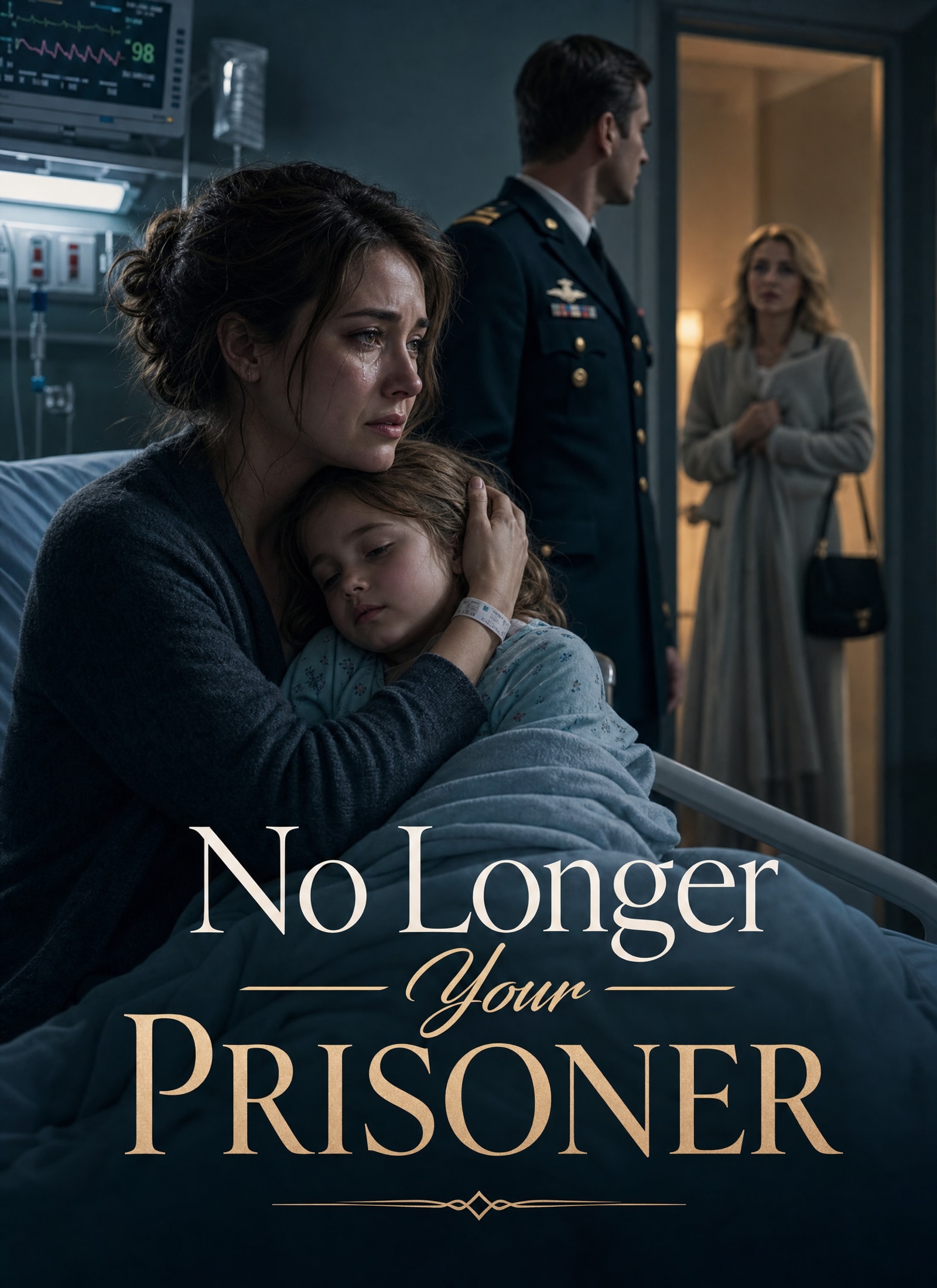
Because I knew my husband, Victor Harlan, would bring his widowed sister-in-law back to live with us, I quietly moved out of base family housing after I was given my second chance at life. Because I knew he would hand over his entire service allowance to Sandra, I raised Tina alone — never asking him for a single dollar. When Tina’s fever spiked and her life hung by a thread, the hospital called Victor because the bill had gone unpaid. He arrived breathless, his face tight with fury. “No money for treatment and you didn’t think to tell me? She nearly died, Ellie!” I watched his jaw work and looked away. “It was nothing. Didn’t want to trouble you.” Because in my first life, trying to stop Victor and Sandra from destroying everything, we spent ten years tearing each other apart. Sandra had racked up crushing gambling debts, and when I told Victor, he called me a liar. He kicked me hard enough to crack two of my ribs. To protect his brother’s fragile, sickly wife, he turned my parents into enemies of the household and drove them to their graves. In despair, I walked into the river. My child was left behind and starved to death. In that life, fighting for his love cost me everyone I had. In this life, I want nothing from him — not his love, not his attention, not even his pity. … Victor’s voice was barely controlled. “Ellie Gould. Our daughter almost died. And you call that nothing?” I kept my mouth shut. He stepped closer, jaw clenched. “Talk to me.” I laughed, low and quiet. “What would you like me to say, Victor? That you’ve been sending your entire allowance to Sandra every month without keeping a cent?” “Or that you used your last leave to spend three days with her instead of coming home for Tina’s birthday?” He took a half-step back. The look on his face was one I had never seen there before — something close to disbelief. Hurried footsteps echoed down the corridor, followed by a familiar cough. “Ellie, please don’t blame Vic. It’s all my fault. I never should have taken that money—” Sandra braced herself against the doorframe, pale-faced and frail. Victor’s throat moved. When he turned toward her, his voice had already softened. “Sandra, what are you doing here? The ward is full of germs — your lungs can’t take it.” Sandra pushed herself to the observation window and pressed her hands to the glass, eyes red. “It’s my fault. The money that should have gone to Tina’s care — it went to my prescriptions.” Victor caught her elbow gently, his voice full of a tenderness I had not heard in years. “Tina’s going to be fine. You need to go back and rest. I’ll handle things here.” I watched them move away together, then turned and held Tina tightly against my chest. “Ma’am.” The nurse stopped me at the desk. “I’m sorry, but without payment—” “Give me a little more time. I’ll have the money.” She looked at me the way people look at someone they feel sorry for. “She can’t wait much longer.” I squeezed the few coins in my pocket and walked out of the hospital. In my first life, I had carried Tina through a winter just like this one — burning with fever — and knelt on the hospital floor in front of Victor, begging him to save our daughter. He had looked down at me with disgust. “Get up. Have you no dignity? Look at yourself.” Sandra had stood behind him, her voice small and careful, driving every word like a nail. “Vic, Ellie’s just scared. It’s my fault really. But my leg has started hurting again—” She beat at her own bad leg, and Victor turned to her without hesitation. I had grabbed his arm. He shook me off and walked out. The cold had gone all the way into my bones, but I did not stop walking. This time, I would not hand my life or Tina’s to a man who could not see what was right in front of him. I went to the pawnshop and left my mother’s silver brooch on the counter. Then I ran back to the hospital and paid the bill. Past midnight, Tina’s fever finally began to break. I folded my arms on the edge of her bed and drifted off. I woke to a familiar presence standing over me. Victor spoke first, his voice rough. “Did you pay?” “Yes.” “Where did you get the money?” “Pawned the brooch.” I kept my voice flat, as if I had given away something worthless rather than the last thing my mother had left me. He was quiet for a long time. “That brooch belonged to your mother, Ellie. How could you just—” “What else was I supposed to do?” I turned and looked him in the eye. “Wait for you to save a little from Sandra’s prescriptions and grocery runs?” His face flushed dark. “Watch your mouth! Sandra is sick! My brother died young and she’s been alone ever since — of course I look after her. Is that a crime?” Again. That sentence. I had heard it so many times in my first life I could recite it in my sleep. “She’s fragile,” I repeated, slowly, and let the irony carry itself. “So Tina and I are supposed to be the durable ones?”
Victor’s face went gray. “Tina is my daughter. You think I don’t care? Ellie, stop keeping score.” I closed my eyes. I was too tired to keep looking at that face — the one I had once loved, obsessed over, and then learned to hate. “Victor. From this day on, I’m done making allowances for you two. I’m also done fighting. And I am done hoping.” “What does that mean?” “It means you can take care of Sandra however you like. But Tina and I — that’s no longer your concern.” “Ellie!” His hand closed around my wrist. “Is this about money? Fine. I’ll draw next month’s allowance tomorrow. Every cent. Just stop talking about separating.” His fingers were warm. The touch turned my stomach. I pulled my arm free and rubbed the red mark on my wrist. “Keep it. Sandra will need it for her next round of prescriptions.” His chest heaved. “Fine. See how long you last on your own. And don’t forget you’re still living in base housing.” I smiled, reached into my coat pocket, and held out a folded sheet of paper. “Actually. This is for you.” It was a handwritten Voluntary Waiver of Base Family Housing, signed and dated in my own hand. “When did you—” His mouth opened and closed. “The day I moved out. I’ve been carrying it since then.” I kept my voice even. “Sign it. Tina and I are done taking up space that belongs to someone else.” Down the hall, Sandra’s voice drifted toward us, soft and trembling. “Vic? You’ve been in there so long. I can’t stop worrying—” She appeared in the doorway, leaning against the frame, wearing her suffering like something carefully arranged. “Ellie, please don’t do anything rash. I’ll go back home. I’ll leave you both alone—” Her eyes filled. Victor stepped toward her at once. “Sandra. Stop that. I made a promise to my brother. You’re not going anywhere.” He looked at me over his shoulder — and in that look was the same disappointment I had seen a thousand times before, as if I were the one who had done something wrong. “Ellie, look what you’re doing to her.” He signed the form. “But Tina is my daughter. That doesn’t change. When she’s better, I’m coming to get her.” I took the paper, folded it carefully, and tucked it away. “Safe travels.” He guided Sandra out without looking back. At the hospital entrance, under the yellow glow of a streetlamp, he took off his coat and wrapped it around her shoulders. He never once glanced back at the window where Tina lay. In my first life, I had drowned myself in the river over this man. Tina was left alone. Sandra forgot her. By the time anyone thought to look, she was gone. I had heard — much later, in the version of events that haunts me still — that Tina’s last words were whispered into an empty room. “Mommy, I’m so cold. I’m so hungry. Where are you?” The tears came before I could stop them, sliding down in silence. “Tina. Not in this life. No one is going to hurt you again.” I dried my face. My eyes went cold. Victor Harlan. This time, you take nothing from me.
After leaving base housing, I rented a small room on a side street near town. During the day, I picked up alterations and mending work — hemming, patching, whatever people brought to the door. In the evenings, by lamplight, I sewed rag dolls and cloth animals for Tina. Word got around now and then that Victor handed over most of his allowance to Sandra each month — imported vitamins, new clothes, specialist appointments. That information passed through me like wind through a screen door. One evening, I was returning from dropping off a batch of finished alterations when I saw a crowd gathered outside my door. My stomach dropped. I pushed through. Inside, the room was destroyed. My sewing things were scattered everywhere; three garment orders I had taken from base families lay in pieces on the floor. Sandra stood in the middle of it all, composed and faintly pleased. “I saw Ellie hiding subversive pamphlets in her sewing basket. She’s been working against the base community. Against all of us.” She held up a few crumpled slips of paper. Two MPs stood near the door, arms folded. “Ms. Gould. Sandra Harlan has filed a report claiming you concealed prohibited materials on premises. Do you have anything to say?” The neighbors murmured. “Can’t believe it. She was doing alterations for military families. What was she hiding in there?” “No wonder Victor Harlan put her out—” I recognized the play. It was the same one Sandra had run on my parents in my first life — a quiet accusation, a ransacked room, a crowd already half-convinced. This time I would not freeze. “What proof do you have?” Sandra’s satisfaction sharpened. “The room. The papers. What more do you need?” “Victor Harlan is here!” Someone called it from the back of the crowd. Victor pushed through and walked in. His gaze moved across the ruined garments, and then he turned it on me. “Ellie. Do you understand what you’ve done?” Sandra moved quickly to his side, her voice dropping to something wounded. “Vic, I only came to check on her. I never imagined I’d find — this.” He put a hand briefly on her arm. When he looked back at me, there was no warmth in it. “Evidence is right in front of us. What is there to argue?” In my first life, he had looked at me exactly this way. No question. No pause. Sandra had accused my parents and he had believed her instantly, led the search himself, watched my father’s head split on a doorframe and my mother collapse. “You have no case,” I said. “These garments belong to base families. Every order has a receipt with a date, a description, and the customer’s signature. The paper trail is complete.” “As for those slips of paper — I’m requesting a handwriting analysis.” Sandra’s color shifted. “That’s enough!” Victor cut across me. “Ellie, making this official helps no one. Apologize to Sandra, and I’ll make this go away.” He had done this before, too. Used my humiliation as currency to keep Sandra calm. I pulled my arm back and looked at him steadily. “I have done nothing wrong. I will not apologize for something I didn’t do. And I don’t need you to make anything go away.” His patience ran out. He pointed at the MPs. “This is a failure of household conduct and it reflects on my command. Whatever the investigation requires, we’ll cooperate fully.”
Watch👉 https://cps-front.novelix.live/app-api/ext/new/202607016mgylT8qqs 🌟 Continue the story here 👉🏻 📲 Download the “Novelix” app 🔍 search for “ni418452”, and watch the full series ✨! #Novelix
Leave a Reply