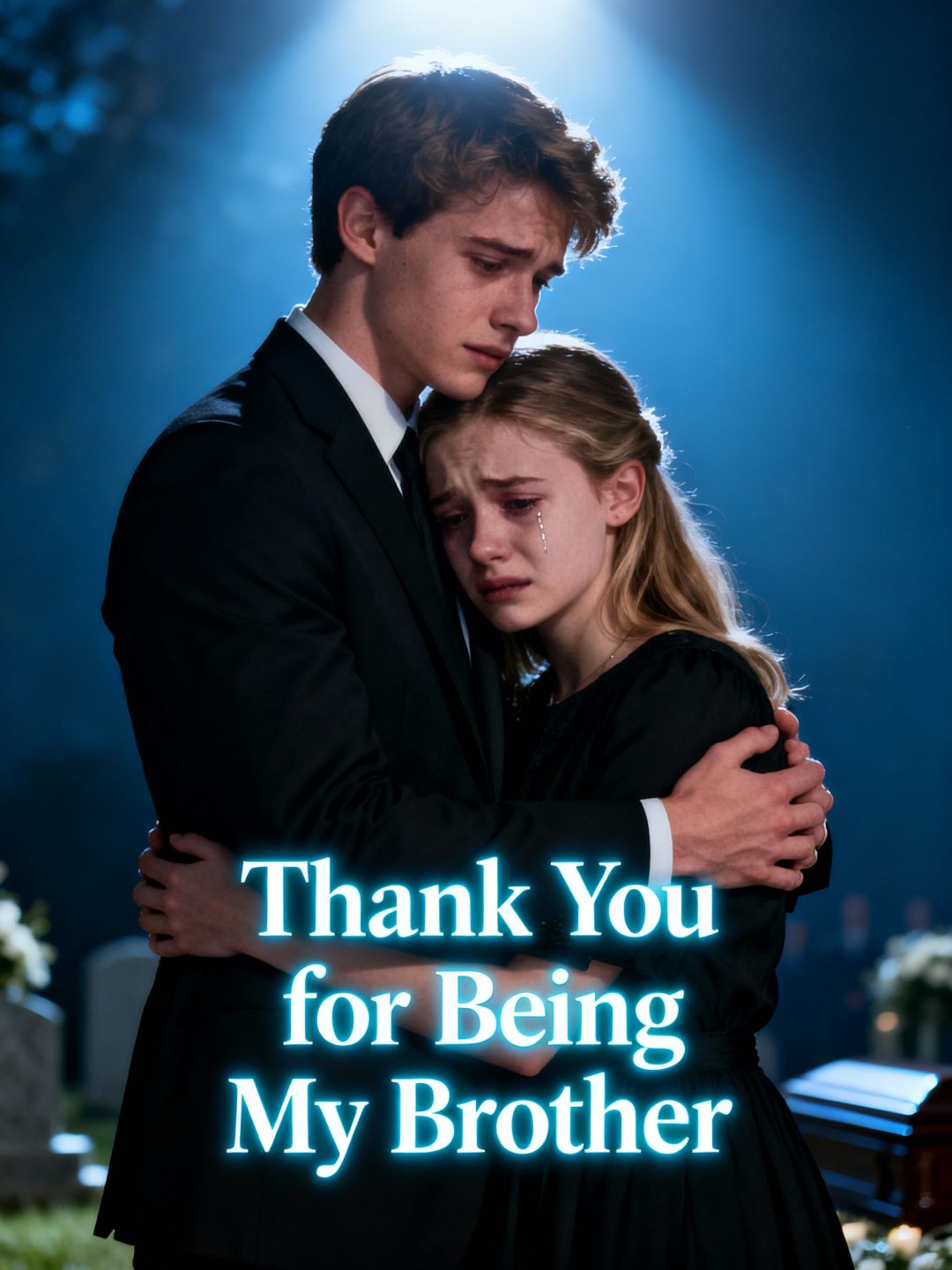
When I was ten years old, my parents died on their way to pick up my brother from prison. At the funeral home, I stared at the man kneeling by the caskets—my brother, just released after serving five years. I rushed at him and shoved him with all my strength: “This is all your fault! If you hadn’t been in prison, Mom and Dad wouldn’t have gone to get you! They wouldn’t be dead!” Damian stumbled from my push but didn’t look up. He just kept praying harder. From that day on, I never called him my brother again. Mom kept treasures in an old metal box. Young and curious as I was, I couldn’t resist sneaking a look when the adults weren’t home. Inside the box was a very old ultrasound report. It read: [Umbilical cord blood match successful. Donor: Fetus. Recipient: Damian] Damian was my brother, fifteen years older than me. For as long as I could remember, he’d been in prison. Mom and Dad never talked about what he’d done. But every time they came back from visiting him, Mom’s eyes would be swollen from crying, and Dad would chain-smoke in silence all night. Before I turned ten, everything I knew about my brother amounted to this: a blurry name, a stranger who made our parents cry, and the entire reason for my existence. Yes, I knew. I was never the product of my parents’ love. I was just proof of how much they loved him. Mom’s health was poor. She risked a late-life pregnancy with me only because Damian had leukemia and needed cord blood from a newborn to survive. The day I was born, Damian’s surgery was a success. And me? I was just a “useful tool” in this family. Karma’s funny that way. Who would’ve thought the brother wrapped in our parents’ love would commit murder and end up behind bars? I was five that year. I was too young to remember why Damian went to prison. Not that it mattered. What mattered was that I would go from being the family’s “tool” to being Mom and Dad’s only child. That didn’t last long. When I turned ten, Damian was released. Mom and Dad left early that morning, full of hope about giving him a fresh start. Then the news came. A truck’s brakes had failed. It crashed into their car. Dad died instantly. Mom held on until we got to the hospital. She only said one thing to me: “Claire, take care of your brother.” I didn’t understand. Why was I supposed to take care of him when I was the child who needed taking care of? Before I could argue with her, Mom closed her eyes. At the funeral home, I looked at the stiff smiles in Mom and Dad’s photos, then at the stranger kneeling before their caskets—my brother, whom I hadn’t seen in five years. His forehead pounded against the floor, blood seeping out and mixing with his tears. Relatives whispered, their stares like needles in my back. “Poor thing, losing her parents so young…” “Living with a murderer for a brother—what’s going to happen to her?” I clenched my fists, nails digging into my palms. Then I rushed at him and shoved with all my strength: “This is all your fault! If you hadn’t been in prison, Mom and Dad wouldn’t have gone to get you! They wouldn’t be dead!” Damian stumbled but didn’t look up. He just kept hitting his head against the floor, harder than before. The night after the funeral, Damian found me in the dark living room. He wore an ill-fitting old shirt, his eyes sunken, looking like a skeleton. “Claire.” His voice was hoarse as he reached to touch my hair. I dodged away. “Don’t touch me,” I said. His hand froze mid-air, then slowly dropped.
We lived in a small town where there were no secrets. Everyone’s business became everyone’s gossip. So it didn’t take long before everyone knew: Damian was out of prison. He was a murderer. Not only morally corrupt, but he’d also brought death to his own parents. And his little sister Claire had lost both parents at such a young age and now had to live with her killer brother. When I returned to school, my homeroom teacher gave me a pointed look during roll call. “Claire, given your family’s special circumstances, if you need anything, talk to me.” The whole class turned to stare. During break, boys crowded around my desk, smirking: “Claire, did your brother really kill someone?” “How’d he do it? With a knife or a rope?” “Are you gonna kill people too?” I buried my face in my arms, pretending not to hear. Walking home from school, girls from another class pointed at me. “That’s her. Her brother’s been to prison.” “Stay away from her. A murderer’s sister can’t be any good either.” I ran home and threw my backpack on the floor. Damian was in the kitchen making noodles, wearing Mom’s old apron, clumsily frying an egg. “You’re home, Claire?” He turned around, forcing a smile. “Dinner’s almost ready.” Looking at his face—so similar to Dad’s—I suddenly exploded: “Why did you come back?! Why didn’t you just die in prison?! Do you know everyone’s laughing at me?! Saying I’m a murderer’s sister!” The pot of water boiled, steam obscuring his face. He turned off the stove, his back to me, shoulders trembling slightly. After a long time, he finally said: “…I’m sorry.” That night, I heard him crying in the living room—suppressed, like a wounded animal whimpering. But I didn’t go out there. I hugged Mom’s pillow and told myself: I hate him. I had no obligation to understand or feel sorry for him. If it weren’t for him, my mom and dad wouldn’t have died in that accident. If it weren’t for him, I wouldn’t be pointed at every single day. He was someone who’d only survived because of my cord blood, yet he “repaid” that debt by turning my life into chaos. I was sick of him. I hated him. Damian started working. During the day he worked construction, at night he helped at the market stalls, and late at night he took on odd jobs assembling cardboard boxes. Probably because of the major surgery he’d had, his health was poor. He coughed constantly and always looked pale. But he spent every penny he earned on me: new backpack, new clothes, even books I mentioned in passing. I had to admit, Damian took good care of me. But my environment was still a swamp. In eighth grade, I ranked first in my year. For parent-teacher night, he borrowed a nicer shirt and combed his hair neatly. But the moment he walked into the classroom, the whispers started. “That’s Claire’s brother?” “He looks pretty harmless. Hard to imagine…” “Murderers don’t have it written on their faces.” Throughout the whole meeting, he kept his head down, fingers gripping his knees tightly. On the way home, I followed behind him, watching his slightly hunched back, and suddenly said: “Let’s move away.” He stopped but didn’t turn around. “Where to?” “Anywhere,” I said. “Everyone here knows you’re a murderer anyway.” He was silent for a long time. “Okay.” A month later, we moved to a city two hundred miles away. Damian used all our savings to rent a tiny studio apartment. We slept in bunk beds. He found work at an electronics factory, working rotating shifts on the assembly line. The night we moved in, I lay on the unfamiliar top bunk, staring at the cracks in the ceiling. “Hey,” I suddenly spoke. Rustling came from the lower bunk. “Yeah?” “Why did you go to prison?” Silence. Long, suffocating silence. Just when I thought he wouldn’t answer, he said quietly: “…I did something wrong.” “What wrong thing?” “Something very bad,” his voice was soft as a sigh. “Claire, don’t ask anymore.” “Just know that I’m sorry—sorry to you, sorry to Mom and Dad…that’s enough.” I turned to face the wall. Always like this. Forever like this. I was never entitled to know the truth.
Apparently, miracles do happen. After working at the electronics factory for half a year, Damian caught the eye of the boss’s daughter. The boss’s daughter was named Vivian, five years younger than Damian, fresh out of college, sent by her father to learn management at the factory. Supposedly, the moment she saw Damian, she couldn’t look away. Fine, I’ll admit—Damian was good-looking. Even I couldn’t deny it. Despite being malnourished, despite always looking exhausted, he’d inherited all of our parents’ best features: deep eyes, a straight nose, and when he was quiet, a kind of broken beauty. Vivian pursued him so openly that the whole factory knew. She brought him meals, medicine, even kept him company when he worked late. His coworkers all urged him: “Damian, just say yes! That’s the boss’s daughter! You’d skip twenty years of struggle!” Damian always shook his head. “I’m not worthy.” Until Vivian’s father—Mr. Palmer himself—came to talk to him. Damian came home very late that night and sat in the dark living room, smoking cigarette after cigarette. He never usually smoked. “What’s wrong?” I couldn’t help asking. He stubbed out his cigarette, his voice dry: “Mr. Palmer…knows I was in prison.” My heart sank. Of course. The background check came through. That was it. He’d lose his job. We couldn’t stay in this city anymore. “He asked me about what happened back then,” Damian continued. “I told him everything.” I closed my eyes in despair. “And then?” “And then…” Damian looked up, his eyes strangely bright in the darkness. “He said next month has an auspicious date, and asked if I wanted a traditional or Western-style wedding.” I was stunned. He must be crazy. I thought. Mr. Palmer must be insane to want a murderer for a son-in-law. But good for him being crazy. I also thought. After all, the Palmer family was truly wealthy. Who wouldn’t want to latch onto a family like theirs? The wedding was simple, just ten tables set up in the factory cafeteria. Damian wore a rented suit, looking like a puppet. Vivian wore a white wedding dress, smiling sweetly. During the toast, she walked up to me, her expression complicated. “You’re Claire, right?” She raised her glass. “We’re family now.” I raised my soda without saying anything. She smiled, but the smile didn’t reach her eyes. On their wedding night, Damian moved into the Palmer family’s two-story house. I stayed in the rental apartment, thinking I could finally have some peace. The next morning, Damian came to get me. “Pack your things. You’re moving in.” “I’m not going.” “Claire,” for the first time, he used such a firm tone. “You have to.” “Why? Vivian obviously doesn’t like me!” “Because you’re my sister,” Damian looked at me, his eyes suddenly reddening. “You’re my only family left in this world, Claire. I can’t leave you behind.” In the end, I moved in. Vivian prepared a room for me—north-facing, small, but clean. She was polite on the surface, but that politeness carried an icy distance. I could feel it. She hated me. Not me as a person, but the identity of “Damian’s sister.” Living at the Palmers’, I’d describe it as living under someone else’s charity. Vivian never mistreated me. Food, clothes, everything—even better than what many of my classmates had. But she barely spoke to me, looking at me like I was a defective product she had no choice but to accept. Damian was caught in the middle, growing quieter and quieter. He got promoted to team leader at the factory, became busier, and when he came home, he still had to deal with Vivian and her extremely controlling father. I could see his exhaustion, but he never complained. When I was fifteen, I got into Central High, the best high school in the state. Most importantly, Central was a boarding school. The day I got my acceptance letter, Damian was happy as a kid, specially cooking a whole table of dishes. Vivian was happy too—happier than Damian, even. At dinner, she gave me a genuinely warm smile for once: “Claire’s so impressive. Boarding school is great—you can focus on your studies.” I understood what she meant: I’d be boarding, so she wouldn’t have to see me every day anymore. The night before school started, Damian came to my room and handed me a bank card. “The PIN is your birthday. If you need anything, buy it. Don’t try to save money.” “Does Vivian know?” “…Yes.” He wasn’t telling the truth. I could see the unease in his eyes. “Don’t worry,” I said. “I’ll study hard and become independent soon. Then…I won’t be a burden to you guys anymore.” Damian opened his mouth to say something but ended up just ruffling my hair. “Claire’s all grown up.” His palm was warm, but I pulled away.
I did well at school. Nobody knew my family background. I could finally be a normal student. Good grades, a few friends I could talk to, and sometimes I’d even dream about the future— I’d go to college far, far away from here. Get away from this place completely. Get away from Damian completely. When I came home for winter break in tenth grade, I noticed Damian had lost a lot of weight. “It’s nothing, just work stress.” He brushed it off. But Vivian seemed unusually anxious, snapping at everything. One night I got up for water and heard them arguing in the master bedroom. “…You have to be hospitalized! How long do you think you can keep dragging this out?!” “Vivian, just wait a bit longer, the factory’s been…” “The factory, the factory! Do you have a death wish?!” I quietly retreated to my room, an ominous feeling settling in my chest. After New Year’s, Damian collapsed on the factory floor. The diagnosis: End-stage kidney failure. He needed a transplant. In the hospital corridor, the smell of disinfectant was pungent. I looked at Damian unconscious in the bed. He was so thin he looked skeletal, his hands covered in needle marks. Vivian sobbed into her hands, shoulders shaking. The attending physician was a family friend of the Palmers, Dr. Harrison, and he was blunt: “It’s best to have a close family member donate. Highest success rate, lowest rejection risk.” I almost blurted out: “Use mine.” Vivian’s head snapped up, eyes bloodshot. “No!” “Why not?” I was confused. “I’m his sister. The match rate would be high.” “I said no!” Her voice was shrill. “Claire, this isn’t your concern!” When Damian woke up, I brought it up again. His reaction was extreme. He nearly jumped out of the hospital bed: “Absolutely not! Claire, don’t even think about it!” “Why? You’re my br—” “Because I’m your brother!” He grabbed my hand with frightening strength. “Listen to me. Study hard, go to college. My situation…I’ll handle it myself.” “How will you handle it? Waiting for a donor could take forever! The doctor said your condition—” “Then I’ll wait!” He cut me off, his eyes more severe than I’d ever seen. “Claire, if you dare go behind my back to get tested, I will never forgive you. Ever.” I was scared by the determination in his eyes. What confused me more was Vivian’s attitude. Someone who hated me so much should be thrilled at the idea of me trading a kidney for her husband’s life. But this time, she stood firmly with Damian. I went to find Dr. Harrison, wanting to secretly get tested for compatibility. Dr. Harrison looked at me, hesitating: “Claire, your brother specifically told me…not to use you as a match.” “Why?” “He said…” Dr. Harrison sighed. “He said you’re not suitable.” “We haven’t even tested yet. How does he know I’m not suitable?” Dr. Harrison avoided my eyes. “Your brother said you were injured as a child. Your health isn’t good.” The excuse was too flimsy. I didn’t know anything about being unhealthy. I rarely even caught colds. But I was helpless. Damian and Vivian were like two walls, blocking me completely from the truth.
🌟 Continue the story here 👉🏻 📲 Download the “NovelMaster” app 🔍 search for “346091”, and watch the full series ✨! #NovelMaster #浪漫Romance #现实主义Realistic #重生Reborn
Leave a Reply