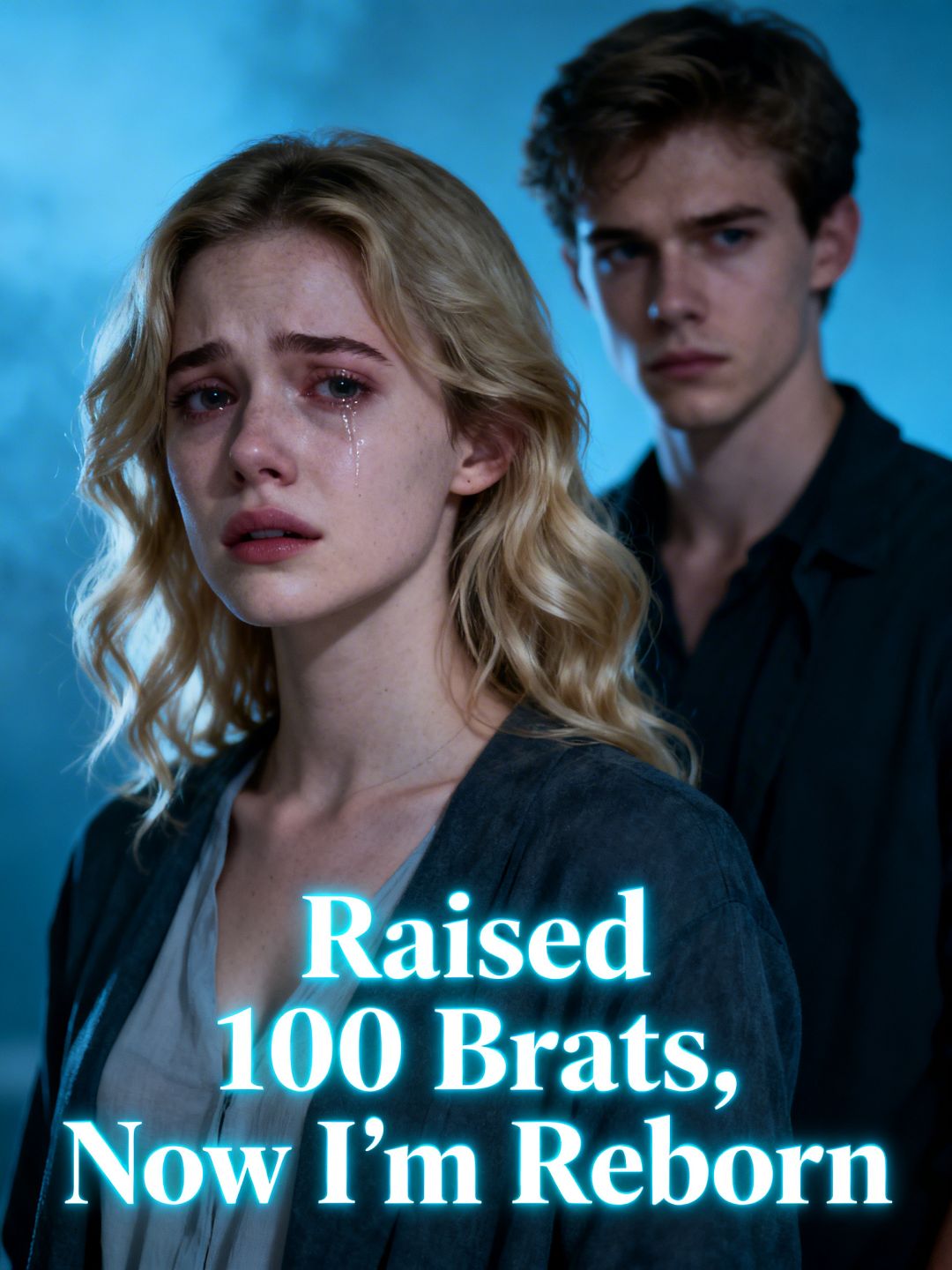
In my past life, my name was Alice. I donated 10 million dollars and supported 101 children. But when I died of stomach cancer at 37, not a single one of those 101 children came to visit me. In this life, the first thing I did when I woke up was throw that sponsorship list into the trash. With the money I had prepared to donate, I bought ten houses in one go before property prices went up. Soon, I saw familiar faces on the screen. Those boys and girls I had sponsored were wiping away tears during media interviews: “Miss Alice promised she would support me through college, but now she’s disappeared. I heard she bought 10 houses.” “Now, we can only drop out and find work.” “I don’t hate her, I just feel hurt inside…” “We just want to ask one question: Miss Alice, we’ve always thought of you as our mother. Are you really this heartless?” I turned off the TV with an expressionless face. The moment I opened my phone, countless messages came flooding in. First text: “Ms. Alice, I’m a reporter from City Hotline. Why did you suddenly stop supporting those 101 underprivileged students? Would you be available for an interview?” Second text: “It’s Leah! Why aren’t you answering your phone? You said you’d support me through college!” Third text: “Ms. Alice, as a well-known philanthropist, you suddenly acquired ten properties but let these children drop out to work. Can you live with your conscience?” Fourth, fifth, sixth… My phone kept buzzing non-stop like it was exploding. At the same time, chaotic footsteps sounded outside my door. From the noise, there had to be at least dozens of people gathered at my doorstep. Through the door, those voices couldn’t wait to drill their way in— “Ms. Alice! Come out and say something!” “Why did you stop the support?” “The children are all kneeling at the TV station entrance. Do you know that?” I closed my eyes. In my past life, I was a selfless, altruistic good person. My husband Andrew and I owned a building materials store. We worked from dawn to dusk, carefully budgeting every expense. The money we earned—very little went to our own household, most of it was donated. Over ten years, we donated more than 10 million dollars and supported 101 children in our region. Many of them we had sponsored since elementary school. I promised them they could study without worry, that I would support them through college. They wrote letters saying they would definitely repay us properly in the future. We kept every single letter, taking them out to read when we couldn’t sleep at night. Every time we read them, we’d be moved to tears. Andrew and I had no children. We didn’t expect the kids to repay us—we just hoped they wouldn’t let poverty limit their futures. Later, Andrew died. During a delivery, his truck overturned. He left behind one sentence—”make sure to take good care of the children”—and was gone. I cried my heart out, and before I could recover, I was diagnosed with late-stage stomach cancer. During that year-plus in the hospital, I lay in my bed waiting for those children to come visit me. Not a single one came. I thought they were busy, that their studies were demanding, that travel expenses were high. I didn’t blame them. Later, when my medical funds ran out, I had no choice but to stop the support payments. That’s when the phone started ringing. “Alice, why hasn’t this month’s living allowance arrived yet?” “Alice, you said you’d support me through college. I’m only a freshman in high school and you’re stopping? Aren’t you screwing me over?” “Ms. Alice, I’m John’s parent. You made a promise back then. Now you just stop without warning? What about our child?” The last call came from a girl named Martha. When I was initially selecting children to sponsor, she had knelt before me, tears streaming down her face, calling me “Mom.” On the phone, she said: “Alice, how long will your treatment take? When you’re better, hurry up and get back to work. So many of us kids are waiting for you.” I hung up and burned all the letters I’d kept under my pillow. Later, a reporter exposed my situation and went to interview those children. Reporter: “Alice is very sick. Won’t you go see her?” One child said: “She promised to support me through college. Now she’s lying in a hospital with no money left. What could I do if I went?” Another child said: “She’s so rich, it’s just treating an illness. Besides, our tuition is nothing, right?” Martha smiled innocently at the camera: “Everyone does things with ulterior motives. What she’s after—I won’t say it, but you can probably guess, right?” I turned off the TV. With my remaining money insufficient for treatment, I was discharged and went home to lie in the bed Andrew had slept in, enduring one day after another. The night I died was New Year’s Eve. Outside my window, everything was lively and festive. I stared at the ceiling and said: “If I could do it all over again—” “I would love myself first.” God blessed me. I was truly reborn.
I was reborn at age 33, when Andrew was still alive and our family was still relatively well-off. Defying fate isn’t easy. That afternoon, I almost couldn’t make it out of my apartment complex. A dark mass of people knelt below my building. About a hundred children in school uniforms, holding banners. “Alice, we need you.” “Alice, don’t abandon us.” Kneeling at the very front was Martha. She held a megaphone, crying out tearfully: “Alice, you said you’d support me through college. Have you forgotten?” Beside them stood countless reporters, all their cameras aimed at the window of my apartment. The moment I stepped out of my building, I heard a crying shout— “Alice!” Martha crawled forward on her knees several steps, then threw herself at me, wrapping her arms around my legs. “Alice, please don’t abandon us! You said we were your children! You said you’d support us forever!” Her tears smeared across my pants, ice-cold. Behind her, those 100 children all started crying in unison. The sound was deafening. Security guards tried to intervene but were blocked by reporters. All around me, cameras and phone lenses everywhere. Some were livestreaming, some were wiping away tears, and others whispered: “So pitiful. How can this woman be so heartless?” I looked down at Martha. This face was exactly the same as in my past life. In my past life, she also knelt before me like this, crying, saying she would take care of me in my old age. Then when I was dying, she told the camera: “Everyone does things with ulterior motives.” I reached out and peeled her fingers off my pants one by one. “Alice!” She clung desperately. I peeled off the last finger. I crouched down, looking straight into her eyes. “Martha, how old are you now?” She paused: “Seventeen.” “Seventeen.” I nodded. “That’s not young anymore.” I paused, then said word by word: “Everyone does things with ulterior motives. What you’re after now—you don’t have to say it. I can guess.” Her face froze. I stood up, walked around Martha, and moved forward. Behind me, Martha suddenly burst into loud sobs: “Alice! You can’t do this! You promised us! You can’t go back on your word!” Those children all cried along with her, even louder than before. Someone started chanting: “Alice, come back! Alice, come back!” Phone cameras followed me, comments flooding in. “What kind of person is this? So many children kneeling and she won’t even look back?” “Too cold-blooded. I used to like her posts!” “Ten houses and she won’t donate even one. I knew her charity was fake all along!” “Alice, can you sleep at night?” Reporters’ cameras were practically in my face, mouths opening and closing, all asking why I stopped the support. Seeing no way to avoid them, I simply stopped and greeted the reporters openly. “Yes, I’ve decided to stop the sponsorships.” “As for the reason, it’s my private matter. I won’t discuss it here.” “But I believe there are more good people in this world than bad. Like all of you—you could easily take over supporting these children.” “You’re all so kind. I believe that even without me, these children will definitely be able to complete their education successfully, right?” I smiled as I looked at these seemingly kind and righteous people. Seeing me redirect the conversation, the reporters immediately fell silent, no longer daring to press me with questions. I seized the opportunity to push through the reporters and quickly made my way to the complex entrance. A car was parked by the roadside. The window rolled down—it was Andrew.
He looked at me, eyes red. “Alice, I saw everything.” His voice was choked. “Those children… they’re so pitiful. Haven’t we always been supporting them? Why did we suddenly…” I opened the car door and got in. Andrew turned his head: “Didn’t we say before that we don’t expect them to repay us, we just hope they’ll be well…” “I changed the bank card password,” I said. He froze. “What?” “Those two bank cards at home—I changed the passwords.” I looked straight ahead. “If you want to withdraw money, you have to ask me.” “Alice, you—” I sighed: “Andrew, I had a very realistic dream. So realistic that I believe it will definitely happen.” “In the dream, you died, and I got cancer. I lay in the hospital for over a year, and not one of those 101 children came to see me. When I stopped the support payments, they called to pressure me, telling me to hurry up and get better so I could go out and earn money. They even said on TV that I had ulterior motives. In the end, I died alone at home on New Year’s Eve. All by myself.” He was stunned. “Andrew,” I said wearily, “in this life, let’s love ourselves first.” He stared at me with his mouth open, looking confused, unable to speak for a long time. Outside the window, a huge advertising screen was playing the news— “Well-known philanthropist Alice abandons 101 underprivileged children. Children kneel in the street begging her to come back…” Many people on the street were looking up at the news. Someone shouted: “Alice, may you die a terrible death!” Immediately, a chorus of voices echoed the sentiment. I let out a cold laugh. The online harassment spread like wildfire. For several days straight, downstairs was packed with people. “Alice! Get out here!” “Bastard!” “What kind of philanthropist? Just a fraud!” Someone threw eggs at my window, the yolk dripping down the glass. Someone spray-painted my door with red paint: “Fake charity worker, real vampire.” Others held up banners: “Punish this unscrupulous businesswoman, give the children justice!” I looked down through a crack in the curtains and saw Martha still standing at the front of the crowd, tears streaming down her face as she gave interviews. “We never wanted her to give us a lot of money. We just want to know why she suddenly doesn’t want us anymore.” Next to her, a boy cried heartbreakingly: “She bought ten houses but makes us drop out to work! My sister is only in middle school, and she has to work in a factory now!” The crowd exploded. “Call the police! Arrest her!” “People like this should be socially destroyed!” “Smash up her house!” Without warning, a fairly large rock smashed through my window, glass shards nearly hitting my eyes. Andrew stood in front of me, his face pale: “Alice, let’s call the police.” I shook my head. What good would calling the police do? They were just a group of “poor,” “helpless,” “betrayed” children. The next day, things got worse. Someone posted my home address online, along with the location of Andrew’s building materials store. By the time I got there, I heard someone in the crowd shout: “Smash it!” Before the words had faded, a baseball bat had already shattered the glass door. The crowd surged in like a tide. Shelves toppled, tiles broke, the cash register was flipped over. Someone even set fire to the advertising sign at the entrance, black smoke billowing. Honest Andrew rushed in with red eyes trying to stop them, but was pushed to the ground. People spat on him, kicked him with their feet. In that moment, blood rushed to my head. But I didn’t rush forward. Instead, I took a step back, retreating to the edge of the crowd, and opened a livestream on my phone.
I aimed the camera at the fire, at the scene of the store being destroyed, at Andrew being trampled underfoot. The comments scrolled frantically: “What’s happening here?” “This is violence, right?” “Has anyone called the police?” “It’s that Alice woman’s store!” “Beat her good! Make this fake do-gooder lose everything!” I stared at the screen, my voice calm with a slight tremor: “Hello everyone, I’m Alice. What you’re seeing now is my husband being attacked.” “For three days, my front door has been vandalized, my store has been besieged, my husband has been trampled on the ground. And all of this is because I stopped supporting 101 children.” “So far, I’ve supported them for three years, totaling about 2 million dollars, with transfer records for every transaction.” “As for why I suddenly stopped the support, I didn’t want to say this—” I pulled out several pieces of paper from my pocket and unfolded them in front of the camera. It was a medical examination report. Dated five days ago. In the diagnosis section, in black and white: Malignant stomach tumor, mid-stage. In my past life, by the time I learned I had stomach cancer, it was already late-stage. After being reborn, the first thing I did was go to the hospital for a checkup. “I stopped the support because I also need money for treatment. I didn’t want to make this public to avoid worrying everyone. But now, I have no choice but to tell you.” “I also want to continue supporting the children’s education and living expenses, but my body won’t allow it. My husband’s health isn’t good either. Our treatment costs will be a significant, perhaps ongoing expense.” By the end, I was crying openly. The comments went crazy: “Wait… stomach cancer?” “She didn’t say this before!” “If she’s sick, of course she needs money for treatment!” “Those people forced her to donate and pushed her to this?” “Wait, if she’s sick why didn’t she say so? If she had, who would criticize her?” “If she said something, wouldn’t she be accused of playing the victim?” “So for three days she’s been cyberbullied and never explained?” Seeing my goal achieved, I turned off the stream. In the distance, police sirens grew closer, and the situation was finally brought under control. Police began registering identities and taking away the ringleaders. I helped Andrew back home. He was amazed to discover that the children who had been coming every day to make a scene had vanished. Only reporters remained, staking out the area. When they saw us, instead of the previous hostility, they showed concern and sympathy: “Ms. Alice, when did you first learn about your stomach problems?” “Ms. Alice, how are you feeling now? What are your plans for treatment?” Andrew’s mouth hung open in shock. Back home, he hugged me tightly. “Alice, when did you get a checkup? Why didn’t you tell me?” “I didn’t want you to worry.” I patted his back. “It’s okay. It’s not late-stage. It can be treated.” When I opened my phone again to check the related news, just as I expected, the online opinion that had been one-sidedly criticizing me had reversed. A senior commentator even wrote an in-depth article specifically about this, stating: “Donating is a favor, not donating is within one’s rights.” “Is this really an unscrupulous businesswoman faking charity, or ungrateful children engaging in donation extortion!?” “Let us wait and see. Waiting for the reversal.”
🌟 Continue the story here 👉🏻 📲 Download the “NovelMaster” app 🔍 search for “366178”, and watch the full series ✨! #NovelMaster #现实主义Realistic #浪漫Romance #重生Reborn
Leave a Reply